Showing posts with label Introductions. Show all posts

Friday, February 13, 2015

How I Became a Teaching Author

My path to becoming an author is . . . unusual.  Like most writers, I’ve loved books all my life.  Some of my earliest memories are of being bribed by the promise of a Golden Book if I would go to sleep in my own bed rather than my parent’s bed (I took the bribe).  However, as I grew up, a wide variety of books were not readily available to me.  Our small town didn’t have a library and neither did my elementary school.  What passed as our “library” was a small collection of books sitting on the bookshelf below the wide windows that ran the whole length of the classroom. 


Peter Rabbit was my favorite book, and was
also one my Mama bought to bribe me.  

Somewhere around the third grade I got a pink diary.  I’d like to say my diary entries were long narratives about my hopes and dreams that show a budding writer’s flair for the dramatic.  That is not the case.  In reality my diary entries are so sparse that the entire text of my five year diary could fit on a napkin, a cocktail napkin.   But when I look at that diary now, I do see the beginnings of an author—a nonfiction author.  Each diary entry contains the facts and does not include any extraneous information or fluff.  For example on one especially important day in history, July 20, 1969, I simply stated: “Dear Diary, the astronauts landed & are walking on the moon.”  It is simple, to the point, and has the sense of immediacy—not a bad start for a future nonfiction author.

My childhood diary shows an early glimpse into my future as a nonfiction author.  My straightforward recording of the moon landing came just one day after my confession that I dreaded facing my piano teacher (I hadn't been practicing.) 

As an adult, my first career is as a Registered Radiologic Technologist.  Next I became a wife and busy mother of three children.  I read voraciously, but still had no thoughts of becoming a writer.  In fact, I would never have become an author if tragedy had not entered my life.  My youngest son, fourteen-month-old Corey, fell off of the backyard swing and died from a head injury.  Life as I knew it ceased to exist.  I was devastated, to say the least.  Ultimately I wrote an inspirational book about the Spiritual battle I faced after Corey’s death and how God brought me through it and back to Him titled Forgiving God.  It was the first book I’d ever written.


My first book, an adult inspirational book that deals with the death of my son, Corey.

After my first book was published, I began writing nonfiction books for young readers.  No classes.  No journalism degree.  No mentor.  I just started researching and writing.  Along the way I joined SCBWI, went to writer’s conferences, and learned all I could about children’s publishing.   I listened to the old writer’s adage that says “write what you know” when I chose X-rays as the topic for my first book in this genre.  That book, titled The Head Bone’s Connected to the Neck Bone: The Weird, Wacky and Wonderful X-ray, was awarded the SCBWI work-in-progress grant and published by Farrar, Straus and Giroux (FSG).  When that book was finished, I wondered if I could do it again.  I could.  The next two books, Something Out of Nothing: Marie Curie and Radium and In Defiance of Hitler: The Secret Mission of Varian Fry were also published by FSG.   Then came The Many Faces of George Washington: Remaking a Presidential Icon published by Carolrhoda, Tech Titans by Scholastic, and my newest book Fourth Down and Inches: Concussion and Football’s Make-or-Break Moment also with Carolrhoda.  


My nonfiction books for young readers. 

Since libraries fill me with awe and appreciation, I’m thrilled to know that my books are in library collections all over the world.  In some ways I’ve come full circle.  I began as a child with no library access and I became a nonfiction author who has done research in some of the finest libraries in America including Columbia University, Harvard University, and the Boston Athenaeum.   


Doing research at the library at Harvard.

I didn’t plan to become a writer or a public speaker.  But the twists and turns of life have turned me into both, and they are a good fit for me.  I love the challenge of researching a topic I know nothing about.  I love to write about ordinary people who have done extraordinary things.   I love to capture the imagination of a live audience and take them on a journey as I share with them the amazing things I’ve learned about the subjects of my books.   And as an added bonus, researching my books has given me incredible life experiences that I will always treasure.  I’ve visited Marie Curie’s office at the Radium Institute in Paris and sat in her chair, behind her desk.  I’ve stayed on the grounds of George Washington’s home at Mount Vernon and watched the sunrise over the Potomac River while standing on the piazza.   I’ve looked into the faces of men and women who were saved from the Nazis by Varian Fry and listened to their personal experiences.  I’ve wept with the parents of teens who lost their lives as a result of concussions.  I’ve presented programs in a wide variety of venues including C Span 2 Book TV, Colonial Williamsburg, the U.S. Holocaust Memorial Museum, the U.S. Consulate in Marseilles, France, teacher conferences, workshops, and at many schools.
 
Now I’m honored to join this amazing group of women known as TeachingAuthors.  It will be a whole new adventure and I’m looking forward to it.

Carla Killough McClafferty
www.carlamcclafferty.com
 

Friday, May 8, 2009

HOW I BECAME A TEACHING AUTHOR

posted by April Halprin Wayland

I was wearing high heels and business suits, working in downtown Los Angeles in a well-paid job…and I was miserable. My life changed forever when I signed up for a class through the UCLA Extension’s Writer’s Program.

How can I describe how I felt when I began taking that class? I felt as if the sun were shining through me like it shines through these leaves on our persimmon tree:
I became addicted to writing classes. Each of my teachers gave me a part of herself. I studied with brilliant teachers: Ruth Lercher Bornstein, Susan Goldman Rubin, Sonia Levitin, Barbara Abercrombie and many more. But the teacher who really changed my life was poet Myra Cohn Livingston. I was her student for over ten years.

Myra gave me the discipline of poetry. She gave me the power of observation. She taught me that in poetry, less is more.

One of my cherished memories was when she read poetry to us for long stretches of time. We’d lean back, listen, luxuriate in each word.

http://daddyo.typepad.com/photos/uncategorized/raptattention.jpg

Myra taught me to read every poem aloud twice: first to hear it, then to feel it.

While I studied with Myra, my first two picture books were published.
TO RABBITTOWN, illustrated by Robin Spowart, is a free-verse story poem

THE NIGHT HORSE, illustrated by Vera Rosenberry.
This book was based on an assignment in Myra’s class
to write a story in Shakespeare’s
iambic pentameter couplets.


It was as if I had been given a magic carpet--I became a visiting author, teaching poetry workshops across America and Europe.

Then UCLA Extension invited me to become an instructor. Me? What did I know? And besides, my life was too full. I had said "yes" to too many requests; I was learning to say "no."

Here was a perfect test! "So," I told my husband later, feeling quite proud of myself, "I recommended another author." My husband was astounded. “You did what?”

His reaction made me wonder: Oops. Did I just goof? And what makes a good teacher? Do you have to be the world's expert on a topic to teach?

I thought about all the wonderful teachers I’d had and all they’d given me. They gave me hundreds of resources. They showed me how to write…and rewrite and rewrite. They taught me how to submit manuscripts, how to pull myself up after rejection, and how to navigate the maze of publication.

Maybe I didn’t know much…but I could offer what I had been given.

Meanwhile, my next picture book came out. IT'S NOT MY TURN TO LOOK FOR GRANDMA!,
illustrated by
The New Yorker cartoonist,
George Booth, includes a song which I wrote
using all I had learned from Myra.


Myra encouraged me to gather my poems for teens into a book. She helped me to select and arrange them.
Take heart! GIRL COMING IN FOR A LANDING--
A Novel in Poems, illustrated by
Elaine Clayton,
took ten years to sell.


When UCLA Extension’s Writer’s Program called a few years later and asked me again if I wanted to teach a class, I took a deep breath and said, “Yes.”

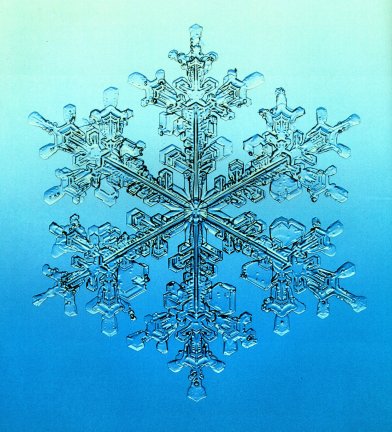
And although I had taught workshops in grades K – 12 for years, the idea of teaching people my own height terrified me. I trembled for months as I prepared for that first class.My mantra—which helped—was: I am a snowflake. When they are in my class, they will learn my snowflakeness. When they take another class, they will learn that teacher’s snowflakeness.I practiced being a snowflake by teaching teens at my home. The most important thing I learned was not to throw every single solitary thing I’d ever learned at them (those poor overwhelmed kids!). John Holt wrote, “The biggest enemy to learning is the talking teacher.” I learned that in teaching, as in poetry, less is more.

I survived that first UCLA Extension class! The next time would be as easy as rolling down a hill, right? Wrong. The second year I was equally frightened. When I asked storyteller/teacher Katy Rydell why I was still scared, she said, “Oh, Honey—the fear doesn’t go away until you’ve taught the class for at least four years.”
My next picture book is NEW YEAR AT THE PIER--A Rosh Hashanah Story, illustrated by Stéphane Jorisch , who won the Canadian equivalent of the Caldicott Medal for Illustration twice! The illustrations are gorgeous.
It comes out June 2009.

So, it's been a process. I've become a TEACHING AUTHOR through the students I've worked with from kindergarten to AARP, through my colleagues, through my own teachers.

I’ve taught in the UCLA Extension Writers’ Program for ten years now and this year
I. Finally. Understand:

Teaching is generosity.

I feel incredibly lucky to be part of TEACHING AUTHORS, and look forward to this great adventure in giving...and learning from you.

Wednesday, May 6, 2009

The Writing Days (and Nights) of My Life

Posted by Jeanne Marie Grunwell Ford

There is a certain loneliness in growing up as an "army brat," moving from place to place among other habitual movers, most of them wary of forming permanent attachments under the relentlessly transient circumstances. As an only child, I was also one of the few kids I knew who lacked the company of siblings. My grandmother did live with us, and she shared a room with me until I was 12. She was an excellent cook and a loud snorer. She was also functionally illiterate, having been forced to drop out of school in fifth grade to get a factory job. My obsession with reading (and not with cleaning!) was incomprehensible to her. In retrospect, I am so sad for what she never had the chance to appreciate.

Not to sound too loser-ish, but Ramona and Laura Ingalls Wilder and even the Bobbsey Twins were my ever-reliable friends. I remember spending one sweltering summer day (my grandmother didn't believe in air conditioning or even open windows) writing a "bridge" between On the Banks of Plum Creek and By the Shores of Silver Lake, imagining what had transpired in the unusually long gap between the two installments. (Apparently I was 20 years ahead of HarperCollins in foreseeing the Little House tie-in market.)

In short, I knew from a very early age that I wanted to be a writer.

In fact, by high school, my oft-articulated (and, dare I say, unusual) aspiration was to write children's books and soap operas (given my love of serials, continuing characters, and my grandmother's daytime TV habit).

A number of caring souls had persuasively made the case that it was highly unlikely that I would ever earn a living as a fiction writer. I considered a variety of divergent career paths (and in fact came thisclose to accepting an Army ROTC scholarship to become a linguist -- in which case I might be writing this post from Iraq or, more likely, not at all). The one career I never considered was teaching.

Despite my tremendous respect for the excellent teachers who have shaped my life (Mind Games is dedicated to them), I knew I could never be one of them. One of the things I enjoy about writing is the ability to carefully consider every word before I commit to it. The idea of extemporaneous anything makes me sweat.

So I embarked on my pleasantly solitary writerly life, with a large dose of secretarial work to support my aspirations. My first professional byline, unlike Carmela's vaunted anthology, was in Soap Opera Weekly Magazine.


After college, I moved to Los Angeles and became an unpaid intern and then a writers' assistant on my favorite TV show, Days of Our Lives. My 80-year-old grandmother, a die hard fan of a rival soap, would get up from the couch every day (no remote control) and switch the channel to the end credits just to see my name.

Meanwhile, I did some writing for hire -- mostly notably of several mystery novels under a certain pseudonym that I am forbidden to disclose, but which any amateur detective worth her salt could deduce. One of my editors was the great Olga Litowinsky, and I am forever grateful for the opportunity to have learned from her.

During my early Days days, when I was too poor to afford a car, I took three buses (four hours) from Burbank to Marina del Ray to attend an SCBWI conference. My first novel was the poor-man's version of Piper Reed. I received an encouraging critique from the then-vice president of Bantam-Doubleday-Dell, who advised me to submit the novel to his executive editor... who rejected it. Nonetheless, I continued diligently working on a sequel. At the following year's conference, I received a devastating critique from another writer, who had not a single positive comment about my manuscript. (Teaching note to self: always find something nice to say!)

In 1998, I enrolled in the MFA in Writing for Children Program at Vermont College. I remember thinking that the investment would likely never pay for itself. And so far, monetarily it might be a wash. But it has been repaid many times over in ways both tangible and less so. I recall being in a workshop with the amazing An Na and reading a draft of A Step From Heaven that was utter perfection. I remember being flattered to be mistaken for Lauren Myracle. My faculty advisors included Randy Powell, Susan Fletcher, Jane Resh Thomas, and Carolyn Coman; without them, my novel never would have been published. My classmates, fondly known as "the Hive," are a constant source of support and encouragement to this day.

Embarking on the Vermont experience seemed to spark a number of serendipitous changes in my life. During my second residency, I was offered a new job at Days and moved back to LA a week later. Within the year, I began to write full-time for Days, which gig ultimately allowed me to move back to Maryland for good. (If you sense a "moving" theme, my gypsy military roots die hard!) My creative thesis, Mind Games, was published by Houghton Mifflin in 2003, and I got engaged a month later.


In the past five years, I have:

Gotten married
Built a new home
Given birth to two children
Buried two kitties
Adopted two new kitties
Worked on three different soap operas
Lived a veritable soap opera!

What could be more inspiring to the children's book writer than having children? My audience now lives in my home! Then again, kids living in the home + full-time job = very little writing time. But -- and I realize I might be slightly biased -- aren't they adorable?


Like it or not, I am now a teacher in every moment of every day.

During one of my recent lapses in employment, a confluence of events led to my accepting a position to teach one semester of English Comp. 101 at the local community college. I had a week to figure out what I was doing. Between my husband's advice and the incredibly generous teacher-mentors on the faculty, I muddled through. But truly, I loved my students, who likely taught me far more than I taught them. I can't wait to do it again someday.

In the meantime, 125 sixth graders fortunate enough to be taught by my husband have read my novel this quarter. I will be meeting them in a few weeks. Last year, I approached this mission with extreme trepidation. This year, I say -- bring it on!

Monday, May 4, 2009

Apologies to Jerry Garcia

Posted by Mary Ann Rodman

I've always been a writer. I taught myself to read from television commercials, "back in the day" when they included a lot of print on the screen. I landed in first grade knowing such essential words as "mouthwash,""antiperspirant" and phrases like "space-age technology" and "ring-around-the collar."
Since I could read for myself, no one ever read to me. Better than any storybook, though, were the stories my family told. My mother was the middle child of eight, growing up on a farm during the Depression. Her adventures with her siblings seemed so exotic to me, an only child in suburban Eisenhower America! As an adult, I realize that if my aunts and uncles pulled the same sort of shenanigans today, they would probably be on a first name basis with the local police.

My dad's mother had a Dickensian childhood that left her an orphan at thirteen with five step-siblings to raise. Mom and Meemaw were the great storytellers of my life. Everything I know about characterization, choosing details, how to move a story from Point A to B to C... I learned from my storytelling family. Additionally, different versions of these same stories, as told by my aunts and uncles taught me point-of-view well before high school (as well as the "unreliable narrator"!)

As much as my family loved stories, none of them wrote, at least not in the creative writing sense. They wrote letters. Boy, did they write letters! Mom's family wrote each other once a week. Mom and her mother-in-law wrote weekly. In those antediluvian days before e-mail, texting and twittering...I wrote voluminous letters from camp, a summer program in Europe, the first two years of college (the last two years I had a boyfriend which must have consumed my correspondence time.) My mother, God bless her, never threw out letters from anyone, so I now have the entire collection. Even though my family swore they "couldn't write", the beauty of their letters, especially those written during World War II, have shown me that a love of words and writing has been backstroking in my family's gene pool for quite awhile.

I published my first story at the age of seven in the local newspaper, and continued to write stories all through my school years, even in circumstances that did not require "creative writing." I have a third grade report on the salamander, which somehow went from the facts. . .salamanders are amphibious, have toes and can regenerate missing limbs...to the story of "Sammy the Salamander" whose creekside home had a dock with a Chris Craft cruiser and a den with a color TV!

In junior high I won my first writing contest for an essay on General Peter Alexander Stewart. This would not be notable except for the fact that I was 1) a Chicagoan living in Mississippi in the 1960's 2) whose father was an FBI agent 3) General Stewart was a Confederate general and 4)most importantly....the contest was sponsored by the United Daughters of the Confederacy. Even at 13 I appreciated the irony of the situation. I also figured that if I can convince the UDC of my personal devotion to a Confederate general, I must be a pretty good writer. I went on to win several national writing contests, and to write the school news column for the local newspaper all four years of high school.

My parents were wildly unenthusiastic about my writing career plans. It wasn't that they didn't like writers or my stories; they just didn't want me living in their basement at the age of 35, still writing the Great American Unpublished Novel. So, I switched "careers". I went off to college and became a drama major. I didn't share this little detail with my parents until graduation when they learned that a "cum laude honors diploma in theatre arts" qualified me for two things... waiting tables in NYC while I waited for my "big break" or grad school. Preferably in a field that produces a steady income. Before you could say "Original Cast Recording of 'A Chorus Line'" I was in the School of Library and Information Science at the University of Tennessee.

My worst nightmare had come to pass. I was going to be a cultural stereotype; a small-town librarian with an apartment full of cats. But in the words of The Grateful Dead, "what a long strange trip it's been." I became a school media specialist, where I told my family stories again, this time, weaving them into a historical and cultural context students could understand.
Then a librarian at a university's School of Education lab library, where I learned about this new-fangled notion of using trade books within a curriculum. I also was in charge of departmental acquisitions, which meant that for five years I read virtually every children's book published.

Through all of this, I continued to write books and stories and journals...and to be rejected by publishers. My writing heroes were Eudora Welty and William Faulkner and Jill McCorkle. My highest aspiration was to be "discovered" after I published a really opaque-style story in an obscure literary journal (I read a lot of short stories in the 90's that I had to admit "Umm....I don't get this.") Writing for children had never crossed my mind, even though I worked with children, and read only children's books....and obscure literary journals.

My "A-ha!" moment when I received yet another rejection from another literary journal. A form letter with a signature stamp. (For years, I licked rejection letter signatures. If the ink smeared, then I knew a human had actually signed the letter) On this letter, however, was a Post-It note, unsigned, probably scribbled by a student assistant. It said "You write so well about children. Why don't you try writing FOR children."

Well, duh! The long, strange trip grew a lot stranger when my husband was transferred to Bangkok. and for the first time in my adult life, I didn't have a job, thanks to Thai employment regulations. For years I had been saying "If I could only write full time, I know I could get published." It was put-up-or-shut-up time. At the same time, I found the Vermont College MFA program, and the rest was....more rejection letters, endless drafts, nail biting, until something I wrote in a fit of anger over an incident between my daughter and her playmates, became my first sale, MY BEST FRIEND. My first published book was my Vermont College thesis, YANKEE GIRL, a semi-autobiographical middle grade novel based on those scary days in Mississippi in the 1960's. At this writing, I have three more published books, JIMMY'S STARS (inspired by those family letters from WWII) and three more picture books, FIRST GRADE STINKS, A TREE FOR EMMY and SURPRISE SOUP. I have two more picture books under contract and am working on another historical fiction middle grade novel (based on more family stories, of course.)

My teaching experience runs the gamut of bookstore summer programs, to workshops at school visits and SCBWI events, and my pride and joy, the wonderful Young Writers Program at the Margaret Mitchell House in Atlanta. My favorite teaching topic is How to Turn Your Own Life Into Fiction (without being sued or making your family mad.) My greatest joy is watching my students, many of whom are in the process of learning English, share their sometimes funny, sometimes harrowing stories in the honest, right-to-the-point way we all have as children. Some of us spend the rest of our lives trying to get back to that point of total honesty.

I am so honored to be included in this great group of writers, and to talk to you writers out there in cyberspace. It's time for you all to being your own "long strange trip."

Giddy-up!

Friday, May 1, 2009

How I Became a Teaching Author

Posted by JoAnn Early Macken

I’ve been a writer for as long as I can remember. Most of the many jobs I’ve held included some writing component—or else I invented one. I didn’t find my true calling as a writer for children until my husband and I had our own kids. Inspired by wonderful books we read together, I remembered a poem I’d written in a college creative writing course, dug it out of the file cabinet, and submitted it to multiple publishers.

After they all rejected it, I knew I needed help. I joined SCBWI, attended every class I could find, and gobbled up whatever I could absorb from editors and published authors. After a whole year of revising in my spare moments, that old college poem eventually turned into my first published book, Cats on Judy, illustrated by Judith DuFour Love. My first teacher, Gretchen Will Mayo, became a mentor and a dear friend.

Then I took a leap and enrolled in the M.F.A. in Writing for Children and Young Adults program at Vermont College, (where I met several of my co-bloggers, but that’s a whole ‘nother story). My amazing and generous advisors Ellen Howard, Norma Fox Mazer, Phyllis Root, and Amy Ehrlich shared their wisdom and understood my struggles. That program was one of the toughest and most rewarding experiences of my life. (I had little kids, remember, and my husband and sisters pitched in a lot to make the program possible for me. But that subject also deserves its own post. So does my glorious writing group. I’ve added them to our list.) A Vermont College assignment became my second picture book, Sing-Along Song, illustrated by LeUyen Pham.

As I wrote my critical thesis (“What Makes a Poem a Poem?”), I also developed a method to help students write their own poetry. I taught classes through our local Recreation Department, spoke at SCBWI conferences, and volunteered in our kids’ classrooms. For my work with a third grade class, I won the Barbara Juster Esbensen 2000 Poetry Teaching Award. What an honor!

After graduation, another friend, local author and fellow Vermont College graduate Ann Angel, introduced me to an editor of books for schools and libraries. The educational publishing company where she worked, practically in my backyard, offered me work for hire that stretched into contracts for more than eighty books for beginning readers and led to a full-time job as a managing editor for two years. Writing or editing, I learned from every book.

Writing those books gave me the courage to approach other educational publishers. I wrote more books for beginning readers, along with classroom science books, biographies for older readers, and short passages for testing companies and textbook publishers. I also kept working on my own ideas whenever I could. My third picture book, Flip, Float, Fly: Seeds on the Move, illustrated by Pam Paparone, grew out of a desire to write my own nonfiction in a more creative way.

Ann Angel helped me again with a recommendation for a part-time adjunct faculty position in the English Department at Mount Mary College, and my work focus shifted away from writing for hire and toward teaching. I’ve been presenting poetry programs in schools for more than ten years now, and when I show examples of the best aspects of poetry, I share amazing poems written by students in my workshops.

I still write whenever I can. My next rhyming picture book, Waiting Out the Storm, illustrated by Susan Gaber, arrives in Spring 2010. I’m so excited!

I’ve learned the same way most children’s book authors do: by practicing, reading, listening, practicing, reading, revising, and so on. I’m still learning. And in the spirit of the generous teachers who have brought me up in the world of children's books, I’m happy to share.

JoAnn Early Macken


Out and About

JoAnn Early Macken will present a workshop (“Write a Poem, Step by Step: A Simple, Logical, Effective Way to Write Poetry With Your Students”) at the International Reading Association Conference in Minneapolis, MN, on Tuesday, May 5, 2009 from 2:00 to 4:45 at the Hilton Minneapolis.

Wednesday, April 29, 2009

How I Became a TeachingAuthor.......

Posted by Esther Hershenhorn

TeachingAuthors
Inclusion in a group so-titled gladdens my heart.
Our blog’s name is the end-all/be-all descriptive phrase in apposition I’ve had in mind since I learned my ABC’s.

For most of my Little Girl Years, I played at school, knowing teaching was something I’d someday do. But buried deep within my pretend teacher’s heart was a want and a wish to someday author children’s books. When readying books to share with friends and dolls, I’d close my eyes and picture my name following the Written By on the chosen book’s front cover.

Teaching came easy. A Bachelor of Science in Elementary Education from the University of Pennsylvania. An Illinois K-8 Teacher’s Certificate. Fifth grade teaching assignments in outstanding Chicago-area private and public schools.

The authoring, however? The authoring proved hard.

Despite my Journalism coursework at Penn’s Annenberg School for Communication and my published educational textbook writing, years and Presidents (two re-elected!) came and went while I told my stories across formats and genres, learning my craft, honing my craft, digging deep to uncover my voice. A die-hard Cubs fan, I knew, I believed: my next book would be The One to win me the wished-and-wanted naming word Author.

How fitting that my first published book, the Holiday House picture book There Goes Lowell’s Party!, told of a Birthday Boy who never stopped believin’. His Ozark kin would a-make to his party, no matter the twisters those May storms a-spawned!

Fortunately, one published book led to another.

As further luck would have it, my hard-won authoring returned me to the classroom. The former fifth-grade teacher in me couldn’t sit still. She and I embraced the opportunity to once again teach, only this time Writing - and - to writers of all ages.

I now share my books, process and writer’s life with young writers in public and private city and suburban schools across Chicago, Illinois and the Midwest.

And I do the same, teaching Picture Book and Novel workshops to young-at-heart writers, at the Newberry Library and the University of Chicago’s Writer’s Studio respectively.

Inside the classroom as well as out, whether presenting to or coaching children’s book writers, facilitating Writer’s Groups or readying teachers to help them grow young writers, I inform, affirm, inspire and celebrate. I ready the soil, so to speak, then seed and feed. Helping others tell their stories well is how I spend most days.

In many ways, S is for Story: A Writer’s Alphabet(Sleeping Bear Press, Fall, ’09), my newest book, is but the proverbial cherry that tops my sundae’s whipped cream. Both my writing and teaching experiences informed the A to Z entries. It’s the book I wish I’d owned when I first learned my letters and tucked away my dream of writing children’s books someday.

Thanks to my five fellow children’s authors who also teach writing, I’ve entered a new classroom of sorts, this group blog in Cyberspace. I welcome yet another opportunity to teach writing to all ages, to share my stories, life and process with present and future authors.

Esther Hershenhorn
TeachingAuthor

Writing Workout: Creating Biographies in Shorthand

Creating the above introductory biographical blog entry forced me to determine my professional story’s essence, to single out its key, relevant elements - i.e. teaching and authoring.

I asked myself: “What did I want the reader to know about me, to take-away, from reading my entry?”

Once I had the answer I thought next about my readers. Then and only then did I put fingers to keyboard.

Try your hand at writing your get-acquainted biography, as a blog entry or the copy on your website’s home page, as a brief bio perhaps that appears beneath a presentation’s title or beside a piece of original writing, or maybe as the shortened back flap copy for your next published book. What are the key, relevant elements of your professional or life story which communicate the essence of who and what you are?

What are your nouns, your naming words, which tell the world about you?

What are your verbs, your action words?

How might you combine these parts of speech, originally, interestingly, to tell your story instantly?

And, remember: no where is it written you can’t create shorthand biographies for your story’s characters. In fact, branding your story’s characters – real, imagined, major and minor, helps you create rounded characters ready to claim the stage. Try the above exercises for any and all characters.

My own branded characters include Lowell Piggott, the silver-lining finding Birthday Boy in There Goes Lowell’s Party!, Rudie Dinkins, the memory-stirring soup-maker in Chicken Soup By Heart, Howie Fingerhut, the junior businessperson dreamer who authors The Confe$$ion$ and $ecret$ of Howard J. Fingerhut, and Pippin Biddle, Fancy That’s young portrait painter family man.

Tuesday, April 28, 2009

Teaching Author Writing Workouts

Posted by Carmela Martino

In my April 22nd post introducing this blog, I neglected to mention one of the regular features we plan to include here: Writing Workouts. These will be writing exercises that can be used by young writers and those who are, as Teaching Author Esther Hershenhorn likes to say, "young at heart." We invite classroom teachers to try these exercises with their students, and adult writers to try them on their own. Afterward, we hope you'll let us know whether you found the exercise helpful.

We chose the above image--a set of barbells and a ribbon with a medal--as the logo for our Writing Workouts because everyone who works out with us is a winner! The logo will serve as a visual clue to make it easy to find the Writing Workout within a post. And all posts containing a workout will be indexed under Writing Workout in the sidebar Subject Index .

Our first Writing Workout will appear in tomorrow's post by Teaching Author Esther Hershenhorn. Enjoy!

Monday, April 27, 2009

Getting to the Head of the Class
(or How I Became a Teaching Author)

Posted by Carmela Martino

I didn't always want to be a writer.

First, I wanted to be a teacher. Silly as it may sound, that desire was inspired, in part, by a board game. Around age 8 or 9, I became addicted to "Go to the Head of the Class." I soon memorized all the answers. Of course, that meant no one would play it with me anymore. So we played school instead. Being a whiz at "Go to the Head of the Class" meant I usually got to stand at the chalkboard easel and be the teacher. I loved it!
My interest in writing didn't begin until around sixth or seventh grade. That's when I started keeping a journal and writing poetry. (Oh, how I wish I'd saved those journals!) I was published for the first time around age 16, when my seven-line poem, "My Sanctuary," appeared in Crystals in the Dark: An Anthology of Creative Writing from the Chicago Public Schools. (That I did save--you can see the cover at right.)

The thrill of seeing my writing--and my name!--in print inspired me to dream of being a professional writer. While still in high school, I had a few more poems published, and even an essay in a local newspaper.

But in college, I became more pragmatic. There weren't many teaching jobs available then, and I knew it would be tough to make a living as a writer. So I majored in Computer Science instead. (Lucky for me, I liked math and science, too.) I had no trouble finding a programming job after college. And I did very well. Too well. I worked long hours and was on call 24/7.

After 5 years, I burned out. I quit programming and took a job at a computer training company. There, I wrote training course materials: lessons, exams, and video and audio scripts. The new job soon rekindled my interest in creative writing. When my son was born, I decided to become a full-time mom and a part-time freelance writer.

I worked for a local paper for five years and also had pieces published in the Chicago Tribune and several national magazines. At the same time, I was reading regularly to my young son. I soon fell in love with children's books, especially picture books. That's when I decided to become a children's writer. I went back to school and completed an MFA in Writing for Children and Young Adults at Vermont College. While there, I started writing a middle-grade novel called Rosa, Sola, which was eventually published by Candlewick Press.

When I held a copy of Rosa, Sola for the first time, I felt the same thrill I'd experienced at age 16 upon seeing "My Sanctuary" in print. Only this was WAY better, because my name was on the COVER!

My MFA degree yielded not only a published book, but also the credentials to be a real teacher. I began teaching writing classes for adults at a local college over ten years ago. Later, I added summer and after-school writing classes for children and teens at a nearby arts center. Now I also have the privilege of presenting writing workshops in schools and libraries.

I still love standing at a chalkboard (or whiteboard) in front of a class. The only difference is, I don't have all the answers anymore. But I am happy to share with my students what I have learned--and am still learning--about writing. I consider myself incredibly blessed to be able to combine two things I enjoy so much, teaching and writing, into a career as a Teaching Author.

Wednesday, April 22, 2009

Introducing TeachingAuthors.com!

Welcome to our group blog! (Or what some call a "glog.") We are six children's book authors with a wide range of experience teaching writing to children, teens, and adults. Here, we will share our unique perspective as writing teachers who are also working writers. While part of our goal is to discuss what we've learned about writing and the teaching of writing, we also hope to accomplish something here that we can't do on our websites: facilitate conversations between writers, teachers, and librarians about the subjects we love best--writing, teaching writing, and reading.

To encourage that interaction, we would like to solicit topic suggestions from you, our readers. Please see the "Ask the Teaching Authors" section in the sidebar to submit writing or teaching questions you would like addressed here.

This blog is a work-in-progress. The current plan is to post three times per week, rotating through a schedule that has each Teaching Author posting every two weeks. We will begin our regular posts on Monday, April 27, with a series about who we are and how we became Teaching Authors. That series will end just in time for Children's Book Week (www.bookweekonline.com/), which will relate directly to our second topic.

We have ideas for additional features, including reviews of books on writing and interviews with other Teaching Authors. However, our main goal is make this blog a valuable resource for teachers, librarians, and writers. Please let us know how we can best do that. We want to hear your voice!