Showing posts with label books about writing. Show all posts

Friday, February 3, 2023

But Ya Gotta Have Friends! (Sorry, Bette Midler!)

January 1st means a fresh start, new resolutions for many people. The Gregorian calendar insists the New Year comes in the middle of grey, grisly, winter, with short days and long dreary nights. I think that's a mean joke. The last thing I want to do this time of year is make resolutions or "move ahead" on a project.

So what do I do to jolt myself out of the midwinter blahs? I talk to my friends As I've mentioned before, some of my best friends are books. I consult my "writers on writing" shelf.
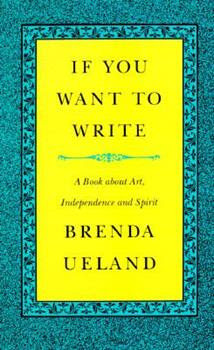
The first book I read about writing was Brenda Ueland's If You Want to Write: A Book About Art, Independence and Spirit.  Ueland is the friend you talk to when you fall in love with writing, because she's in love with it too.  She gets it. If You Want to Write was published in 1938, but so timeless in style and advice, it could've been written last week. She believes that everyone is talented, original and has something important to say...just what a new writer wants to hear! "Try to discover your true, honest untheoretical self," says Brenda. Wow! Somebody wants to hear from the "real me"? All right!

How can you not love a book with chapters titled "The imagination works slow and quietly," and"Be careless, be reckless! Be a lion, be a pirate when you write." Then there is my favorite "Why Women who do too much housework should neglect it for their writing." (Not a problem, Brenda!) I've written journals off and on since third grade, but when I read So You Want to Write in my 20's, I was encouraged to "Keep a slovenly, headlong, impulsive, honest diary." Ueland set me free to write and write and write without fretting over what I was writing, or what it might be some day. She turned me into an enthusiastic observer and journal keeper. I re-read So You Want to Write when I need to fall in love with writing again. (Sidebar--Greywolf Press brought the book back into print in 1983...and it has not been out of print since. That should speak to the quality of Ueland's advice.)

Anne Lamott's Bird by Bird came into my life when I was trying to turn all that journal writing into actual stories...and having serious doubts that I could do it. Anne Lamott is the big sister friend, who has been there, done that and is going to tell you Get over yourself! Don't listen to your inner voice screaming, Who told you you are a writer.?You stink! Don't freak out. Take deep breaths. You can only write one sentence at a time, word by word. (Or bird by bird, as per the title.) Whatever writer's block you have, or how horribly you judge your own work...Anne Lamott has already done it, much, much  worse! (If you need a visual, think of Cher in Moonstruck, slapping Nick Cage and yelling "Snap out of it!") When I'm overthinking or hypercritical to the point of inertia, I pour a glass of wine and spend a little time with Anne.


After decades of plugging away, I began to publish. However, the myth that "once you get your first book published, the next one is easier" is just that. A myth. I sold my first book. The next one took four years. (Although in the wild and wacky world of publishing schedules, the second book came out before the first one!) I didn't have an agent. In fact, I was discovering that getting an agent was harder than getting an editor's attention.I was sure that J.K Rowling and Stephen King were not having my problems with a-hiccuping career. That's when I happened on Stephen King's On Writing: A Memoir of the Craft. 

Personally, I'm not a fan of King's stories or style. However, I am in awe of how he has made readers out of people who don't like to read. I read On Writing, hoping he had some sort of magic formula. Of course he doesn't. However I discovered has a lovely conversational style when writing about his own life...and not homicidal Plymouth Furys or evil, sewer-dwelling clowns.

 King takes the "toolbox" approach to writing. If you don't possess and use these tools, you will never become a competent writer. His first tool: read a lot and write a lot. I'd been telling my own writing students that for years. I didn't know whether to be disappointed that his advice wasn't more exotic, or pleased that Stephen and I were on the same page, philosophically speaking. I didn't tell my students that by "writing a lot," King means that he writes every single day. That's a discouraging notion to a ten-year-old whose life is already scheduled to the gills.(He once told an interviewer that he wrote everyday except Fourth of July, Christmas and his birthday--but that wasn't true. He writes every day.) I also write every day, although not necessarily of the journaling-and-writing-project variety. I'm a moderator of a Facebook (OK Meta!) page that involves a lot of research and concise explanatory writing. This keeps my toolbox working between projects, and through the spells when my imagination seems to have dried up and blown away. (I tell my students to write on weekends and school holidays...and whenever they are happy or sad or mad. That winds up being pretty much every day...without them knowing it.)

The other "tools" King uses are so basic, I'm a little insulted he calls them tools; vocabulary and grammar. Vocabulary doesn't need to be voluminous (The last time I was required to know and use the word "salubrious" was in taking the ACT.),  varied and useful. If you get stuck, he suggests a thesaurus, preferably not the one that came with your word processing program. For grammar, nothing can beat our mutual old friend, Strunk and White's The Elements of Style.  While King never does tells how he can turn out bestseller after bestseller, he does remind me that if you don't read, write, mind your vocabulary and grammar, you're never going to write anything. On Writing is that professor you regard with awe, but when you actually talk to them, find they aren't magical or mystical...just hardworking and focused. 


My last friend is my teacher friend, Ralph Fletcher. (I don't personally know Mr. Fletcher, but after reading everyone of his many books, I feel as if I do.) I rely on Fletcher to inspire me as a teacher.  He is a master teacher of writing as well as a writer for children. He knows how kids think, and how to jazz their imaginations, free them of their writing hang-ups. His books contain writing exercises and topics (he doesn't use the word "prompts") for every age group--including adults. I've never taught a class without Ralph Fletcher at my side, in spirit. 

No one gets through this writing life alone. As the great Bette Midler sings "'cause yah got to have friends." Please feel free to introduce me to some of your writing friends. 

Posted by Mary Ann. Rodman 

Friday, September 14, 2018

This Magnificent Madness


“One tiny Hobbit against all the evil the world could muster. A sane being would have given up, but Samwise burned with a magnificent madness, a glowing obsession to surmount every obstacle, to find Frodo, destroy the Ring, and cleanse Middle Earth of its festering malignancy. He knew he would try again. Fail, perhaps. And try once more. A thousand, thousand times if need be, but he would not give up the quest.” -- J.R.R. Tolkien, The Return of the King
Last time I wrote about my ongoing search for a new agent. Until my stories find this champion, I continue to study in hopes of mastering my craft. And to that end, I told you about a new discovery, Donald Maass’ book, The Emotional Craft of Fiction.

In my quest, I returned this week to an old favorite, a steady, inspirational read by Christopher Vogler, The Writer’s Journey (Michael Wiese Productions, 1992)

While the book explores the monomyth, made famous by Joseph Campbell, and its impact in the storytelling process, Vogler expands the myth to include the writer herself. Every storyteller bends this archetypal pattern to her own purpose or the needs of her culture. That’s why the hero has a thousand faces, states Vogler. But at the heart of the story is always a journey.

“It's a dangerous business, Frodo, going out your door. You step onto the road, and if you don't keep your feet, there's no knowing where you might be swept off to.” -- J.R.R. Tolkien, The Lord of the Rings
The hero’s journey, you may remember, is found in all sorts of storytelling, most especially in adolescent and young adult. The profound truth of adolescence is the separation from parent, the search for uniqueness and the triumphant integrating into wholeness – the return to being. You can see how this hero’s journey is mapped out in J. K. Rowling’s Harry Potter and the Sorcerer’s Stone, Lois Lowry’s The Giver, and Rick Riordan’s The Lightning Thief.

Writers go on a similar journey, states Vogler. In fact, as he states, “The hero’s journey and the writer’s journey are one and the same.”


Most writers I know received their call to adventure at a young age. George Orwell knew he wanted to be a writer by the time he was five. Neil Gaiman also discovered his love of story at a young age, describing himself as “a feral child who was raised in libraries.” J.K. Rowling wrote her first story at age six, a book about a rabbit with measles. Raised by her grandparents, Lucy Maud Montgomery battled a debilitating sense of loneliness by creating imaginary friends, Katie Maurice and Lucy Gray, who lived in a fairy room behind a bookcase.

“The world is indeed full of peril, and in it there are many dark places; but still there is much that is fair, and though in all lands love is now mingled with grief, it grows perhaps the greater.” -- J.R.R. Tolkien, The Fellowship of the Ring

Writing is certainly hard work, “a perilous journey inward to probe the depths of one soul.” It is a fearsome process, no matter how many books one has under their belts. Sue Grafton, author of the wildly popular Kinsey Millhone Alphabet Series, once stated, “Most days when I sit down at my computer, I’m scared half out of my mind.” The mighty Stephen King noted, “I’m afraid of failing at whatever story I’m writing – that it won’t come up for me, or I won’t be able to finish it.” Even the mythic J.R.R. Tolkien said, as the first book of his iconic series was published, “It is written in my life-blood…I am dreading the publication, for it will be impossible not to mind what is said. I have exposed my heart to be shot at.”

So why write, we ask ourselves? We go through all this agony!

Says Mary Karr (The Liar’s Club), “I write to dream; to connect with other human beings; to record; to clarify; to visit the dead. I have a kind of primitive need to leave a mark on the world.”

Vogler shows that anyone – new as well as established writers – who sets out to write a story encounters all the trials and tribulations, joys and rewards of the hero’s journey.

A writer encounters her trickster, taking shape as computer problems, doctor appointments, family responsibilities, and time management issues, and other “enemies of the status quo" that also bring perspective on the process.

A writer meets the grumpy threshold guardian in the form of our inner and relentless judgments of our work. The tension rises as we face the searing remarks of a reviewer, a copyeditor, an agent, or an editor. And finally, we cross the Rubicon. We are published. But the journey is just beginning, as we “fully enter the mysterious, exciting Special World” of a published writer. The ordeals become all the more exhausting as we face deadlines and revisions and more rejections. As we build our platforms and speak – holy moly! – to readers. And our beloveds go out of print, and favorite editors retire, and face the rise of the internet dragons.

Along the way, if we are lucky, we meet our sidekicks, our Dr. Watson, our Clara Oswald, our Hermione Granger. Our Samwise Gamgee. Sometimes, if we're lucky, we meet our Dumbledore or our Gandolf the Wise wielding his magic purple crayon, who gives advice, who tells us to keep going, just keep swimming. Don’t give up.

Take hope, states Vogler, “for writing is magic. Even the simplest act of writing is almost supernatural…We can make a few abstract marks on a piece of paper in a certain order and someone a world away and a thousand years from now can know our deepest thoughts. The boundaries of space and time and even the limitations of death can be transcended.”

“It's like in the great stories, Mr. Frodo. The ones that really mattered. Full of darkness and danger they were. And sometimes you didn't want to know the end… because how could the end be happy? How could the world go back to the way it was when so much bad had happened? But in the end, it’s only a passing thing… this shadow. Even darkness must pass.” -- J.R.R. Tolkien, The Two Towers

--Bobbi Miller

Just a reminder about our wonderful giveaway, a chance to win your a copy of GREAT MORNING! ~ Poems for School Leaders to Read Aloud (Pomelo Books), by Sylvia Vardell and Janet Wong, and includes a poem by our very own April. See more information on her post here.

Wednesday, May 10, 2017

Wednesday Writing Workout(S): THINKING WITH INK!


Welcome to the second Wednesday Writing Workout created by
Sheboygan, Wisconsin author, educational consultant and veteran elementary and middle school classroom teacher Michael Leannah. It’s one of four from his recently-released book WE THINK WITH INK (Brightside Publications, 2016) that make our TeachingAuthors month of May even merrier.

As I shared in my introduction to the first WWW posted May 3, Michael writes fiction and nonfiction for children and adults. Tilbury House releases his picture book MOST PEOPLE in August.  Two other picture books are soon to follow: GOODNIGHT WHISPERS (Familius) and FARMER HUCKINSHUCK’S WILD RIDE (Splashing Cow Books.)  His stories have appeared in U.S. and Australian magazines.
He authored the award-winning SOMETHING FOR EVERYONE: MEMORIES OF LAUERMAN BROTHERS DEPARTMENT STORE and is the editor and contributing author of WELL! REFLECTIONS ON THE LIFE AND CAREER OF JACK BENNY.

WE THINK WITH INK is a trove of lessons, projects and activities designed to increase reading and writing skills in the classroom…and beyond.  It’s an ideas book for elementary and middle school teachers seeking to merge writing instruction into science, social studies and math classes.  It’s a guide for teachers looking to help students increase self-confidence and self-esteem.  It’s also a book for students working independently on creative writing skills as well as a manual for learners young and old – i.e. me and you, our TeachingAuthors readers - who aspire to be good – even published – writers.

“The WE THINK WITH INK approach relies heavily on the sharing and
critiquing of stories,” Michael shared.  “Our goal is publication, which means that people other than those in the classroom or group will read what we write.  Booklets are put together and made available on the shelves of the school library.  Story collections are sent home for families to read.  Our writing is distributed to local coffee shops and doctors’ waiting rooms.  Our booklets/anthologies are given as gifts to friends and family.  And yes, we write with the goal of someday sending our very best work to magazine and book publishers.”

Check out today’s WWW and try your hand, then be sure to return the next two Wednesdays in May to do the same.

Thank you, Michael, for sharing your smarts, your passion for writing and WE THINK WITH INK writing workouts with our TeachingAuthors readers!  Oh, and for making yourself available at contactmichael@gmail.com, should our readers wish to share their appreciation.

Enjoy thinking with ink!

Esther Hershenhorn

. . . . . . . . . . . . . . . . . . . . . . . .


DAILY PRACTICES

It is good to have at least a bit of structure in the classroom, as well as in the workings of a writers’ critique group. The Daily Practices outlined below will help to “get the juices flowing” when beginning a new assignment and to keep the focus where it belongs throughout the writing session.

For much of the work described below, I encourage the use of a chalkboard or white board. It is good for all involved to hear and see the words and sentences being presented.


The Daily Question
As students enter the room, they look to see the Daily Question on the board. They take their seats and write their answers, with sharing and discussion to follow. This whole activity takes as little as five or ten minutes, but it gets the class thinking, reasoning, writing, articulating, and listening. A lot of bang for the buck.

Here are some samples of Daily Questions:

What are you looking forward to doing later today?
What is making you nervous about next week?
What happened the last time you felt proud of someone in your family?
What would your grandmother say if she could see your bedroom right now?
What makes your best friend so good?
What farm animal is like a member of your family?
Name three good things about Mondays.
Tell about something unpleasant that happened last week.
Would you rather be a wolf, a bear, or a skunk? Why?
Write the dialog between someone you know who is very old and someone you know who is very young.
Name one thing you would change about a relative or friend so that life would be better for him/her.

The answers to most of these questions will vary from day to day, so don’t be afraid to reuse the questions from time to time. Add questions of your own to the list, but do avoid questions that can be answered with a simple “Yes” or “No.” Set the expectation for students to include explanations with their answers.

It’s good to remember that some of the best writing assignments begin with discussion, so consider using the Daily Question as a launching pad for a major writing assignment. I often used the Daily Question to address difficult situations going on in the lives of my students, such as bullying or family troubles. Start with a pertinent question, allow for a discussion, then get the class writing.


Words of Wisdom (W.O.W.)

Compile a list of meaningful quotations from the famous (or not-so-famous) to be used in place of the Daily Question occasionally. (I used W.O.W. every Friday.)

Students write the quotation and a reaction to it. Do they understand what the writer is trying to say? Do they agree with the message behind the quotation? Can they think of a time in their experience when the message applied to them?

Using W.O.W. as a writing activity has many benefits. Wisdom is imparted, of course. Attitudes might start to change, and students become acquainted with some of the great thinkers in history.

Sooner or later, they begin to recognize “words of wisdom” in the books they are reading and in the movies they see. The contributions eventually start to trickle in. Someone appears with words on a scrap of paper. “My favorite singer said this after her concert the other day. Do you want to use it as a W.O.W.?”

It’s just a matter of time until students start producing original pieces of wisdom written well enough to be presented to the class when it’s time for W.O.W. That is a time of great celebration.

Here are a few W.O.W.s to get you started:

The man is richest whose pleasures are the cheapest.
— Henry David Thoreau

It is only when you see people looking ridiculous that
you realize just how much you love them.
– Agatha Christie

Don’t cry because it’s over, smile because it happened.
– Dr. Seuss

My mother had a great deal of trouble with me,
but I think she enjoyed it.
— Mark Twain

Children need love, especially when they don’t deserve it.
— Harold Hulbert

You have everything you need by the time you're 12 years
old to do interesting writing for most of the rest of your life.
– Bruce Springsteen

Often, a W.O.W. can be used as a lead-in to a writing assignment. (“Write about a time when your mother or father may have been angry
with you, but later seemed to see things differently and appreciated what you did.”)

Wednesday, May 3, 2017

Wednesday Writing Workout(S): THINKING WITH INK!


Yes, indeedy.  That’s Wednesday Writing WorkoutS, plural.

And that’s because Sheboygan, Wisconsin author, educational consultant and veteran elementary and middle school classroom teacher Michael Leannah has made our month of May even merrier by generously contributing 4 Wednesday Writing Workouts from his recently-released book WE THINK WITH INK (Brightside Publications, 2016).

Michael writes fiction and nonfiction for children and adults.  Tilbury House releases his picture book MOST PEOPLE in August.  Two other picture books are soon to follow: GOODNIGHT WHISPERS (Familius) and FARMER HUCKINSHUCK’S WILD RIDE (Splashing Cow Books.)  His stories have appeared in U.S. and Australian magazines.

He authored the award-winning SOMETHING FOR EVERYONE: MEMORIES OF LAUERMAN BROTHERS DEPARTMENT STORE and is the editor and contributing author of WELL! REFLECTIONS ON THE LIFE AND CAREER OF JACK BENNY.


WE THINK WITH INK is a trove of lessons, projects and activities designed to increase reading and writing skills in the classroom…and beyond.  It’s an ideas book for elementary and middle school teachers seeking to merge writing instruction into science, social studies and math classes.  It’s a guide for teachers looking to help students increase self-confidence and self-esteem.  It’s also a book for students working independently on creative writing skills as well as a manual for learners young and old – i.e. me and you, our TeachingAuthors readers - who aspire to be good – even published – writers. 

“The WE THINK WITH INK approach relies heavily on the sharing and critiquing of stories,” Michael shared.  “Our goal is publication, which means that people other than those in the classroom or group will read what we write.  Booklets are put together and made available on the shelves of the school library.  Story collections are sent home for families to read.  Our writing is distributed to local coffee shops and doctors’ waiting rooms.  Our booklets/anthologies are given as gifts to friends and family.  And yes, we write with the goal of someday sending our very best work to magazine and book publishers.”

Check out today’s WWW and try your hand, then be sure to return the next three Wednesdays in May to do the same.

Thank you, Michael, for sharing your smarts, your passion for writing and WE THINK WITH INK writing workouts with our TeachingAuthors readers!  Oh, and for making yourself available at contactmichael@gmail.com, should our readers wish to share their appreciation.

Enjoy thinking with ink!

Esther Hershenhorn

P.S.
Please accept my SINCERE apologies for my laptop's
misbehavior - as evidenced by the unevenly-back-grounded
text below!  My Lenova Yoga and Blogger are not playing well
together.  We're workin' on it!
. . . . . . . . . . . . . . . . . . . .

     In the process of writing our stories and poems, we learn from each other. We share our stories, compare notes, ask for honest opinions, help each other to improve our skills.

Any writers who work together, be it in the classroom, in a critique group, or just two friends who regularly get together to compare stories and give feedback, must develop a sense of trust. They must come to know each other quite well. To jumpstart the entire process, it is good to begin with a “Get to Know You” activity or two. In the school room, the following activities may be used during the first week or two in September. Because we are complex individuals and our feelings change over time, it is good to work in a “Get to Know You” activity once every couple of months throughout the year.

                                                            All About You

     Teachers may give this as a piece of homework on Day One and ask for it to be returned in one week. This gives participants plenty of time to analyze and describe their interests, likes, and dislikes.

Encourage students to explain their answers fully, using well-written sentences. Because the papers will later be shared (read aloud or passed around to be read silently), participants should provide information that is interesting and — to an extent that is comfortable — revealing.

Students are required to answer at least seven of the ten questions. When it is time to share, students will read their answers aloud, or have a friend or the teacher do it.

1.       In what cities have you lived?

2.      What do you like about your favorite food?

3.      What character in a book or movie do you admire?

4.      What character in a book or movie scares you?

5.      What character in a book or movie would you like to be for one hour?*

6.      What animal would you like to be for one hour?*

7.      What is your most prized possession?

8.     What’s the scariest or most dangerous thing you’ve ever done?

9.      What would you say or do if you met your favorite famous person?

10.  What do you think you’ll be doing when you’re 30 years old?

             * When asking a “What would you like to be” question, I recommend putting a time limit on it. Would I like to be a lion or a mosquito or the president of Germany, Brazil, or Zimbabwe? For an hour, maybe, but no longer than that.

                                                           Interviews

        This “Get to Know You” activity works well as an ice-breaker for students meeting for the first time, as well as a way for familiar students to get to know each other even better. I suggest using this activity several times throughout the year.

Allow time for each student to write five or six questions, which, if approached correctly, is an exercise in creative thinking by itself. The famous journalist Jim Nicholson once said, “There aren’t any boring people; there are just boring questions,” so encourage unusual questions: “Which of your relatives do you like the most?” “What is a smell you really love?” “What happened the last time you laughed your head off?”

Place the students in groups of two or three. Students will ask each other the questions and record the answers. The interviewers will then report to the class and share the information learned during the interviews.

Notes to the Teacher

Perhaps my favorite method of “Getting to Know You” involves the writing of notes back and forth between student and teacher. I found an old-fashioned rural mail box at rummage sale and used it in my classroom for this purpose. (If a real mailbox is not available, a decorated shoe box will suffice.) When students placed a note or letter inside the box, they raised the little flag on the side so I knew a delivery had been made. I respond promptly with a note passed during lunch or some such time.

In the rush of the day, students sometimes don’t have the opportunity to share news concerning personal troubles, worries, and concerns (divorce, sickness in the family, older siblings moving away, etc.). The mailbox allows students to communicate with the teacher in a way that is secret, safe, and satisfying.

I have found this simple practice of offering the chance to write “Notes to the Teacher” to be very important and meaningful. There is something very nice about a kid revealing a wounded piece of ego and hearing from his teacher in a note: “When I was your age, that happened to me too.”

     As the year goes on, “Get to Know You” activities become increasingly unnecessary, because, due to all the writing and sharing and critiquing going on in the classroom every day, members of the class naturally get to know one another better and better every day.


Monday, January 30, 2017

Five Fingers/Five Titles for Teaching Young Authors (And Those Young-At-Heart)


So, to answer April’s insightful question posed in her Friday post, you can find my current fingerprint all over today’s post, literally and figuratively.

For a variety of reasons too many to share, it’s the TEACHING part of my TeachingAuthor handle that currently fills my days. I’m a gardener of sorts, seeding and feeding writers, helping others tell their stories to young readers.  I pinch myself daily, honored to be doing so.  I also remain grateful.  Ironically, it is I who likely blooms fuller from helping such singular folks grow their diverse offerings.

As luck would have it, I often have the chance to seed and feed Young Authors. I take joy when sharing writing resources, opportunities, connections and book titles (how-to’s, biographies, autobiographies, related fiction) with teachers, librarians, parents, booksellers – and best of all, the young writers themselves who squeeze me out like a sponge.

Here are five titles I’ve recently added to my Young Authors hand-out, though in truth, all five speak to writers of all ages.

👍WRITING WITH ROSIE by Patricia Reilly Giff (Holiday House, 2016)
Thumbs up for award-winning author Patricia Reilly Giff’s writing how-to book for writers and readers ages 8-12.  The subtitle says it all: You can write a story too.
In conversational chapters that engage, amuse (thanks to her dog Rosie), inform and inspire, Giff introduces the elements of narrative (character, plot, setting, conflict, resolution), shares how she dealt with those elements, offering specific Show, Don’t Tell examples from her published books (CAN YOU SEE HOW I DID IT?), then gives the young writer a chance to try his hand (YOUR TURN). Kirkus called it “the best recent writing guide for young readers and writers.”  Giff knows her audience and how to reach them in age-appropriate meaningful ways.  Holiday House also offers an accompanying Educators Guide with Instructional Standards.  Giff’s spirit abounds.  “Writing is a joyous part of my life. I want that joy for you too, because we all have stories to tell.”

👌 WHERE ARE THE WORDS? by Jodi McKay and Denise Holmes (Albert Whitman, 2016)
 McKay’s introduction to punctuation marks and how they work to tell a story is A-OK!  Thanks to Holmes’ reader-friendly illustrations, the marks come to life, building on each other’s expertise to help Period tell his tale.  The resulting story appears at the end, punctuated correctly.  Young readers ages 4 to 8 come to know each mark in a way that makes their usage unforgettable. 

👏 HOW THIS BOOK WAS MADE by Mac Barnett and Adam Rex (Disney-Hyperion, 2016)
Applause! Applause! There’s finally a fun picture book that SHOWS readers in pictures and in words how a writer’s idea becomes a book they can hold in their own two hands. In between there are “dangerous animals, an angry mob, unreasonable editorial demands, high-seas adventure and traffic.” The Narrator-dash-Writer writes and rewrites and works with his editor so the illustrator can make his art in a timely fashion so the publisher can print the book so it eventually can sit reader-ready on a shelf! There’s just enough absurdity to keep the reader laughing but just enough reality to keep the reader and future writer learning. Barnett and Rex make making a book understandable and fun.

✋ THE UNCORKER OF OCEAN BOTTLES by Michelle Cuevas and Erin E. Stead (Dial, 2016) 
High Fives to Cuevas for her gorgeous writing and Stead for her beautiful illustrations that capture the uncorker’s one-of-a-kind life and heart-stopping situation. This book deservedly sits on numerous Best Books of 2016 lists – SLJ, the Boston Globe, People Magazine and Time. The story is a keeper, like the unaddressed party invitation the nameless character receives.  Bottled messages especially appeal to young writers. Wonder prevails and gets us all “What-if?-ing.” Just think about the author, to launch a story idea.  Or think about the recipient.  Maybe think about the message.  It’s a terrific device when a writer needs to step into another person’s – or character’s – shoes, as both the writer and the reader. A bottled message and its mystery make a swell story hook, too.  

✌ A CHILD OF BOOKS by Oliver Jeffers and Sam Winston (Candlewick Press, 2016)
V is for victory in Jeffers’ prose poem.  Beautifully illustrated by Winston’s clever typographical images created from text from favorite classics, all the words – both Jeffers’ and Winston’s - sing the praises of the travel opportunities stories bring the reader. Might this be the perfect explanation for how readers become writers?  How might young writers create text images from their favorite stories to create stories of their own? (Oh, to have a classroom of young writers ripe for such an assignment!)

🤞 My fingers are crossed you’ll come to know, explore and use the above five titles, whether sharing them with Young Writers or telling your stories.

Enjoy!

Esther Hershenhorn

Monday, September 12, 2016

A Book (PLUS Book Giveaway) for Every Children’s Book Writer!


No matter where you are on your Writer’s Journey – still thinking about writing for children and thus refusing the Call to Adventure, half-way past the First Threshold and revising your story or in the throes of a Supreme Ordeal while readying your manuscript for submission, I’ve got the perfect guide book to keep you moving forward:  Cheryl Klein’s THE MAGIC WORDS (W.W. Norton, 2016).

As luck would have it, you can have it!  Simply enter our TeachingAuthors Book Giveaway at the end of this post.

For those new to writing for children, Cheryl Klein’s credits as executive editor at Arthur A. Levine Books/Scholastic Inc.  guarantee writers the kinds of insights, techniques, exercises and reflections that are essential when placing the right words in the right order – “the magic words,” she says, that allow our books to change lives.

And not just our readers’ lives, but our writers’ lives too.

Knowing how this editor of award-winning books views her life’s work and passion speaks volumes for all she shares in THE MAGIC WORDS.

“I think of my work as an editor as being a mechanic for stories:  I take books apart, examine their component pieces, and help my authors assemble them again as more elegant and polished machines. My writing for writers, from this point of view, is the instruction manual that comes with the cars — how I articulate the instincts and knowledge about fiction I’ve gained over fifteen-plus years of working with writers and their books.”

Chapter by chapter, Cheryl Klein mines her years of editorial experience to clearly and thoughtfully instruct and show writers how to use and develop their gifts to craft a strong (and personally meaningful) story concept told in an appropriate format for their intended audience – a story that builds bonds between readers and characters, that keeps those readers engaged and turning the pages, that speaks to them with truth and thus is worthy of publication.

Each chapter offers Exercises, well-known referenced titles and concrete examples from esteemed authors such as Lisa Yee and Trent Reedy, all to support the stated take-away – The Power of Plot, for example, Seven Ways to Look at a Scene, Fundamentals of Voice, or Twenty Revision Techniques. Informational Asides, Book Map instructions and Checklists for Character, Plot and First Pages add to the content.

Together, the chapters underscore the 5 qualities this editor deems essential to magic-making:  good prose, rich characters, strong plot construction, thematic depth and powerful emotion, for both the reader and the writer.

A Recommended Reading List is also included.

Readers close the book smarter about story, craft, genre and format possibilities, children’s book literature and publishing as well as smarter about themselves as writers.

My all-time favorite chapter?  Chapter 16 – Perspective and Polishing.  Readers are offered the first scene of a YA novel, followed by Cheryl Klein’s annotated notes, followed by author Morgan Kass’ revised draft, followed by Annotations Part II. Talk about Show, Don’t Tell!  This eye-opening chapter should be compulsory reading for every writer of fiction. 

Speaking of which, I’ve now added THE MAGIC WORDS to my Recommended Reading lists for my University of Chicago’s Writer’s Studio and Newberry Library Workshops.

Why not see for yourself?  Click HERE to read an excerpt from Chapter 2 – Experience and Emotion -  Cheryl posted August 28 pre-publication.


MARY POPPINS creator P.L. Travers wrote, “We are all looking for magic…But indeed we have to wave the wand for ourself.”

Thank you, Cheryl Klein, for helping us wave our wands.

Happy Magic-Making!

Esther Hershenhorn

. . . .

AND NOW FOR OUR BOOK GIVEAWAY!

Use the Rafflecopter widget below to enter to win a copy of Cheryl Klein’s THE MAGIC WORDS (W.W. Norton).  The giveaway is open to U.S. residents only and ends September 26.

You may enter via 1, 2, or all 3 options.

If you choose option 2, you MUST leave a comment on TODAY'S blog post below or on our TeachingAuthors 
Facebook page. If you haven't already "liked" our Facebook page, please do so today! 

(If you prefer, you may submit your comment via email to: teachingauthors [at] gmail [dot] com.)

Email subscribers: if you received this post via email, you can click on the Rafflecopter link at the end of this message to access the entry form.

Good Luck!

P.S. If you've never entered a Rafflecopter giveaway, here's 
info on how to enter a Rafflecopter giveaway and the difference between signing in with Facebook vs. with an email address.


a Rafflecopter giveaway

Monday, October 19, 2015

Thumbs Up for Another Kate Messner Book That Helps Us Walk the Walk


KateMessner is the first to admit: writing with her students made her a mentor – and – a far better teacher.
Her newest Stenhouse book, 59 Reasons toWrite, offers teachers 59 Mini-lessons  - plus Q & A's, prompts, daily warm-ups and assignments, to help them become mentors and better teachers, too.
Walking the walk is suddenly doable – for all writers, classroom teachers or not.

An outgrowth of her online summer writing camp Teachers Write, the book’s purposefully designed to get us writing every day, whether on our own or as part of a group.
Chapters move from getting started to organizing our time and stories, through narrative elements such as characters, point of view, voice, mood, setting, plot and pacing, nonfiction and fiction needs and poetry to writer’s block, revising, critiquing and reflection.
Everything we ask of our students Kate and her “faculty” of award-winning authors ask of us.

It’s the luminous 52+ faculty members who both teach and inspire, underscoring how, when it comes to writing, we’re all in this together. 
Again, walking the walk is suddenly doable, thanks to this insightful, comprehensive, hands-on text.
And who wouldn’t want to learn from talents such as Linda Urban, Donna Gephart, Jo Knowles, Shutta Crum, Jenny Meyerhoff and Barb Rosenstock, just to name a few?

I was especially taken with the honest Q + A – The Best of the Q-And-A Wednesday sessions from the online summer camp.
Again, notables truthfully responded to a host of questions, including those about intimidation, making and finding writing time, connecting with our characters, handling point of view, the passage of time and too much description.

Tools, short-cuts, exercises.  The list of writing aids goes on and on.  Think Writer’s Notebooks, three-column brainstorming, outlining, world building, selecting and using mentor texts. 

“Write,” Kate tells her readers, “because you have things to say – arguments to make, stories to tell, poems to share – and no one else in the world has your unique voice with which to say them.  And do it,” she adds, “for the young writers you hope to inspire.  In making time for your own writing, you’ll be crossing a barrier, joining them as real, vulnerable members of a community of writers.”

"Amen!" I say, along with "Thank you, Kate!"
59 Reasons to Write is a terrific follow-up to Real Revision, offering yet another valuable writing book for those of us lucky enough to be “TeachingAuthors” and writers.

Enjoy, learn and write!  
 
Esther Hershenhorn

Monday, June 2, 2014

A MUST Book for Every Writer's Bookshelf!


I’ve been chomping at the bit while I awaited my scheduled posting time, that’s how eager I am to share Dani Shapiro’s STILL WRITING: THE PERILS AND PLEASURES OF A CREATIVE LIFE (Atlantic Monthly Press, 2013) with our TeachingAuthors readers.

How did I ever miss this book when it released last November!
It’s a MUST book for every writer’s bookshelf that beautifully delivers the front flap copy’s promise: “Shapiro offers a gift to writers everywhere: an elegant guide of hard-won wisdom and encouragement for staying the course.”

Part personal memoir, part meditation on the artistic process and part advice on craft gleaned from a twenty-year writing and teaching career, STILL WRITING inspires, encourages, informs and delights, and much like a children’s book, leaves the writer with hope.

When it comes to writing, Dani Shapiro bares both the good and the not-so-good.  As a result, I closed the book and was once again reminded that – at least when it comes to my writing, I am normal.

I’m NOT alone. I’m not the odd-woman out.  I’m not the only one struggling here.

Much like Anne LaMott did in her BIRD BY BIRD instructions on writing and on life, Dani Shaprio gave me permission to do what I cannot not do, i.e. write.

I like how Shapiro divided the book and the creative process into Beginnings, Middles and Ends. Her insightful and instructive bon mots within each section never fail to speak the truth whether addressing topics such as Riding the Wave, our Inner Censor, a Corner (start small) or Building the Boat, Courage, Rhythm and Distance or Exposure, Risk, Tribe and Envy.

My three favorite quotes from STILL WRITING?

“The only reason to be a writer is because you have to.”

“My words are my pickax, and with them I chip away at the rough surface of whatever it is I still need to know.”

And, finally, these words Shapiro shared about approaching her Writing Workshops, which had the writing teacher inside of me weeping:

“We – this ragtag group of ten or twelve – are going to become a single organism. A collective unconscious.  We are going to set aside our petty concerns and focus, instead, on the sentences in front of us.  We will train our best selves – our empathic understanding, our optimism, our critical eye – to understand what each of us is trying to do.  We are going to laugh, possibly cry, argue, roll our eyes.  But we’re going to do it with respect, and even with love.”

I can’t wait to begin each of my Summer Newberry Library Workshop sessions with relevant readings from this life-affirming/writer-affirming book. 

As an aside, I openly confess: I have a writer’s crush on Dani Shapiro.

I’m taken with her smarts, her raw courage, her honesty, her talent, and most of all, her generosity in sharing all she’s come to live and know first-hand, as a writer, as a teacher, as a daughter, as a wife, as a mother, as a friend, all in the service of keeping writers keeping on.

I’ve now read her poignant, beautifully-written memoir SLOW MOTION: A Memoir of a Life Rescued by Tragedy.                                                                                                                         
Her memoir DEVOTION: A Memoir and the novel FAMILY HISTORY top my book pile.

I’ve also sent on links to Dani Shapiro’s blog to several of my students and writers.

"There is only this moment,” Shapiro writes, “when we put pen to page.”
STILL WRITING will help you do just that.

Enjoy! And do share your thoughts once you lose yourself as I did in Shapiro’s book and writing.
Esther Hershenhorn