Showing posts with label Mary Ann Rodman. Show all posts

Friday, June 5, 2026

Revising a Book is Like Renovating a House --Sort of

   Before I tell you why renovating is like revising, I'll tell you the one obvious way in which they are not alike. In renovating a house, I am revising someone else's work. (Obviously, I didn't build the house originally.) 

    OK, on to the analogy.

    Short backstory. We have lived in Atlanta since June 200, longer than my husband or I have lived anywhere. He retired two years ago and wanted to move. He specifically wanted to move back to his hometown, a place he hasn't lived since 1983.  He had his reasons for wanting to move. I had mine for staying put. We came to an agreement that we would move only if we fell in love with a house. I thought the likelihood for that happening were slim to none. 

I was wrong. We found a house. This house. Built in 1925 and located in a lovely Historical District.


End of backstory.

 Sometimes I fall in love with a story idea and just start writing, without worrying about where it will end up. With this house, we had the usual house inspection before buying.  No foundation cracks and no termites, the two things southern homeowners fret about. The house had good "bones" but there were a few things we wanted to change. 

We had already figured out that what we originally thought was a garage was actually a workshop.  Large for a workshop but in no way big enough for a car, let alone two. 

That's OK, we thought. It's a big yard. We'll just tear down the workshop and build a garage. We learned that any changes to the exterior and yard had to be approved by the Neighborhood Historical Commission. Running these plans by a committee is not unlike working with an agent who points out why your idea is or is not acceptable, in terms of sales. (I do not have an agent but have a lot of friends who do. I've heard their stories.)

Then my husband, the cook of the household, decided the kitchen needed help. It was not an original to o the house, but added by some previous owner. It had some odd features such as a corner fireplace and a mirrored wall.

Kitchen selfie in the mirrored wall. Fireplace to right.

Most importantly for said husband, it had terrible flow and was too small. And while we were at it, why not add a covered back porch? Plans drawn and revised to the specifications of the Historical Commission.

"Revising" the kitchen and adding a porch meant to demolishing the whole back of the house. We discovered that the kitchen had been added before the days of building permits.

This is what the "framing" looked like. I thought that our contractors had randomly nailed up some boards to keep the frame from caving in. No.  That was the frame.  (This was the point where I seriously questioned the guy who inspected the house before sale)

I write out of sequence. Whatever scene is in my brain at the moment, that's what I write. If I come to a spot where I don't know what comes next, I type a couple of lines of giant Xs in red. I will return to this later on. Discovering what was holding the old kitchen "together" was like finding a page of red Xs. You have a great start, an envisioned ending....and a yawning chasm between the two. And oh yeah, the existing porch had been built over an old hot tub.  

If this were a book for which I had no contract, I might have just thrown up my hands at this point. However, this was a house we had bought. Fortunately we had a great contractor who, after he stopped laughing, figured out how to rebuild the kitchen and porch. Another set of plans to the Historical Commission, who move with the speed of the Supreme Court. Construction stopped until we heard from them.

That was just the first floor. The second floor had it's own issues that involved...you guessed it. Another set of plans to the Historical Commission. 

As I write this, we are getting down to the "final edit." The floors are being refinished, and the screened porch, framed. How long did it all this "revising" take? Eighteen months. I didn't mention the obvious cosmetic changes like repainting every room, changing all the light fixtures and door knobs to something more period appropriate. Replacing the 70's linoleum in the front hall with ceramic tile. Taking down a set of random "columns" in the office that were hiding the fact that that the floor was uneven. 

In writing, I can revise and revise and still never be satisfied with my work. After awhile. I'm not revising; I'm just re-arranging nitpicky details that don't really matter. I'm revising to put off the inevitable...showing my masterpiece to someone who may or may not like it. 

With the our new house, we had only ourselves to please (and of course the Historical Commission.) The inevitable is now putting our current house up for sale. Which means...another renovation job. Gutting a master bathroom. A new roof. Painting inside and out. But it's time to get on with it. 

We hope to move by mid-July.

Posted by Mary Ann Rodman


Friday, March 6, 2026

Writers Groups--Now New and Improved by Mary Ann Rodman

 Continuing with our current topic "Something New for the New Year"....I have joined a new writer's group. Actually the group itself has been around awhile, it's just taken me this long to remember to reserve Thursday mornings to meet.

What's really new is that this is a Zoom group. The members are friends from the Vermont MFA program and live in Minnesota or Wisconsin. I live in Atlanta. 

Many years ago, before iPhones and texts and Zoom, I belonged to a metro Atlanta critique group. "Metro Atlanta" covers about 8 counties, and I live at the northern edge of the area. The rest of the group lived a couple counties to the east. The first Sunday night of the month, I would drive 100 miles, round trip, to group. Atlanta traffic is always terrible, especially Sunday nights when people are returning from out-of- town.

This did not stop me from meeting with the group known as WINGS. (This was so long ago, I no longer remember what WINGS stood for! ) They were terrific writers and critiquers, or I certainly wouldn't have made that long trek. These four ladies critiqued all but one of my published books. (My Best Friend sold just before I joined the group.) I could not have finished, let alone sold, any of them without their sharp insights and thoughtful questions. It was like having four editors, before sending my work to an actual editor. 

We were as diverse a group as you could find. What brought us together was a passion for children's literature and a desire to contribute to the genre. We were each others biggest fans and greatest critics. The Women of WINGS were the best.

But as they say, all good things must come to an end. Members retired or moved or developed health problems.  New members joined, but the group no longer was exclusively children's writers. There were writers whose work I was at a loss to critique (especially poetry). By then I was traveling to Mississippi once a month trying to look after my father, (which could be a whole book in itself.) 

I became a former member of WINGS.

Without a monthly meeting to spur me on, my creative output shrank. Long distance elder care and the seven hour drive to see Dad zapped my energy, creative and otherwise. Some years, this blog was all I wrote. Dad died, but I was still driving to Mississippi to settle his estate and clear out his semi-hoarded house. Then COVID hit. I was drained. (Weren't we all?) What's the point of writing I thought. It's not like I had an agent or editor panting for my work.  

I missed WINGS but there wasn't anything I could do about it. There wasn't another group around devoted solely to children's writing. (At least not any that wanted to new members.)

Then, I got an email from a friend from the Vermont writing program. She proposed that a bunch of us from the program and her local SCBWI meet weekly on Zoom. This would not be a critique group, but more of a support group. There would be a brief discussion of how we were doing and what we were working on. Then we would sign off for an hour, write, then check back in and talk about how it went. 

This was the kick in the pants I needed to go back to a first draft that had been growing cobwebs since 2013. Knowing I couldn't write longer than an hour freed me. I can write for an hour! When I check in the next Thursday, I can pick up where I left off and go another hour.

I know. An hour a week. Big deal. Stephen King write all day every day, 364 (I hear he takes his birthday off). I think about Toni Morrison who wrote at 4 am before her day job. I remember my old self, writing in car pool lines and the skating rink where my daughter spent 80% of her childhood. But life changes. I'm ....gasp...older. What hasn't changed is my love of writing. The Thursday Morning Zoomers remind me of that. Sometimes we don't remember why we are trying to write in a chaotic world that doesn't support creativity. We tell each other that is exactly why we need to keep going. Thanks to the Zoomers, I feel pretty confident of finishing another draft of my book this year. (Now whether anyone will ever read it is another issue. I try not to worry about that.)

So that's my new-old thing--writer's group. Writing is a solitary pursuit. There is no schmoozing at coffee break or getting together after work for happy hour. Sometimes you. have to crawl out of your cave and communicate with your own kind.

Once again I'm in the middle of major life changes--downsizing while renovating our forever house--in another state. So mostly I'm plodding along, an hour a week. Is it working? Some Thursdays I write for another couple of hours after we sign off. For the record, I wrote the first draft of this post during my Zoomer hour yesterday.

Keep writing, y'all.  The world needs us.

Posted by Mary Ann Rodman

Friday, December 19, 2025

I'M GRATEFUL FOR AN AFTERNOON IN AMSTERDAM

 I'm not sure that "grateful" is the right word for this occasion. "Blessed" may be the better word.  After all, how many people ever get to visit their number one bucket list location? In April, Craig and I went to Amsterdam. April is the best time to be in the Netherlands. The weather is temperate, if occasionally drizzly. The tulips are in full and fabulous bloom. (Whatever else you might do in Amsterdam, you have to see the Keukenhof Gardens. Words fail me. See picture.)


Amsterdam is the most European of cities. Ancient architecture cozies up to postwar modernist buildings. Cobblestone streets and canals. Cathedrals and museums. Streetcars and swarms of cyclists. The very few personal cars are tiny and electric which makes for surprisingly clean air for an urban area. 

As exciting as all this was, there was one reason I was in Amsterdam. Anne Frank. Amsterdam was her city and I'd wanted to see it since I read The Diary of a Young Girl in fifth grade. Never had a book affected to me the way The Diary did. I felt as though I knew Anne. I identified with a precocious girl who was not taken seriously by adults. To a degree, I knew what it was like to be a pariah in your own town. I read and re-read her book so many times as a teen that I could recite whole entries. I absorbed the geography of her world...the "secret annex" in her father's office building where she hid for 25 months with seven other people. The Westertoren of Westkirk church, just a block from the Annex, whose carillon bells comforted Anne. Her apartment home on the Merweideplein, her school and the bookstore where she first spied the red and tan plaid cloth covered notebook that became the diary...these places were as real to me as my own neighborhood. 

                                                        The Anne Frank House, Westertoren on right.

Yes, we toured the Annex (known as the Anne Frank House. Warning: you have to buy the tickets seven weeks in advance, online at the House site...on a Tuesday at 4am Eastern time. The tickets sell out for the week in under an hour...and NO tickets are sold at the house...as some disappointed tourists learned while we were there.) The house was exactly as I expected it to be...except smaller.  I have performed in the stage version of The Diary and our stage was twice the size of the tiny common room in which the Franks and the others spent their days.  That room had no windows and was incredibly stuffy. The bedrooms did have windows but with blackout shades. Each room was smaller that the one before. I could only imagine how confined all of their occupants felt, but especially lively Anne. By the time I left, I was dizzy from lack of air and too many strangers pressing against me.

The Annex smelled of old wood and faintly of canal water. The front offices were furnished with desks and office equipment and advertisements for Mr. Frank's company, Opekta. The Annex area was empty, but large picture displays showed how the rooms looked during the Frank's stay. I came away with a better understanding of how physically difficult it had been to live in the Annex, to say nothing of terrifying.  The house was a shrine to the experience of the Franks and their friends, but I had a hard time feeling their presence. The only time I felt that connection was when the Westertoren chimed. 

I had anticipated that the Annex might affect me this way. That's why I booked a private tour of Anne's neighborhood in the Rivierenbuurt (the River District). I knew I would feel Anne's spirit there. 

                                                        The Anne Frank statue 

I met my guide at the Anne Frank statue in Merwedeplein Park. The statue depicts Anne the day she left her home for the last time...dressed in layers of clothes, her school bag under one arm and a small satchel in hand. That July day was warm and rainy; the family had a nearly 3 mile walk to the Annex.

Wide sidewalks border the park. The many pictures of Anne and her friends playing hopscotch and jumprope on that pavement came to mind. The neighborhood was built in 1929. By the time that the Franks' moved there from Germany in 1934, the park perimeter was marked by low, neatly trimmed hedges. No trees. Today the area is a lovely, leafy urban oasis. Tidy brick apartment flats face each other across the park. The Franks lived on the second floor at Number 37. The apartment has been restored to its pre-war appearance but is not open to the public. Instead, it's a retreat for refugee writers who cannot write freely in their home countries. (Anne would've liked that!) 


                                                                Number 37 Merweideplein

I have read every book published by Anne's friends, a surprisingly large number of whom survived the Holocaust. The Merweidepleine of the 1930's was almost entirely populated by German Jews, fleeing Hitler. Anne's girlfriends--Hanne, Sanne, Jacque, Nanny and Ilse--were constantly in an out of each other's apartments, They announced their presence by whistling through the mail slot in the front door. Anne could not whistle, but she could sing. She sang a series of notes--la-la-la-- into the slot, and her friends would know it was her. 

Around the corner stood the  bicycle sheds where Anne kept her beloved bike, until the Nazis forced the Jews to surrender them. The bike sheds also served as a sort of hangout place for the children before and after school. More than once Anne's diary speaks of meeting "an attractive boy"at the sheds. (Anne was quite the flirt.)

                                                               Montessori 6th (still a school)

                                                          
It must've been a short but pleasant bike ride to Anne's beloved Montessori School. Anne loved school and was heartbroken when the Nazis evicted Jews from "gentile schools" in 1941. She skipped a grade so she could join her older sister Margot at the Jewish Lyceum. The Lyceum was nearly three miles away from the Merweideplein without the benefit of bikes. The girls only attended the Lyceum for the 1941-42 school year. In the fall of 1942, the school closed because most of the students had been deported or were in hiding, including Anne and Margot.

With the 1940 Nazi invasion of the Netherlands, Jews were prohibited from most public areas--city parks, beaches, swimming pools, tennis courts, cinemas, theaters and on and on. Anne and her friends compensated for the lack of outside entertainment by forming a ping pong club since most of them had access to a table and equipment at home. After a strenuous afternoon of ping-pong, the girls would go in search of refreshment, at one of the two neighborhood ice cream parlors that would still serve Jews. This is one of them, the Adelphi.  Today it is a Japanese-Peruvian eatery, but Anne's image is immortalized inside.

It was a warm spring afternoon when my guide and I strolled the sidewalks of Anne's neighborhood. He was as versed in "Anne Lore" as I and we chatter about Anne and Margot and Hanne and Ilse as if they were our own friends. I felt as if one of the girls might suddenly pop from around a corner and say "hi." 


One of the honest surprises I encountered was the home of Miep Gies. As you might recall, Miep worked in Mr. Frank's office as a bookkeeper, and was one of the "Helpers" who kept the occupants of the Annex alive with forged ration cards, food and library deliveries, and anything else eight people in hiding might need to survive. I did not realize that Miep and her husband Jan's apartment was just around the corner from the Merweideplein. There is a tiny citizen's garden there, dedicated to Miep's memory.


Just outside the Merweidepleine we came to "Anne's bookshop" where her father bought her diary as a 13th birthday present. The same family still operates the store. Sadly, it was not open the day I visited but I saw a great deal through the plate glass windows that covered both street sides. Not surprisingly, the window displays were all copies of books about Anne, and the diary, translated into many languages. 

My tour ended back in front of Number 37 Merweidepleine. My guide pointed out something I had not noticed before, but that I had seen in the sidewalks throughout the afternoon. Embedded in the pavement were four small brass plates, one for each member of the Frank family.

"These are stolperstein," my guide explained. "These are memorial plaques for Holocaust victims, placed in front of their homes. These began in Germany about thirty years, and are now on sidewalks throughout Europe. "Stolpersteine" means "stumbling stone."  They are meant to be happened or stumbled upon, in memory of those who suffered under the Nazis. You have to stoop to read them, thus "bowing" to the memory of the person."


Each "stone" contains the person's birthdate, date they went into hiding. date of arrest, camps/prisons where they were held, and death date. Of the four Franks (and the eight in the Secret Annex) only Otto Frank survived the war.

I left "Anne's World" that sunny afternoon feeling that I had truly spent a couple of hours with her spirit. I feel very grateful. Also I am determined, to the best of my ability, to let the world "never forget."

Posted by Mary Ann Rodman


Friday, September 12, 2025

Writing with JOY!!! by Mary Ann Rodman

    I ran into an old friend this summer.  I hadn't checked in with her in awhile, but she had been right there on my bookshelf the whole time. Before Julia Cameron and her "artist dates" and Anne Lamott's "bird by bird" mantra, there was Brenda Ueland's seminal writing book, So You Want to Write. For a book first published in 1938, and rediscovered in 1983 by Greywolf Press, Brenda''s peppy prose hasn't aged at all.


So You Want to Write was the first book on writing I ever read. Honesty, I didn't know there was such a thing as a "how-to-write" book. By 1984, I had given up writing, except for journaling. I had written my whole life, with some decent success...for a kid.  Competing against other young writers was one thing but against professionals? How could I hope to compete? So I didn't. 

I missed writing, but figured it was an unrequited love. I was a school librarian, a job I loved but... I'd read the YA books at work and think "I could do better than this." Then I'd tell myself to shut up and forget about it. Until the next time.

Brenda was introduced to me via NPR. I was driving home from work when NPR reviewed So You Want to Write. It was the briefest of All Things Considered segments but I gathered that Ms Ueland believed  anyone could write. You didn't need an MFA or an Ivy League degree. You didn't have to live a wild bohemian life in Greenwich Village, (although Brenda Ueland was quite the Village wild child in the Roaring 20's.) Everybody's life provides them with the tools to be a successful writer. All you really need is the desire, and willingness to be spend the time writing.

I had to find this book! In the days before Amazon, that meant driving almost a 100 miles, one way to the nearest bookstore. Thank God for Barnes & Noble; they had the book. It was all I could do not to floor the car all the way home to read my new treasure.

And what a treasure it was! I still have never read anything as intimate and reassuring. It was as if Brenda Ueland was sitting next to me, chatting about writing over steaming mugs of black tea. Write what you love, write with passion and abandon. Forget the spelling and the grammar and the symbolism and all the writing tricks and techniques. Just write! Write honestly, without pretense. Don't use ten dollar words unless that's exactly what you want to say. And remember...we all can write!

Encouraged, I read on. Write without regard to money or audience.  Write for you!

Oh. I thought about all those things every time I scrolled a sheet of paper into my typewriter. Brenda was especially fond of William Blake and Van Gogh, two artists who created for their own pleasure. They also were almost unknown in their own time. Brenda herself was quite a successful journalist, writing for all the popular magazines of her day. She wasn't worrying about paying the rent! I would have to work on the "not worrying" part. I read on.

Observe life with JOY!!! (I could imagine Brenda fairly shouting those words.) Write what catches your eye, what you think about, no matter how insignificant. No self judgement. Just write. Be free! I picture Brenda on her feet, waving her hands as if to shoo me off to my desk. Go! Now! What are you waiting for?

After reading So You Want to Write I walked around in a golden haze of observation, as if I was in love. When you are in love, everything in your world takes on a special significance.  Life smells sweeter, tastes better, feels soft as velvet. Everything moment has meaning. I was in love with words. I wrote and wrote and wrote.

Writing with JOY!!  I banged out the first three chapters of a YA novel that I stupidly submitted without writing the rest of the book. When the publisher said they wanted to read the whole thing, I faked a week-long bout of flu to finish the story. (Surprise! Writing a book in a week does not work unless you are Stephen King.)

I kept working with JOY!!! but as time went on, I became aware of my own weaknesses. I didn't know how to structure a plot or build a character. I just wrote. I could (and still can) spin out pages and pages without ever creating a story. (The best critique I ever got was "You write very well but you aren't saying anything.") Eventually I found my way to the Vermont College MFA program, and learned how to do those things. As I became focused on craft and pace and technique, I didn't always write with JOY!!! Sometimes I was just slogging from one plot point to the next. I forgot about Brenda.

But you know what? In the end, Brenda was absolutely right. My first sold book was one I wrote with great passion (and a Diet Coke and Jim Beam!)in two hours without thinking of an audience. I never remotely considered submitting to a publisher, because I didn't "know how" to write a picture book. I wrote it only to cheer up my three-year old daughter. She could've cared less. That book was My Best Friend.


That manuscript would never have left my desk if circumstances hadn't interfered to prevent me writing anything else for two months. I needed to something to send in as part of my semester's work for Vermont.  So I sent the picture I didn't know how to write.  I was not surprised when no one in my critique group had anything good to say about it...except the moderator, the great Eric Kimmel.  He thought I should "send it somewhere." I was deliriously happy because in a full year into the program no one had so much as hinted that I had written anything worth publishing. After 27 rejections, it found a home with Viking, the last publisher on my alphabetical list. Twenty years later, it is still in print. I discovered last month that the school system where my daughter teaches, gave every K-2 classroom a copy of My Best Friend. That's a lot of book sales! 

My most successful books have been ones that I wrote for myself (or my daughter) without considering whether they were topical or part of a curriculum. They were fun. I wrote with JOY!!! 

I remembered all this when I found So You Want to Write on my bookshelf. It's been awhile since I've written with joy and abandon and without looking over my shoulder. JOY!!! has been absent from my life for a considerable period of time. I'm writing on an otherwise extremely stressful day, but for the hour in which I created this post, it was absolutely with JOY!!!

Thank you, Brenda Ueland!

Posted by Mary Ann Rodman

Friday, June 6, 2025

Where Do You Find Your Stories?

 I'm TA #3 to weigh in on my most frequently asked question as an author. Even though I teach both adults and children, the question is the same from both groups. And that is...

"Where do get your ideas?"

99% of my stories come from my own family. As a writer, I couldn't be luckier to have the family I do. We're all storytellers, both sides of the family. Even my father-in-law loved to share tales about his life and family history. It's not that my relatives were famous or did anything historic. They just liked to tell stories about their childhoods and their own ancestors. I was that rare kid who loved to listen to them. Thanks to the Rodmans, Smiths and Downings, I have enough raw material to keep me going forever.

Once I've answered question #1, the second most asked question is "So do the people you write about recognize themselves in your stories?" The answer for every writer should be "no." There is a disclaimer in the front pages of every novel that says "This book is a work of fiction. Names, characters, places and incidents are either the product of the author's imagination or are used fictitiously, and any resemblance to actual persons living or dead, business establishments, events or locales is entirely coincidental." There is a good reason for this. No one wants to get hauled into court for defamation of character, especially not if the complainants are your cousins or in-laws. The storytellers of my childhood are no longer alive, but their children and grandchildren are. 

My ideas, the story seeds, come from real life. They come from events that happened to real people in real cities. However, once I start writing, the characters are no longer my parents or aunts or uncles. They have different names, appearances and personality traits. Halfway through a first draft they become people who are very real, but a product of my own imagination. The geographic location stays real; location is as important as the characters and action. However, the neighborhoods and schools are composites. I draw maps for these fictional neighborhoods so I can keep the locations straight in my head.

I think I've done a pretty good job in turning real people into fictional people. When I began writing in elementary school, my mom typed my stories for magazine and contest submissions. Every time there was a mother in the story, she would ask "Is that mom supposed to be me? I'm not like that at all." In those early stories the mother was never even remotely based on Mom. If the character was the least bit unpleasant, Mom would take it very, very personally, never convinced I wasn't writing about her. But I wasn't. 

Fast forward thirty years. Yankee Girl is published. Although the parents in the book are relatively minor characters, they are, straight on, my parents. The narrator is Alice Ann Moxley, who is pretty much eleven-year-old me. My parents loved the book. I kept waiting for Mom to say something about the mother character. (My dad would never say anything, one way or the other.) 

Crickets. 

Almost two years later, Mom called me late at night. My parents never called after 8pm, not even if someone was dying. This had to be important. 

I only managed to get out a "hello" before Mom barged right on.

"Is the mom in Yankee Girl me?"

Uh oh. Busted. Gulp. "Yeah."

After a moment, Mom continued.

"I was re-reading it tonight, and I realized that you were writing about yourself and all your worries at that time...and I didn't know about any of it. And neither did the mother in the book. Was I that clueless?"

That led to a long discussion about how terribly stressed and worried our whole family was at that time, each of us keeping our fears to ourselves so as not to upset anyone else. It wasn't a matter of being clueless; it was everyone trying to be strong and pretending that whatever was happening in the wider world, our family was safe. (We really weren't.) 

Looking back, it's funny that the one time I wrote clearly recognizable characters (to me at least), those people didn't realize it until years later.

Surprise Soup was based on my husband's childhood as a bratty little brother. By the time the book came out his character was a bratty little bear. I had to tell him it was him. My Best Friend and First Grade Stinks were based on things that happened to my daughter. She completely disavows both books. She remembers things much differently. And so she should, because while something she said or did was the story seed, the events, characters and outcomes of the story are very different.

That's how it should be. After all, it's fiction.

Posted by Mary Ann Rodman


Friday, March 7, 2025

My Best Day (OK, Four Best Days)

 I am blessed to be able to count many best days in my life, but this is a writing blog. Let's narrow it down to the writing related ones.

There was the day I got the phone call telling me that Viking was buying my first book, My Best Friend. I was at my parents'. Dad went out to the liquor store at 10 in the morning and bought a bottle of Moet Chandon, which we consumed right then. (Mom was a teetotaler. Besides, she was at work.)

Six years later, a different editor called to tell me that My Best Friend had won the Ezra Jack Keats Award. My daughter was getting ready for her figure skating lesson. 

"I can't find my tights," she screamed from downstairs. "Where's my GAP sweatshirt?"

"Look in the dryer," I yelled back as my editor babbled something about "award" and "My Best Friend"and "Ezra Jack Keats." I think I said "Well, that's great but I have to get my kid to skating right now. Send me an email." (I was talking on a landline, and didn't have a cell phone.)

I was halfway to the skating rink before the editor's words registered. The Ezra Jack Keat Award? I had been a librarian; I knew what that was. A big picture book award!  

One blessing is that both my parents were alive to share in my publishing success. The best day I ever spent with my mom was my first school visit/book signing in Oxford, Mississippi. The day began with a book discussion with an AP English class at Oxford High School, then a signing at Square Books Jr., just across Courthouse Square from its parent store, Square Books. I knew not to expect a bunch of people at a book signing. It was for my first published book, Yankee Girl. First time authors don't draw crowds. Heck, I didn't even know anybody who lived in Oxford. Or so I thought.

The first person in the door was a high school friend I hadn't seen in over 30 years. She was a local doctor, had seen the ad about my appearance, and wondered if it was me. She was followed by a pair of librarian friends from my first job, two hours away in Corinth, Ms. Then two carloads of teachers from the rural Tennessee junior-senior high school where I had taught for eight years. I was bowled over that my good friends had driven three hours on mostly two lane country roads to be there. All the while, people introduced themselves to Mom, wanting to know more about the events in Yankee Girl. 

I remember the trip home from Oxford as one of those blissful Mississippi April evenings of pink skies and soft breezes. Mom was never one to seek the spotlight, but she glowed with the experience of sharing our family's story with a group of my friends. A Best Day for us both.

The fourth Best Day was when my dad invited me to speak to his Retired FBI Agents group about Yankee Girl. The book is based on my family's moving to Mississippi in the summer of 1964, Freedom Summer. My dad was one of 500 FBI Agents assigned to the "Mississippi Burning" case of three missing civil rights workers. Their bodies had been found in their burned out station wagon, buried in an earthen dam, right before my family arrived. I was ten, and between worrying that the Russians would nuke us, or the Ku Klux Klan would firebomb our house, I never thought I'd live to see eleven.

Dad is on my right with the brass bowl over his head
The FBI has a culture all its own. The agents (all male at the time)were never to speak of their work outside the office. Dad was always getting middle of the night phone calls to come into work. We never knew why, although a couple of times we could hear why; bombs going off within a mile or two of the house. Dad would be sent out of town for weeks and months at a time and we wouldn't know where. If there was an emergency, we were to "call the office" and they would get in touch with him. If Dad was ten minutes late coming home from work, Mom would pace the driveway until she saw his car. We worried he'd be shot or kidnapped or have his car bombed.

Although there were other "Agent Kids" my age, almost all of them went to Catholic school. There was one other "AK" in my school, but we were in different classes, lived in different neighborhoods...and he was a boy. The local kids were either distantly polite ("Southern manners") or out and out ugly, calling me names, telling me to "go back up North where you belong." It was a lonely time.

Back to the Retired Agents meeting. About half the group were from the original 500 agents of 1964. They listened as I read parts of the book that dealt with the fear and loneliness I experienced. When I finished, there was a long, long silence.

Uh-oh, I thought. This was a bad idea.

Then slowly the men started clapping, louder and louder, and the ones who could, stood up. One by one they came over to me, with tears in their eyes.

"I didn't know my kids were scared," they said. "We thought we had kept what we did a secret."

"We didn't know our kids were being bullied.  They never said anything to us."

Of course we didn't. We knew our parents were dealing with life and death stuff. Being called a "damn Yankee" or a "N-word lover" was small potatoes in comparison. 

One man took my hands and said, "My daughter is about your age. I'm going home right now and calling her and apologizing for not being aware of what was going on with her while we were working."

My dad was a quiet man, perfect for an FBI agent. I adored him, but if we spoke three sentences in a week, it was a big deal. He spoke only when necessary. That's just the way he was. That day on the way home from the meeting, for the first and only time in my life, he said, "I'm proud of you."

Another Best Day.

Posted by Mary Ann Rodman


Friday, November 15, 2024

New Book I Can't Wait to Share: Buffalo Dreamer by Mary Ann Rodman


The more I learn about writing, the harder it is for me to "lose"myself in a book. My Inner Editor keeps chattering away... Poor word choice. A ten-year-old would never say that. Hmm...well isn't that a wonderful coincidence for the sake of the plot? Really annoying.

Inner Editor took a break as I read Buffalo Dreamer by Violet Duncan, a finalist for this year's National Book Award for Young People's Literature. (The awards will announced this Wednesday, November 20th.) Duncan handled a disturbing topic--government-sponsored "boarding schools" for indigenous children--in an age-appropriate but serious manner. And...she did it in only 128 pages.

Usually I blitz through 128 pages in a little over an hour. This book took two days. The writing is so lovely, you read a sentence, then let it seep into your soul. My reading pace slowed as page 128 approached. I didn't want to leave these characters and their lives. 

There may be other children's books that deal with this subject, but I haven't read them. (BTW, if you know any, please let me know in the comments.) Residential schools for Native American/First Nation children were established as early as the mid-17th century in both the US and Canada. Their purpose was to assimilate the children into Anglo-American culture. All traces of their native culture were squashed. The students were dressed in Western clothes, their hair cut. Speaking their native language was forbidden. Parents who tried to hide their children were cut off from government assistance or even jailed. Sometimes the children were kidnapped from the reservations and sent miles away to school, never to be seen again. Those who tried to escape were harshly punished. Sometimes they died. Parents were never notified.

All 11-year-old Summer knows is that her beloved Mosom (grandfather) was once a student at one of these schools. A mixed tribe girl from Arizona, Summer, her mom and little brother, are on their way to her grandparent's reservation home in Alberta, Canada. On the long car trip, she falls asleep, dreaming odd dreams. About a girl who is not Summer. A girl who is trapped somewhere dark and cold. She needs to escape.

These troubling dreams unspool even as Summer enjoys her annual vacation with her mom's family. She suspects the dreams are connected to the old residential school at the edge of town. She and her mystery-loving cousin Autumn resolve to find out more about the school, and their grandfather's time there. Their investigation gets a boost when unmarked graves are discovered on the school grounds. Will Mosom at last speak about his past? Do the graves have a connection to Summer's nightmares?

Duncan doesn't pull any punches in her description of how the schools treated children. This could've been a super grim tale if not for the episodes of Summer enjoying her reservation vacation--swimming, riding bareback, picking sweetgrass, in addition to giggly sleepovers with bestie Autumn. Cultural history and customs are woven unobtrusively throughout the story, as Summer learns more about her Cree heritage. 

I cannot recommend this book highly enough.

And other news I can't wait to share...

It's been three years last week since my beloved friend, April Pulley Sayre, passed away. I did not realize that six weeks later, her long-time illustrator, Steve Jenkins, also died. In honor of this perfect pairing of author and artist, Beach Lane Books will be re-issuing four of their titles: Vulture ViewEat Like a BearSquirrels Leap, Squirrels Sleep and Woodpecker Wham! in 2025. I'm so thrilled these new editions will be available to the next generation of readers. April's unique vision of the world lives on.

Posted by Mary Ann Rodman

Friday, August 16, 2024

Pickle Words: Crunchy, Punchy Pickles and Poetry by April Pulley Sayre--posted by Mary Ann Rodman


Welcome to the Pickle Party! Who knew there were was so much poetry in pickles? My dear friend, the late April Pulley Sayre, that's who! Fans of Sayre's "chant books" (Trout, Trout, Trout and Rah, Rah, Radishes) will recognize the style of these short punchy poems about the multicultural world of pickles in Pickle Words: Crunchy, Punchy Pickles and Poetry.

"Gherkins workin'/Mustard--wow!/Piccalilli/Chowchow now!"is a sample of the pungent, picklicious poetry, combined with commentary, history and recipes of fermented food. From kosher dills to kimchi, chowchow to chutney, Sayre represents a variety of cultures and countries. Jialei Sun's multimedia illustrations feature children in a range of skin tones concocting and consuming the many sorts of pickled foods. 

However, this more than a paean to pickles. It's a love song to the power of punchy words. In the author's note, Sayre writes of her love of "delicious words...these kinds of words feel good in your mouth." An impromptu word association exercise during a school visit inspired this book. The original topic of the school visit was "whales." Only April could've described a whale as "pickle-shaped"...and then segued into asking her students "what are some words that describe pickles?" I can just hear her "tasting" each word before selection in this collection. April taught me the art of brainstorming word choices when I was writing A Tree for Emmy. Since then, I've started every picture book project with a list of associated words. I've included a "word list" exercise in every class I've taught.

April Pulley Sayre left this world way too soon, but how like her to leave us with a playful pickle party.

I miss her.

Mary Ann Rodman


Friday, May 17, 2024

15 Years? No!!! Posted by Mary Ann Rodman

 Fifteen years? Teaching Authors is fifteen years old? How is that possible?

 I have no sense of time.  People kept telling me “Wait until you have a child, and you’ll see how time flies.”

Well, no.  My daughter will be thirty in July, and her birth seems to have taken place in a “galaxy long ago and far away.” Everything in my life feels like it happened in the last Ice Age. I swear I’ve been writing these blogs for at least fifty years. 

So what is there to say on this momentous occasion? For one thing, we Teaching Authors, and especially our Mighty Blog Mistress Carmela, should give ourselves a big, old pat on the back. When we began posting 2009, everybody and his dog had a blog. The majority fizzled out after a couple of months…or weeks. We’re not the only blog that’s lasted this long…but we are definitely in an exclusive club. Let’s hear it for us!

I suppose this is a time for looking back. 

For 12 years I really was a Teaching Author, leading Young Writers’ Workshops and Camps in the Atlanta area. Then COVID hit and…well, there was really no way to do day-long programs for kids 9-15, virtually. I haven’t taught since 2019, and I really, really miss it.  The same thing happened with school visits. (I’m available for workshops and school visits...hint, hint.)

Life has shifted in my family as well.  Most of these fifteen years I was the “Sandwich Woman”; getting my daughter through school while trying to take care of my parents in another time zone. For the past ten years, my husband has been commuting from Atlanta to Chicago for work…every single week (except for the COVID year when he telecommuted from the kitchen table.) After four previously announced retirement dates (the first was March 2020 and we all know what happened then!), he is officially retiring this August.  My parents are gone, now. My daughter is teaching in a public school Pre-K, while pursuing a double masters degree in Special Education. (Her students can’t believe she was the inspiration for MY BEST FRIEND and FIRST GRADE STINKS!) The circumstances are constantly changing but life goes on.

I had a “milestone” birthday in March.  I’ve never really thought about age, but that particular number has brought me up short. My husband’s retirement plans are unformed, apart from wanting to move away from Atlanta traffic. The future seems fuzzy and uncertain. However, I am hanging on to something I was told in the Vermont MFA program; write the book you must write before you die (not that I'm planning on doing that in the near future!) So that’s what am I doing now.

I press on.

Don't forget--you have until May 18th to enter our Blogiversary Giveaway Book, S is for Story by TA Esther Herschenhorn. Details are here. 

Posted by Mary Ann Rodman

Friday, February 16, 2024

My Word for the Year—Hope by Mary Ann Rodman


 My word for this year is right next to my front door. Hope. 

I am a pessimist by nature. I think I inherited this “attribute” from my mom who had two favorite sayings. 1.  Don’t get your hopes up. 2. Don’t expect the best and you’ll never be disappointed. (So that’s how The Greatest Generation got through the Depression, WWII and raising us Boomers. Chronic skepticism.)

So when my college roommate sent me this during the Pandemic, I had to chuckle. The world was going to hell in a hand basket, and she literally sent me Hope, courtesy of UPS. I hung it where I would see it multiple times a day. Who knew? Maybe it would inspire hope. Right, I thought. As if!

This has been a particularly grim winter for me. Battleship grey skies…not even clouds, just solid grey overhead. Every time I turned on my computer I learned another cousin, friend, former student or had died. I was writing myself into literary cul-de-sacs. And let’s not talk about the general state of the world. In fact, the only hopeful thing in life was that little word, hanging by the front door.

But you know what? The sun started making cameo appearances throughout the day. People didn’t stop dying but now there was good news as well. Friends who had searched decades for an agent, acquired one. First time authors of a certain age (which is now how I refer to myself) were being published. My long dormant brain became aware of story ideas.

In other words, I felt hopeful. I also had faith, that elusive concept that makes hope possible. As the Bible says  “Now faith is the assurance of things hoped for, the conviction of things not seen.” --Hebrew 11:1

I will write my way out of those cul-de-sacs. Those ideas will blossom into stories.

I can feel that fluttering of hope that Emily Dickinson wrote of.  If there comes a time when hope seems to be taking another sabbatical, I can always recall my favorite Woody Allen quote: 

 “How wrong Emily Dickinson was! Hope is not the thing with feathers. The thing with feathers has turned out to be my nephew. I must take him to a specialist in Zurich.”

Hope also has a sense of humor.

When all else fails, there are the wise words of Cormac McCarthy—“Keep a little fire burning; however small, however hidden.” 

Posted by Mary Ann Rodman

Friday, December 1, 2023

My End of the Year Round Up

  I both love and hate doing the "end of the year books" post. I love sharing my favorite books with you, but hate picking just a couple.  In years past, I picked one book per category--picture book, middle grade and YA. This year I'm adding my new obsession--graphic novels...so four best books.

If I had to pick just one, it would be my YA selection, Artifice by Sharon Cameron (Scholastic.) It's been awhile since I've read something so engrossing that I had to ration my reading to an hour a day. Otherwise, I would've read for hours straight, ignoring appointments, phones and my family.


 The action takes place (mostly) over one week in Amsterdam, September 1943. Cameron based her book on the real lives of art forger Han Van Meergen and Johann van Hulse, a professor who is credited with saving 600 Jewish babies from the hands of the Nazis. The protagonist, however is seventeen-year-old Isa DeSmit. The Nazis have confiscated all the "degenerate" art (like Picasso and Chagall)from her father's gallery, essentially closing the business. The taxes are due on the gallery, which is also her home. Isa's mother is dead and her father, lost in grief, lives in another reality. Isa's best friend Truus has disappeared into the shadow world of the Dutch Resistance. With the Nazis snapping up art, left and right (real and fake), Isa decides to sell a forged Rembrandt, painted by her father, to Van Meergen's gallery, who in turn, sells it to Hitler himself. The money will pay the taxes. This sets off a chain of events that zooms from selling forgeries, to hiding Jewish children (and real Rembrandts) master to an encounter with a young Nazi named Michel who says he want to defect...but does he really? Cameron skillfully weaves a half dozen subplots, while asking"What is real?" in a world of forged art, secret identities, and collaborators. Artifice literally left me breathless and kind of exhausted...but in a satisfactory way. 


Middle Grade--Nothing Else but Miracles by Kate Albus (Margaret Ferguson Books)

OK, I'm biased. Having published a Middle Grade WWII era novel,  I fell in love with this story set NYC's Lower East Side. When their pop goes off to war, the motherless Byrne siblings, ages 17,12 and 6 (and their cat), he promises them that they will be safe. "The neighborhood will give you what you need," he assures them. "The neighborhood," a character in itself, proves Pop right. 

The story is told from middle child Dory's point-of-view, with humorous asides where the author directly addresses the reader. Although the Byrne's neighborhood conspires with the kids to avoid social workers and truant officers who could put them in an orphanage, there is still The Landlord. When their kindly landlord dies, his replacement wants the rent on time, no pets, and would turn the Brynes to the dreaded authorities if he discovers that they are living on their own. To complicate matters, oldest son Fish's 18th birthday is fast approaching, when he will be eligible for the draft. His shipyard job and Pop's military pay barely keep the family afloat. Dory can tell no one about the worries...at least not anyone human. Her "secret friend" is the Statue of Liberty. Dory lives close enough to Battery Park, that she often goes there to confide to "The Lady," whose weathered copper presence reassures her.

  This is historical fiction at its best. Not a single off note, or anachronism, or whiff of 21st century attitude or language kept me completely within Bryne's 1940's New York. Albus based her story on her own family's tales of this place and era. She is my new favorite historical fiction writer!


Picture Book--In Between by April Pulley Sayre and Jeff Sayre(Beach Lane)

I would've selected this as my picture book of the year, even if April Pulley Sayre wasn't a good friend and MFA classmate. I would choose it even if I didn't know that this would be one of April's last books before her untimely death in 2021.  

In spare words and lovely, close-up photography, the Sayres explore nature's moments of transition, the place between just hatched (or born) and maturity. Newly hatched birds, but not ready to fly. Frogs, no longer a tadpole, but not ready to leap from water to land. Although it looks like s picture book, it's a book for everybody, because all living things experience the "in between."  


Graphic--First Time for Everything by Dan Santat (First Second)

I am not alone in thinking that author-illustrator Santat's graphic memoir is something special. It won this year's National Book Award for Young People's Literature and has been named School Library Journal's Best Book of the Year...and award season is just getting underway! (Santat won the 2015 Caldecott Award for The Adventures of Beetle: The Unimaginary Friend.)

I readily identified with eighth grader Dan. I too, was the "good kid," who did what adults expected and stayed out of trouble. Dan and I both felt "invisible" to classmates, but that didn't stop us from being bullied. (My personal definition of hell is reliving 7th and 8th grade for all eternity.) So Dan is far from enthused when his parents send him on a class trip to Europe. (I also went on a European "class trip" but I was 16.)

At first, just being in a different country makes no difference in Dan's life. He's stuck with the same classmates that made fun of him. He doesn't understand why the adults in his life thought the trip was a good idea. But as he travels through France, Germany, Switzerland and England, a series of events slowly change him. He discovers Fanta and fondue. He sneaks into a semi-final match at Wimbledon and by chance sees Stefan Edberg defeat the great John McEnroe And he falls in love.

Although the book is set in 1989, the dynamics and emotions of the trip are timeless. It could've been the same trip I took in 1971. (Although the absence of cell phones does make a difference in the choices Dan is forced to make.) Not everyone has the opportunity to take such a trip, but reading A First Time for Everything is the next best thing.

I hope some of you will share your favorite books of this year in the comments.

Posted by Mary Ann Rodman


Thursday, August 31, 2023

And They All Live Happily Ever After ...Not! Posted by Mary Ann Rodman


 Has this ever happened to you? You've invested hours, days, weeks of your precious reading time in the Novel of the Season. The writing is wonderful, the plot a page turner. The characters have become like members of your family. The  book resides in your brain when you've not reading. This is the best book ever until...

Wham, bam, thank you, ma'am... it's over. It's over and you feel cheated. What a terrible ending! Maybe it was ludicrous, given the 400 previous pages. Maybe you didn't see it coming...and not in a good way. Maybe the writer got tired and looked for the nearest exit ramp.

Endings are your final impression of a book. A sucky ending is not likely encourage you to read another book by that author. And we authors do like return readers. (So do publishers.)

One of the reasons I became a writer was the awful endings of books as I read as a kid. The books available to me in the 60's were primarily written in the 50's and 40's, the Era of Perpetually Happy Endings. No names mentioned, but there were a couple of "teen romance" writers whose plain but brilliant female main character always landed her dream boat by the last page. If Dreamboat had discovered the inner beauty of Plain Jane, I would've been happy, but that's not what happened. In every single book, Jane suddenly became a curvaceous beauty, with a perfect complexion and shimmering hair. I can't tell you the number of times 10-year-old me threw a book across the room, yelling, "Real life isn't like that!" I vowed to myself I'd become a writer of books with Real Life endings.

The first Real Life ending I encountered (although I didn't realize it) was Charlotte's Web when I was 8. I cried for days (one of the few books that have made me cry.) I didn't really think very much about why E.B White chose to end his book that way, until I was in the Vermont College MFA program. Someone on the faculty--if only I could remember who--said, "Endings should be inevitable." Light bulbs! Fireworks! Lightening! Yes! But the lecturer was still talking, "Inevitable doesn't need to be predictable. The ending should be organic to what has come before." Ding ding ding! In two minutes, I learned the secret of a good ending.

Now all I had to do was write one.  

There are people who don't write without an outline, complete with ending. I'm not one of those people. I know the beginning, I know some of what happens in the middle...but the end? The end is always as much of a surprise to me as I hope it is to the reader. If I have to think hard, then the end is neither inevitable or organic. It's just an ending.

In writing both of my middle grade novels, Yankee Girl and Jimmy's Stars, I thought I had the end firmly in mind and then... In Yankee Girl, several new characters came out of nowhere, jumped in the scene and took it to another place all together, with me, racing behind, trying to keep up. Jimmy's Stars had my main character remember something from chapter one--something I had forgotten--that ended the story for me. Organically. Inevitably.

Picture books are a little easier to end, because the story isn't as complicated. However, I had no idea how to end First Grade Stinks. I didn't so much write that one, as take dictation. My daughter came home from school every day with a new complaint about first grade. Why wasn't it cool, like kindergarten? I couldn't use reality here, because my daughter and her first grade teacher never came to terms. I had to let that one "germinate" in the computer files for a year as I contemplated what my character... wanted from first grade...and what she really needed. What she needed was a new attitude. Once she found that...the ending came all in a rush. Happily-ever-after-but with a twist of reality.

Not all my readers appreciate my endings. I've lost count of the kids who've asked  "Why did such and such have to happen?  That was so sad!"   I ask them, "So what would the story be if that thing didn't happen?" The answer is usually, "Well then Ellie/Alice Ann/Lily would be happy." 

"OK, now tell me your version of the story," I say. The young reader starts to retell the story until the troubling plot point. They fumble around for a minute, before saying "And they all lived happily ever after." Pause. "That's not a very good story, my way, is it?" Nope. (No conflict, no story...but that's a different post.) How the character (and author) handle and resolve conflict realistically makes a satisfying ending.

 I'm sure there are kids all over the world, throwing my books across the room, yelling, "What a dumb ending!" But I'll bet they don't say "Real life isn't like that."

And they always ask about a sequel.


P.S. Indulge me a minute. This is my daughter, on the first day of kindergarten, and the same daughter, heading off to her first week of teaching her own Pre-K class. I could not be prouder of her. She also uses "extra story time" as a class reward. If you're a picture book writer and you're my friend, your books are in her classroom library.

Posted by Mary Ann Rodman

Friday, June 2, 2023

Not Prompts—Sensory Cues! by Mary Ann Rodman

 The term “prompt” is not a favorite of writers. I know it’s not a favorite of students. I don’t know if “journal writing” is still used by teachers to keep students quiet while taking attendance. However, I’ve taught a whole generation of kids who wince at the words “prompt” and “journal” after years of having to expound on “my favorite fruit” and “what is a good friend” in a notebook that the teacher checked but never read. 

To me, “prompt” means you’ve lost your way and your memory needs nudging—like being prompted on stage. I prefer the term “cues”, but not just any cues, but sensory cues. 

Sensory cues are those aromas or textures that evoke particular emotions and memories. I keep a list of these cues. Here are a few of mine: Smells—honeysuckle, lime scented aftershave, mildew, baking bread or cookies. Textures—velvet, sand, grass, peanut butter, porcelain.

Let’s take peanut butter—which is on both of my lists. I imagine the mouthfeel of soft bread mixed with crunchy peanut butter (my favorite).  The smell of peanut butter recalls a twin aroma—that of the slightly soured milk smell of my vinyl Barbie lunchbox in second grade. Even though my thermos was washed every day, the scent of milk and peanut butter had absorbed into the soft sided vinyl. Oh, and that’s another cue —the sharp chemical smell of a new vinyl lunchbox or three-ring notebook. Suddenly, I’m back in my second grade classroom, with a cascade of cues: pencil shavings, chalk dust, hot asphalt (it was a new school and the parking lot was still being paved). This is followed by specific images, like Margaret who sat across the aisle. She wore her hair in long ringlets, wore periwinkle suede Hush Puppies and read nothing but Winnie-the-Pooh books the whole year. 

Whew! That was unexpected! See how that works? Sensory details are what makes writing come alive for me. So much of what we write in a first draft is what we see or hear. As a result my first draft often feels like a string of events—a lot of “and he went there and she said this.” It’s when I use my cues (NOT prompts), that my story picks up momentum. 

Suddenly, I want to write a second grade story. Hmmm—I wonder what happened to Margaret?

Posted by Mary Ann Rodman. 

Friday, February 3, 2023

But Ya Gotta Have Friends! (Sorry, Bette Midler!)

January 1st means a fresh start, new resolutions for many people. The Gregorian calendar insists the New Year comes in the middle of grey, grisly, winter, with short days and long dreary nights. I think that's a mean joke. The last thing I want to do this time of year is make resolutions or "move ahead" on a project.

So what do I do to jolt myself out of the midwinter blahs? I talk to my friends As I've mentioned before, some of my best friends are books. I consult my "writers on writing" shelf.

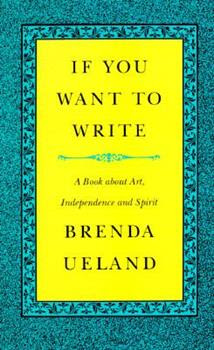
The first book I read about writing was Brenda Ueland's If You Want to Write: A Book About Art, Independence and Spirit.  Ueland is the friend you talk to when you fall in love with writing, because she's in love with it too.  She gets it. If You Want to Write was published in 1938, but so timeless in style and advice, it could've been written last week. She believes that everyone is talented, original and has something important to say...just what a new writer wants to hear! "Try to discover your true, honest untheoretical self," says Brenda. Wow! Somebody wants to hear from the "real me"? All right!

How can you not love a book with chapters titled "The imagination works slow and quietly," and"Be careless, be reckless! Be a lion, be a pirate when you write." Then there is my favorite "Why Women who do too much housework should neglect it for their writing." (Not a problem, Brenda!) I've written journals off and on since third grade, but when I read So You Want to Write in my 20's, I was encouraged to "Keep a slovenly, headlong, impulsive, honest diary." Ueland set me free to write and write and write without fretting over what I was writing, or what it might be some day. She turned me into an enthusiastic observer and journal keeper. I re-read So You Want to Write when I need to fall in love with writing again. (Sidebar--Greywolf Press brought the book back into print in 1983...and it has not been out of print since. That should speak to the quality of Ueland's advice.)

Anne Lamott's Bird by Bird came into my life when I was trying to turn all that journal writing into actual stories...and having serious doubts that I could do it. Anne Lamott is the big sister friend, who has been there, done that and is going to tell you Get over yourself! Don't listen to your inner voice screaming, Who told you you are a writer.?You stink! Don't freak out. Take deep breaths. You can only write one sentence at a time, word by word. (Or bird by bird, as per the title.) Whatever writer's block you have, or how horribly you judge your own work...Anne Lamott has already done it, much, much  worse! (If you need a visual, think of Cher in Moonstruck, slapping Nick Cage and yelling "Snap out of it!") When I'm overthinking or hypercritical to the point of inertia, I pour a glass of wine and spend a little time with Anne.


After decades of plugging away, I began to publish. However, the myth that "once you get your first book published, the next one is easier" is just that. A myth. I sold my first book. The next one took four years. (Although in the wild and wacky world of publishing schedules, the second book came out before the first one!) I didn't have an agent. In fact, I was discovering that getting an agent was harder than getting an editor's attention.I was sure that J.K Rowling and Stephen King were not having my problems with a-hiccuping career. That's when I happened on Stephen King's On Writing: A Memoir of the Craft. 

Personally, I'm not a fan of King's stories or style. However, I am in awe of how he has made readers out of people who don't like to read. I read On Writing, hoping he had some sort of magic formula. Of course he doesn't. However I discovered has a lovely conversational style when writing about his own life...and not homicidal Plymouth Furys or evil, sewer-dwelling clowns.

 King takes the "toolbox" approach to writing. If you don't possess and use these tools, you will never become a competent writer. His first tool: read a lot and write a lot. I'd been telling my own writing students that for years. I didn't know whether to be disappointed that his advice wasn't more exotic, or pleased that Stephen and I were on the same page, philosophically speaking. I didn't tell my students that by "writing a lot," King means that he writes every single day. That's a discouraging notion to a ten-year-old whose life is already scheduled to the gills.(He once told an interviewer that he wrote everyday except Fourth of July, Christmas and his birthday--but that wasn't true. He writes every day.) I also write every day, although not necessarily of the journaling-and-writing-project variety. I'm a moderator of a Facebook (OK Meta!) page that involves a lot of research and concise explanatory writing. This keeps my toolbox working between projects, and through the spells when my imagination seems to have dried up and blown away. (I tell my students to write on weekends and school holidays...and whenever they are happy or sad or mad. That winds up being pretty much every day...without them knowing it.)

The other "tools" King uses are so basic, I'm a little insulted he calls them tools; vocabulary and grammar. Vocabulary doesn't need to be voluminous (The last time I was required to know and use the word "salubrious" was in taking the ACT.),  varied and useful. If you get stuck, he suggests a thesaurus, preferably not the one that came with your word processing program. For grammar, nothing can beat our mutual old friend, Strunk and White's The Elements of Style.  While King never does tells how he can turn out bestseller after bestseller, he does remind me that if you don't read, write, mind your vocabulary and grammar, you're never going to write anything. On Writing is that professor you regard with awe, but when you actually talk to them, find they aren't magical or mystical...just hardworking and focused. 


My last friend is my teacher friend, Ralph Fletcher. (I don't personally know Mr. Fletcher, but after reading everyone of his many books, I feel as if I do.) I rely on Fletcher to inspire me as a teacher.  He is a master teacher of writing as well as a writer for children. He knows how kids think, and how to jazz their imaginations, free them of their writing hang-ups. His books contain writing exercises and topics (he doesn't use the word "prompts") for every age group--including adults. I've never taught a class without Ralph Fletcher at my side, in spirit. 

No one gets through this writing life alone. As the great Bette Midler sings "'cause yah got to have friends." Please feel free to introduce me to some of your writing friends. 

Posted by Mary Ann. Rodman 

Friday, November 18, 2022

Wibble Wobble Boom!---Skating Away with a Picture Book Giveaway

I'm experiencing unusual, winter-like weather here in Atlanta...in November. I am writing with a fire in the fireplace, George Winston's Winter playing in the background, coffee mug at hand. What better way to celebrate the publication of my new picture book, Wibble Wobble Boom! (Peachtree Publishing), available November 29th?


As you might guess from the adorable cover by Holly Sterling, Wibble Wobble Boom! is about learning to ice skate. Claire arrives for her first lesson with high-flying dreams of leaping and spinning, like the skaters she's seen on TV. How disappointing that the first skill she's taught, is how to fall safely! 

If you're a long time follower of this blog, you know my daughter Lily was a competitive figure skater from kindergarten through high school graduation. She spent every single weekday at the ice rink. And by default, so did I. Every. Single. Day. 

Lily chanced into figure skating. A kindergarten classmate invited her to a birthday party at the local ice rink. A birthday party is not a good time to introduce kindergartners to ice skating. The whole class stood wobbling on rental skates, afraid to step on the ice. While her friends whined about falling and being cold and couldn't we just go eat cake, my daredevil daughter and a couple of boys stepped on the ice. Clutching the side rails, they inched their way around. The next thing I knew, Lily had let go of the rails and was baby-gliding away from the boys. 

Lily continued her cautious way around the rink, arms straight out to her sides. The other kids had flopped on the spectator bench, whining that their feet hurt, they were cold, they wanted cake. The birthday girl's mom kept checking her watch, knowing that the party room wouldn't be open for another half hour. 

"This is fun!" Lily called to me. And took another lap around, a bit faster time. By the time she had finished a second trip, the birthday mom announced it was time for cake and presents. 

"Do I have to eat cake?" Lily asked me. "I want to stay here and skate." 

I told her she had to go eat cake but after that, she could come back and skate. 

And she did. 

For four hours. At the end of the session, her legs were so sore, I had to carry her out to the car. As I buckled her into her car seat she asked, "When can I come back?" 

Lily's first competition--1st grade

 Lily became a skater. I froze my behind off in rinks for the next 12 years. I learned to write with frozen fingers, surrounded by hoards of skaters and their families, chattering, screaming, or having hockey stick wars. I watched Lily master the Bunny Hop, spin and Mohawk. By high school, she was teaching her own Snowplow (beginner) classes. 

My mom put me on double runner skate blades when I was two. I thought that the whole point of skating was falling! I would fall on purpose...on my bottom...and yell "Boom!" extremely pleased with myself.

That memory came back to me as Lily taught her own students how to fall. I watched their little feet in those brown, battle-scarred rental skates, ankles wibbling and wobbling. I listened to them complain "Miss Lily, this isn't skating. I want to twirl. Teach me that." "My feet are tired. I wanna sit down." "I'm cold."

Lily would patiently explain that safety is the very first lesson in skating. Then they could learn everything else. Yes, your feet do hurt and you do feel cold. That's what happens if you want to skate. 

I like alliteration. As I observed those little Snowplows, I remembered a song from kindergarten... crickle crackle crickle crackle creak creak creak, the sound of walking on ice. Then my mind followed with wibble wobble boom. Skaters learning to fall. I remembered Lily's first skating lessons. While she never  complained about being cold or tired, she didn't like learning to fall...because she never fell. Her balance was that good. She disliked being made to fall, just to learn how to land on your butt. 

What if Lily had gone to that birthday party, expecting to sail across the ice like an Olympic medalist? What if...?

Once again, my daughter sparked a story, just as she had for First Grade Stinks and My Best Friend and A Tree for Emmy. 

Lily's last competition--senior year.

Children. The gift that keeps on giving.

Speaking of gifts, we're giving away a copy of Wibble Wobble Boom! Keep reading for entry instructions.

Posted by Mary Ann Rodman

____

We are giving away ONE autographed copy of Mary Ann's soon-to-be-released picture book, Wibble Wobble Boom! (Peachtree Publishing), which received a Starred review from Booklist

To enter the giveaway drawing, use the Rafflecopter widget below. (Note: if the widget doesn't appear, click on the link at the end of this post that says "a Rafflecopter giveaway" to enter.)

For the first time ever, you may enter via up to 4 options. The more options you choose, the better your odds!

If you choose option 3, you MUST leave a comment on TODAY’S blog post or on our TeachingAuthors Facebook page. If you haven’t already “liked” our Facebook page, please do so today!

If you prefer, you may submit your comment via email to: teachingauthors [at] gmail [dot] com.

Note: if you submit your comments via email or Facebook, YOU MUST STILL ENTER THE DRAWING VIA RAFFLECOPTER BELOW.  The giveaway ends December 1, 2022 and is open to US. Residents only.

If you’ve never entered a Rafflecopter giveaway, here’s info on how to enter a Rafflecopter giveaway. And a second article explains the difference between signing in with Facebook vs. with an email address.

Good luck!

a Rafflecopter giveaway