Showing posts with label Anne Lamott. Show all posts

Friday, February 3, 2023

But Ya Gotta Have Friends! (Sorry, Bette Midler!)

January 1st means a fresh start, new resolutions for many people. The Gregorian calendar insists the New Year comes in the middle of grey, grisly, winter, with short days and long dreary nights. I think that's a mean joke. The last thing I want to do this time of year is make resolutions or "move ahead" on a project.

So what do I do to jolt myself out of the midwinter blahs? I talk to my friends As I've mentioned before, some of my best friends are books. I consult my "writers on writing" shelf.
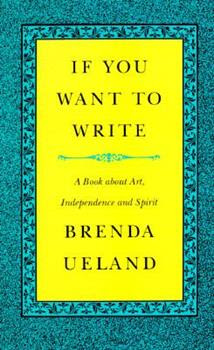
The first book I read about writing was Brenda Ueland's If You Want to Write: A Book About Art, Independence and Spirit.  Ueland is the friend you talk to when you fall in love with writing, because she's in love with it too.  She gets it. If You Want to Write was published in 1938, but so timeless in style and advice, it could've been written last week. She believes that everyone is talented, original and has something important to say...just what a new writer wants to hear! "Try to discover your true, honest untheoretical self," says Brenda. Wow! Somebody wants to hear from the "real me"? All right!

How can you not love a book with chapters titled "The imagination works slow and quietly," and"Be careless, be reckless! Be a lion, be a pirate when you write." Then there is my favorite "Why Women who do too much housework should neglect it for their writing." (Not a problem, Brenda!) I've written journals off and on since third grade, but when I read So You Want to Write in my 20's, I was encouraged to "Keep a slovenly, headlong, impulsive, honest diary." Ueland set me free to write and write and write without fretting over what I was writing, or what it might be some day. She turned me into an enthusiastic observer and journal keeper. I re-read So You Want to Write when I need to fall in love with writing again. (Sidebar--Greywolf Press brought the book back into print in 1983...and it has not been out of print since. That should speak to the quality of Ueland's advice.)

Anne Lamott's Bird by Bird came into my life when I was trying to turn all that journal writing into actual stories...and having serious doubts that I could do it. Anne Lamott is the big sister friend, who has been there, done that and is going to tell you Get over yourself! Don't listen to your inner voice screaming, Who told you you are a writer.?You stink! Don't freak out. Take deep breaths. You can only write one sentence at a time, word by word. (Or bird by bird, as per the title.) Whatever writer's block you have, or how horribly you judge your own work...Anne Lamott has already done it, much, much  worse! (If you need a visual, think of Cher in Moonstruck, slapping Nick Cage and yelling "Snap out of it!") When I'm overthinking or hypercritical to the point of inertia, I pour a glass of wine and spend a little time with Anne.


After decades of plugging away, I began to publish. However, the myth that "once you get your first book published, the next one is easier" is just that. A myth. I sold my first book. The next one took four years. (Although in the wild and wacky world of publishing schedules, the second book came out before the first one!) I didn't have an agent. In fact, I was discovering that getting an agent was harder than getting an editor's attention.I was sure that J.K Rowling and Stephen King were not having my problems with a-hiccuping career. That's when I happened on Stephen King's On Writing: A Memoir of the Craft. 

Personally, I'm not a fan of King's stories or style. However, I am in awe of how he has made readers out of people who don't like to read. I read On Writing, hoping he had some sort of magic formula. Of course he doesn't. However I discovered has a lovely conversational style when writing about his own life...and not homicidal Plymouth Furys or evil, sewer-dwelling clowns.

 King takes the "toolbox" approach to writing. If you don't possess and use these tools, you will never become a competent writer. His first tool: read a lot and write a lot. I'd been telling my own writing students that for years. I didn't know whether to be disappointed that his advice wasn't more exotic, or pleased that Stephen and I were on the same page, philosophically speaking. I didn't tell my students that by "writing a lot," King means that he writes every single day. That's a discouraging notion to a ten-year-old whose life is already scheduled to the gills.(He once told an interviewer that he wrote everyday except Fourth of July, Christmas and his birthday--but that wasn't true. He writes every day.) I also write every day, although not necessarily of the journaling-and-writing-project variety. I'm a moderator of a Facebook (OK Meta!) page that involves a lot of research and concise explanatory writing. This keeps my toolbox working between projects, and through the spells when my imagination seems to have dried up and blown away. (I tell my students to write on weekends and school holidays...and whenever they are happy or sad or mad. That winds up being pretty much every day...without them knowing it.)

The other "tools" King uses are so basic, I'm a little insulted he calls them tools; vocabulary and grammar. Vocabulary doesn't need to be voluminous (The last time I was required to know and use the word "salubrious" was in taking the ACT.),  varied and useful. If you get stuck, he suggests a thesaurus, preferably not the one that came with your word processing program. For grammar, nothing can beat our mutual old friend, Strunk and White's The Elements of Style.  While King never does tells how he can turn out bestseller after bestseller, he does remind me that if you don't read, write, mind your vocabulary and grammar, you're never going to write anything. On Writing is that professor you regard with awe, but when you actually talk to them, find they aren't magical or mystical...just hardworking and focused. 


My last friend is my teacher friend, Ralph Fletcher. (I don't personally know Mr. Fletcher, but after reading everyone of his many books, I feel as if I do.) I rely on Fletcher to inspire me as a teacher.  He is a master teacher of writing as well as a writer for children. He knows how kids think, and how to jazz their imaginations, free them of their writing hang-ups. His books contain writing exercises and topics (he doesn't use the word "prompts") for every age group--including adults. I've never taught a class without Ralph Fletcher at my side, in spirit. 

No one gets through this writing life alone. As the great Bette Midler sings "'cause yah got to have friends." Please feel free to introduce me to some of your writing friends. 

Posted by Mary Ann. Rodman 

Friday, June 2, 2017

3 Terrific Quotes on Character Flaws and a Poem

.
Howdy, Campers ~ and Happy Poetry Friday! The link to today's PF host is below, as is my poem.

TeachingAuthors
' current topic is Creating Characters. Bobbi started this series, discussing characters' inner struggles. JoAnn gives us the questionnaire she uses to get to know her characters, Carla shows us concrete examples of how small details reveal character in nonfiction characters, and each Wednesday in May, Esther offered us Wednesday Writing Workouts.

And me? I need help pulling 3-D characters from the blank page.

One criticism of my W.I.P. novel in poems is that except for the narrator, the other characters are one dimensional. Ouch! As a teen, I saw everyone as black and white. It's still hard for me to see people as three dimensional, hard to accept the fact that they are/we humans are imperfect. But we all have flaws, darn it.

I'll never forget the example Barbara Bottner gave in a class at Otis Parsons in the 1980's. The gist of what she said is this:

Let's say you want to tell a story about three characters in search of buried treasure. 

Okay--that's fine. 

But what if you told a story about 

Richard Nixon

Lucille Ball 

and Godzilla 

searching for buried treasure? 
NOW you have a story.
(I've forgotten the specific characters Barbara suggested--insert your own favorites.)

Wow. Talk about flawed characters! That's the moment I began to understand the interconnectedness between real characters (with real bitten fingernails and real raspberry jam stains on their clothes, who sometimes stomp on their little brother's toe) and story.

illustration from my book, New Year at the Pier by Stéphane Jorisch (Dial)

Still I struggle--both on the page and in real life--to see flaws in those I love. Or alternately, I dismiss a person entirely if I do discover a flaw.

One evening at a memorial service, I realized that everything that annoys me about my friends will be exactly what I remember fondly when they die. 

Ann Whitford Paul agrees:
"We all have flaws. Our characters must have flaws, too....Think about your imperfections. Think about imperfections in others that annoy you or maybe tug at your heart...Often...the strength and weakness are two sides of the same issue. Think of Frances in Russell Hoban's Bedtime for Frances. Her great imagination is exactly what makes her so fearful. It's what makes her sure spiders and tigers and monsters lurk in her room...Whatever the specifics, the main characters in our picture books must be human, and that means imperfect." ~ Ann Whitford Paul in Writing Picture Books

Ann Lamott makes this point, too:
"[Characters] shouldn't be too perfect; perfect means shallow and unreal and fatally uninteresting...I like them to be mentally ill in the same sorts of ways that I am; for instance, I have a friend who said one day, 'I could resent the ocean if I tried,'and I realized that I love that in a guy." ~ Anne Lamott in Bird by Bird

As does Madeleine L'Engle:
"I like the fact that in ancient Chinese art the great painters always included a deliberate flaw in their work: human creation is never perfect." ~ Madeleine L'Engle

For today's poem I thought I'd describe a character by including a flaw and some eye-poppingly original details. But that's not exactly what turned out. The first line came to me immediately: "She takes out her teeth to chew on that." Hmm, I thought. We know who that must be.

But...you're a writer--you know how it goes. You fiddle and rearrange and think and unthink and finally that first line seems too cliche, so out it goes.
.
I didn't include a fatal flaw or raspberry jam on her skirt, but here's a draft that came from my tweedle-dee and tweedle-dumming today:

CLARICE
by April Halprin Wayland

Ding-a-ling-ding, the telephone rings.
Her cat bats away a spec on wings.
She doesn't answer that telephone call.
Forget them all,
forget them all.

She watches this brave day's afterglow
then picks up the cat, tunes her radio,
leans into the umpire's gritty call.
It didn't have to happen at all,
it didn't have to happen at all.

She stares into space, chewing on that.
Her cat jumps into her tired lap.
How can it be the sun still sets
since Daniel's death,
since Daniel's death?

poem (c) 2017 April Halprin Wayland. All rights reserved.


posted with love by April Halprin Wayland with help from an invisible bee named Spinach.

Monday, February 1, 2016

Villains are People, too!

Alan Rickman as Severus Snape
 (Fair Use; Copyright owned
by Harry Potter and the Order of the Phoenix (film) )


April began this discussion on what we love about our writing. One of my favorite writing things is – believe it or not – the villain! As we know, fiction is primarily an emotional exchange. The reader stays connected to the hero because she feels her story. Madeleine L’Engle (“The Heroic Personality,” Origins of Story, 1999) offers that the heroic personality is human, not perfect.


Not infallible or impeccable or faultless. Human. This sense of authenticity is important in keeping the reader connected to your story.


But a hero is only as good as the villain of the story. You could say that you cannot have a good story without a good villain. Who would Beowulf be without Grendel? Frodo with Sauron? Oliver Twist without Bill Sykes? Peter Pan without Captain Hook? Jim Hawkins without Long John Silver?


The hero needs opposition to make her story worthwhile. While the antagonist may simply be one who disagrees with the hero’s tactics, the villain is dedicated to the destruction of the hero. Christopher Vogler (Writer’s Journey, 1992) describes the difference: “Antagonists and heroes in conflict are like horses in a team pulling in different directions, while villains and heroes in conflict are like trains on a head-on collision course.” 

Like the hero, villains need motivation. If the plot is what happens to a character, then motivation is the force that sets it into motion and keeps it going. It’s why the villain goes after her goal in the first place. Villains have a history. And this history influences her motivation. Unless the villain was born evil, and few people are, villains are born human. Dean Koontz once offered that the best villains evoke pity, even sympathy, as well as terror. Sympathy for a villain, according to James Scott Bell (Revision and Self-Editing, 2008), deepens a story. A bully doesn’t pick on someone just to be mean. Why did he become a bully?

 Remember, Darth Vader in the Star Wars movies wasn’t always evil. In the beginning, he was an innocent, precocious and enslaved child, who grew to a teenager losing faith in his parental figures as he feared for the survival of his love, followed by his ultimate downfall when he was seduced by the dark force. We see the evolution of his evilness. But that’s not the end of his story, as we also witness his redemption when he meets his son, Luke Skywalker.

And remember Mary Shelley’s Frankenstein monster was a sensitive, emotional creature driven by despair and loneliness to acts of cruelty.


In the end, villains are people, too! 


One of my favorite villains is smooth-talking Long John Silver. He’s so personable, but Long John is greedy and cunning to the core. Ruthless and violent, he has the brains behind the scheme to recover Captain Flint's treasure. Had it succeeded he probably would have found a way to make off with the loot and leave his shipmates to face the gallows. Except, he developed a soft spot for Jim. He saved Jim. A villain with a heart.

Jim, Long John Silver and his Parrot by en:w:N. C. Wyeth from 1911 edition of en:Treasure Island

Another of my favorite villains is found in Gar-Face, from The Underneath written by Kathi Appelt. He is as mean as they come. Kathi didn’t back away from the hardness of such a broken character. Kathi once shared the backstory of her character Gar Face. He was actually based on someone Kathi knew as a child. Both Gar Face and the real person didn’t have an easy life growing up. The hardness of life broke the character, and the man that inspired him. As she explained, “I don’t think [the real man] sought [redemption] at all, and there’s a part of me that feels that redemption must be sought. I lost track of the real person behind Gar Face, but I don’t recall him ever seeking anything like kindness, nor did he offer much of it. Of course, my memory of him is that of a little girl, so I’m sure there were things I never knew.”

Another favorite villain is Harry Potter’s Severus Snape. Snape’s love of Lily, Harry Potter’s mother, is at the core of his motivation. Snape’s early involvement in Voldemort’s world, as a Death Eater and as Dumbledore’s spy, created the backstory for his choices, with tragic results.


“I have spied for you and lied for you, put myself in mortal danger for you. Everything was supposed to be to keep Lily Potter’s son safe. Now you tell me you have been raising him like a pig for slaughter —” (JK Rowling, Severus Snape, Harry Potter and the Deathly Hallows)

This spy-role meant that he would never have the chance to move on from his love for Lily. It was this capacity for love that made him so heroic, a villain who sacrificed the most important things in life to protect the son of the person whom he loved,  a person who could never return that love. Snape remained the bitter, sour-faced man, but he is set apart from Voldemort by his courage and his ability to love. It was his love that redeemed him. As Harry told his son, Albus Severus, Snape was one of the bravest men he had ever known.The villain was the hero after all!

Peter S. Beagley once wrote, “Great heroes need great sorrows and burdens, or half their greatness goes unnoticed. It is all part of the fairy tale.” Sometimes not only are the villains the most interesting characters, they are the most important, for the hero cannot begin her journey without the villain.

And perhaps this is why it takes so much courage to write a story. As Anne Lamott suggest (Bird by Bird, 1995), “One way to do this is to look within your own heart, at the different facets of your personality.” Be brave, she warns, because you never know what you will find: a con man or a preacher, an orphan or a king, a child or a crone. When you explore the depths and shadows of your characters, including your villains, you are touching upon your own shadows. This becomes the paradox in storytelling: when we tell stories, we are making things up. This is, by definition, a lie. But every lie is wrapped in some emotional truth.

Ralph Keyes (The Courage to Write, 1995) explains:

“Gripping writing results from intensity, and intensity is the flip side of fear … Daring is always more riveting then skill. Any juggler knows the real crowd pleaser isn’t his hardest task, such as keeping five balls in the air. The biggest oohs and ahhs are reserved for feats that look as they could maim him…Bold writers have the same relationship to readers that a juggler has to his crowd. When they seem to catch an errant machete by the blade, their readers stay glued to the page.”

Three cheers for our villains, who dare our heroes to become better than they ever imagined themselves to be!

Bobbi Miller