“Literacy is an act of power and freedom. It is why slaves in our wrenching and painful U.S. history were forbidden to learn to read and write, and why young girls living in repressive societies today are kept out of the classroom. When children realize the power of narrative, they begin to dismantle patriarchy, racism, and oppression. In a true democratic society, every child has these tools of literacy to both absorb the stories of the world and to tell his or her own.”
Showing posts with label Book Lists. Show all posts
Monday, February 5, 2018
Mighty Read Alouds!
Posted by
Bobbi Miller
Carmela's post began
the celebration, and Esther read poetry aloud
to her grandson via Skype with glee!
I thought you might be interesting in a few treasures I found this week.
One of my favorite sites, A Mighty Girl “… embraces the
value of reading aloud for all of its practical merits, but just as importantly
for introducing high-quality Mighty Girl literature into the lives of children
everywhere. With that in mind, we've expanded our Read Aloud Collection to include 212 high-quality books all starring smart, confident, and courageous Mighty Girl characters. The featured stories are perfect for reading aloud with
older elementary-aged children or as independent reading for kids." To browse their special feature on “212 Read Aloud Books
Starring Mighty Girls,” visit here. No doubt you will see a few familiar titles, including my own Big River’s
Daughter!
For younger children, you’ll discover hundreds of girl-empowering picture
books in their "Picture Book Collection" here.
More helpful read aloud lists include these treasures:
Read Aloud Revival is
“… a community of parents just like you who know that when our kids are grown
and gone, they won’t likely mind that their childhood included dishes piled in
the sink, that we never ever reached the bottom of the laundry basket.”
Nourishing My Scholar offers another intriguing list. The
site is managed by homeschooling manager Erica, and “…is filled with information to help
you explore a child led education while making meaningful connections with your
children.”
Sarah Anderson is a high school English teacher, offering a
special list for the older reader at YA Love. Says Mrs. Anderson, “My students
loved it and often asked me to read “just one more chapter.” Since then
I’m much more comfortable reading books where characters swear, but I make sure
to choose books that aren’t over the top in that category. It sometimes
shocks my students to hear me read those parts, but we have a conversation
about why that language is in the book and how we won’t be using that language
in class.”
A.J. O’Connell at Book Riot offers ten reasons why reading
aloud can be a fun a winter tradition, stating, “Children’s books are important, of course, but we’ve found that
reading a book the whole family likes meets needs we didn’t realize we had.”
Reading aloud is a transforming power. Says Pam Allyn,
Friday, December 3, 2010
BEWARE OF BOOKS! Books that have kidnapped us, a poem for Poetry Friday & a question for you
Posted by
April Halprin Wayland
xxx
Howdy and Happy Poetry Friday! There's a teeny tiny Writing Workout and a not-so-teeny poem below!
A recent School Library Journal article has inspired TeachingAuthors to chat with you about the books that have most influenced us.
That article introduced us to Bookprints. Run by Scholastic, its full name is You Are What You Read; it's sort of a FaceBook for readers. A recent School Library Journal article has inspired TeachingAuthors to chat with you about the books that have most influenced us.
Upon registering, I discovered a few glitches to Bookprints' wonderful universe. I couldn't figure out how to sign on as an author (help, anyone?) and, on strict orders of my financial advisor (aka my husband) I never give out my birth year.
So I signed in with a different birth year. I must say, I look remarkably young for a 109-year-old. : ^ )
The first thing it asks you (after rudely inquiring about your birth year) is to list the five most influential books in your life. Here is my list:
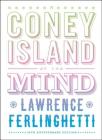
A Coney Island of the Mind by Lawrence Ferlinghetti
As I wrote when listing my five favorite poetry books, an older teen gave this one to me on my 13th birthday. I was thrilled she thought I would like these poems. I memorized the poem, DOG and choreographed a dance about it for my modern dance class...I even wore my dog's collar! (Of course, those were the days I painted a flower on my cheek each morning to match my outfit...and painted Twiggy lashes on my eyes.)
Roget's English Thesaurus by Peter Roget
When poems began pouring out of me in my teens, this book was like having an external hard drive. It was my late-night writing partner. These days I use an online thesaurus.
Rhyming Dictionary
Actually, I adored the Capricorn Rhyming Dictionary which is no longer in print. These days I use an online rhyming dictionary. Like the thesaurus, this book was my writing partner--or maybe better, it was my dance partner. It expanded what I could say in rhyme, made me feel smarter and made rhyming even more of a pleasure.
Wind, Sand and Stars by Antoine de Saint-Exupéry; L. Galantiere (Translator)
This is the autobiography of the author of The Little Prince. My mother checked it out of the library for me when I was ten or twelve...it had been one of her favorites. It's translated from French; the language is beautiful. It's also spiritual and full of adventure. The cover of this edition says it won the National Book Award and is a National Geographic Top Ten Adventure Book of All Time. Here's a quote from the New York Times review: "A beautiful book, a brave book, a book that should be read against the confusion of the world."
Harold and the Purple Crayon by Crockett Johnson This is the autobiography of the author of The Little Prince. My mother checked it out of the library for me when I was ten or twelve...it had been one of her favorites. It's translated from French; the language is beautiful. It's also spiritual and full of adventure. The cover of this edition says it won the National Book Award and is a National Geographic Top Ten Adventure Book of All Time. Here's a quote from the New York Times review: "A beautiful book, a brave book, a book that should be read against the confusion of the world."
My all-time favorite children's book. It showed me wild possibilities. It continues to influence me, teaching that we can (and do) create our own lives.
Here's a book-ish poem for you (inspired by a dream!) on Poetry Friday. I started writing it more than a year ago and worked on today. Would you like to read the first draft and today's draft? All poems are a work in progress, I think. I like the first version for its seriousness and the last version for its humor. Which do you prefer?
first draft -- 7-19-09
untitled
by April Halprin Wayland
on little book feet.
One is shy,
padding away quietly while I am busy,
hiding under a chair.
One is loud,
talkative, chattering up a storm—
I have to close it to catch my breath.
One picks me—
pulls me in, and before I realize it,
has kidnapped me completely.
It tries to leave the house
with me in it’s grasp
I have to brace myself against the door frame
hold on as tightly as possible,
I have to want to stay here in this house
or it will take me
take me,
take me away
and I may never find my way back.
latest draft:
BEWARE OF BOOKS!
by April Halprin WaylandI bring home loads of library books
once or twice a week.
And every single one of them has curious little book feet.
Here’s a book that’s LOUD! It’s wild!
Leaping off tables! Crashing to death!
I close it quick to catch my breath.
Another beckons, it reels me in…
before I’m lured, before it’s cooked me,
this dangerous book has baited and hooked me!
It snatches me up and tries to escape
I could brace my legs against the door
or…
I could relax,
could stop yelling, “NO!”
I could simply sit back, I could just let go.
I could ride this book
far and free… Hmmm.
Should I let this story kidnap me?
What about you? What books have captured you, or what ONE book changed your life?
Teeny tiny quick Writing Workout for you or your students:
What books have influenced you?
Whether or not you join Bookprints, join the conversation here! Inquiring minds want to know!
poem and drawing (c) April Halprin Wayland
Wednesday, March 17, 2010
Out and About in the Clover-dash-Shamrocks!
Posted by
Esther Hershenhorn
I’m Out-and-About and in clover today, wheeling to Springfield, Illinois to join four of my five fellow Teaching Authors for our Workshop tomorrow afternoon Thursday at the 42nd Annual Illinois Reading Conference.
(And, for the record, I care little o'bout the variety of the three-leafed plants that surround me – red, black, white or otherwise, all of which can be classified as Shamrocks. My Chicago River’s flowing green today!)
Visit us Friday to view photos of our singular workshop we’re co-presenting with Dr. Roxanne Owens and Dr. Marie Donovan of DePaul University’s School of Education – “Flabby to Fab-y: Writing Workouts to Shape Up Your Curriculum.” Thanks to you, our readers, we’re able to focus on the Top Ten Teaching-Writing Issues Teachers Face Daily and ways Young Writers can stretch, flex and bend.
Y
ou can exercise, too, of course, by checking out this year’s Children’s Choice Book Awards list, a joint project of the Children's Book Council and the International Reading Assocation. Each year publishers submit hundreds of titles for consideration by five teams of some 12,000 young readers from across the country. Share the voting opportunity which began Monday, March 15, with your students, children, grandchildren, library patrons - AND/OR - use the list to acquaint yourself with titles children already enjoy. We children’s book writers need to know The Best of the Best as determined by – drum roll, please – our readers.
ou can exercise, too, of course, by checking out this year’s Children’s Choice Book Awards list, a joint project of the Children's Book Council and the International Reading Assocation. Each year publishers submit hundreds of titles for consideration by five teams of some 12,000 young readers from across the country. Share the voting opportunity which began Monday, March 15, with your students, children, grandchildren, library patrons - AND/OR - use the list to acquaint yourself with titles children already enjoy. We children’s book writers need to know The Best of the Best as determined by – drum roll, please – our readers.Finally, please remember: 11 pm today Wednesday is the deadline for our current book giveaway of Johanna Hurwitz’s I Fooled You: Ten Stories of Tricks, Jokes, and Switcheroos.
Keep those insightful questions comin’!Happy St. Patrick’s Day!
Esther Hershenhorn
*Credits for photo
http://www.lycoming.edu/
http://www.rhapsodyinbooks.wordpress/
Friday, June 26, 2009
More About Favorite Childhood Books plus Teaching Authors at ALA
Posted by
JoAnn Early Macken
A few readers have written to share their favorite childhood books. Sarah mentioned Mama, Buy Me a China Doll; Free to Be You and Me; Pickle Chiffon Pie; Harriet The Spy; and The All-of-a-Kind-Family. Cynthia’s list included the Oz books, National Velvet, E. Nesbit’s Five Children trilogy, and Louisa May Alcott’s Jack and Jill. Pamanmat remembered Nancy Drew, Archie comic books, and Great Expectations. What special books do you remember from your childhood or teen years? We’d love to hear about them!
Out and About
Several Teaching Authors will be at the American Library Association (ALA) Annual Conference at McCormick Place in Chicago next month.
Esther Hershenhorn will be at the SCBWI-Illinois Booth, #1626, on Saturday, July 11, from 11:00 a.m. to 1:00 p.m., promoting her new book S is for Story: A Writer’s Alphabet, out this September with Sleeping Bear Press. The booth promotes Illinois authors and illustrators. SCBWI members, please stop by and say “Howdy!”
JoAnn Early Macken will be speaking on Sunday, July 12, on a panel of nonfiction authors called “Nonfiction Book Blast! Booktalks Your Reluctant Readers Can’t Resist.” Seventeen authors and a moderator will present booktalks librarians can use to interest young readers in nonfiction. The panel appears from 10:30 a.m. to 12:00 p.m. in Convention Center Room W181 (Level 1 of the West Building). Participating authors and their books include:
Library media specialist Sharon Mitchell will be the panel moderator. Hope to see you there!
The authors have also collaborated to produce a wiki (Nonfiction Book Blast) that includes all the booktalks, searchable by title, author, subject, and intended age level. The front page includes links to the authors’ web sites. After the conference, other authors, librarians, and interested readers can add booktalks of their own. Check it out!
JoAnn Early Macken will be autographing Flip, Float, Fly: Seeds on the Move at the Holiday House Booth, #2138 in the West Building, from 1:00-1:30 p.m.
April Halprin Wayland and Carmela Martino will also be strolling through the convention center and exploring exhibits. Watch for them, and be sure to say hello!
Out and AboutSeveral Teaching Authors will be at the American Library Association (ALA) Annual Conference at McCormick Place in Chicago next month.
Esther Hershenhorn will be at the SCBWI-Illinois Booth, #1626, on Saturday, July 11, from 11:00 a.m. to 1:00 p.m., promoting her new book S is for Story: A Writer’s Alphabet, out this September with Sleeping Bear Press. The booth promotes Illinois authors and illustrators. SCBWI members, please stop by and say “Howdy!”
JoAnn Early Macken will be speaking on Sunday, July 12, on a panel of nonfiction authors called “Nonfiction Book Blast! Booktalks Your Reluctant Readers Can’t Resist.” Seventeen authors and a moderator will present booktalks librarians can use to interest young readers in nonfiction. The panel appears from 10:30 a.m. to 12:00 p.m. in Convention Center Room W181 (Level 1 of the West Building). Participating authors and their books include:
- Lisa Rondinelli Albert, Stephenie Meyer: Author of the Twilight Saga (Enslow, 2009), So You Want to Be a Film or TV Actor (Enslow, 2008)
- Mary Bowman-Kruhm, The Leakeys: A Biography (Prometheus Books, 2009)
- Laura Crawford, In Arctic Waters (Sylvan Dell Publishing), The Pilgrims’ Thanksgiving From A to Z (Pelican Publishing), Postcards From Chicago (Raven Tree Press)
- Jeri Chase Ferris, With Open Hands: The Story of Biddy Mason (Lerner), Arctic Explorer: Matthew Henson (Lerner)
- Kelly Milner Halls, Dinosaur Parade (Lark/Sterling Publishers, 2008), Saving the Baghdad Zoo (HarperCollins/Greenwillow, 2009), Tales of the Cryptids (Darby Creek Publishing, 2006)
- Amy S. Hansen, Bugs and Bugsicles: Insects in the Winter (Boyds Mills Press, 2010), Touch the Earth (NASA and NFB, 2009)
- Gwendolyn Hooks, Makers and Takers (Rourke Publishing, 2008)
- Katherine L. House, Lighthouses for Kids: History, Science, and Lore with 21 Activities (Chicago Review Press, 2008)
- Patricia K. Kummer, The Great Barrier Reef (Marshall Cavendish Benchmark, 2009), The Great Lakes (Marshall Cavendish Benchmark, 2009), North Korea, and South Korea (Scholastic/Children's Press, 2008)
- Suzanne Lieurance, The Triangle Shirtwaist Fire and Sweatshop Reform in American History (Enslow)
- JoAnn Early Macken, Flip, Float, Fly: Seeds on the Move (Holiday House, 2008)
- Carla Killough McClafferty, In Defiance of Hitler: The Secret Mission of Varian Fry (Farrar, Straus and Giroux, 2008)
- Wendie Old, The Halloween Book of Facts and Fun (Albert Whitman), The Groundhog Day Book of Facts and Fun (Albert Whitman)
- April Pulley Sayre, Honk, Honk, Goose: Canada Geese Start a Family (Henry Holt, 2009)
- Anastasia Suen, Wired (Charlesbridge, 2007), The U.S. Supreme Court (Picture Window Books)
- Christine Taylor-Butler, Sacred Mountain: Everest (Lee and Low Books, 2009)
- Rebecca Hogue Wojahn and Donald Wojahn, Follow That Food Chain (Lerner, 2009)
Library media specialist Sharon Mitchell will be the panel moderator. Hope to see you there!
The authors have also collaborated to produce a wiki (Nonfiction Book Blast) that includes all the booktalks, searchable by title, author, subject, and intended age level. The front page includes links to the authors’ web sites. After the conference, other authors, librarians, and interested readers can add booktalks of their own. Check it out!
JoAnn Early Macken will be autographing Flip, Float, Fly: Seeds on the Move at the Holiday House Booth, #2138 in the West Building, from 1:00-1:30 p.m.
April Halprin Wayland and Carmela Martino will also be strolling through the convention center and exploring exhibits. Watch for them, and be sure to say hello!
Monday, June 22, 2009
School's Out!
Posted by
Jeanne Marie Grunwell Ford
As a kid, I spent many summers in my parents' hometown in Pennsylvania (near where Esther grew up). My grandparents had a pool, and I swam all day long. When I was not swimming, I was reading. I would take a stack of books in my luggage at the beginning of the summer and read them again and again. Like Mary Ann, I read for comfort, and I savored the best-turned phrases just as much as I savored my daily dose of chocolate (which, for those who don't know me, is saying a lot).
I was just telling my husband yesterday that when my grandparents needed a break, sometimes they'd send me to visit my mom's sister. She had three TV channels, no nearby neighborhood kids, no pool, and of course, no books. I remember that, in desperation, I once started reading her twenty-year-old encyclopedias.
So yes, bearing in mind that I am a geek, these are the books and authors (for better or worse) that inspired me to become a writer:
The Bobbsey Twins:
For one brief, not-so-shining moment in time, every girl my age (6, 7, 8) in every state in which I lived (a good number of states -- from Hawaii to Maryland) was reading the re-issued Bobbsey Twins. The Mystery at Cherry Corners was the first non-picture book I was ever given as a gift (by my grandparents the Christmas I was five). My mother read it aloud to me at bedtime. Having been reared by non-readers with nothing in the house to read herself besides Dick and Jane, she clearly enjoyed this ritual at least as much as I did. She voiced each character with gusto, and her level of animation (probably even more than the Bobbsey Twins' adventures) is the thing that made reading feel like an adventure to love.
I later "graduated" to Nancy Drew but found her to be so perfect that I couldn't stand her. (Irony that I later became Carolyn Keene -- but that's a story for another post.) The Hardy Boys were better. I tried some Trixie Belden, some Happy Hollisters. Ah, those were the golden days of the children's mystery series. Oh, and how I loved Encyclopedia Brown.
The Bobbsey Twins books were again reissued (in paperback) when I was a tween, with lots of PC tweaks (much-needed), but zero zip or fun.
I have the entire series of Sweet Tart-purple-spined hardcovers on my shelf upstairs to this day -- and, twenty-six or so moves later, I think that speaks volumes about how much I cherish the memories, if not the volumes themselves.
Beverly Cleary:
The first book a teacher gave me to read on my own was Ramona, the Pest. (A hint, perhaps.)
I adored all the Ramonas I read as a child and all the Henry Huggins books. I also re-read Mitch and Amy and Ellen Tebbits dozens of times. One thing I really appreciated was Cleary's skill at illuminating multiple points of view. In one book, she could convince you that Otis Spofford or Ramona was the most annoying person in the world (from Ellen's or Beezus' point of view). And, though you still totally empathized with Ellen and Beezus, you could read the book in which Otis or Ramona was the star and suddenly understand exactly how and why they were so misunderstood.
For the record, I think the most perfect book I've ever read is Ramona Quimby, Age 8.
Madeleine L'Engle:
My class was forced to watch a filmstrip version of A Wrinkle in Time in second grade. Either the filmstrip was very bad (likely) or I was just not ready (equally likely), but I was consequently turned off to this book for years. I finally forced myself to read it one day when I was sick and had nothing else on my shelf. I have never been a fantasy fan, but L'Engle is my big exception.
Some of my favorite lesser-read L'Engles are A House Like a Lotus and The Young Unicorns. Of the Time Trilogy, I liked A Swiftly Tilting Planet the best. I think I trace my eighth-grade interest in ESP (and thus, in its way, Mind Games) to this book.
Laura Ingalls Wilder:
Little Laura grew up to become a famous writer -- spun off into her own TV series, no less. Takeaway lesson? This could be a very cool thing.
I think I'd seen Little House on the Prairie on TV (it was the '70s) before my mom and I started reading the series together. I definitely remember that we started with book #2 because we thought, based on the title of the TV show, that it came first. Farmer Boy aside (I cou
ld never get through that one), I read the others over and over and over. On the Banks of Plum Creek was my very favorite.
I dressed as Laura Ingalls Wilder four Halloweens in a row. Again, it being the '70s, my dress and sunbonnet were some ghastly mix of orange and chartreuse. Inexplicably, neighbors always thought I was Holly Hobbie. Do you see the resemblance?
Judy Blume:
When I was in second grade and a somewhat precocious reader, my mom followed a librarian's advice (based, I presume, on reading level and not age) and checked out Are You There God, It's Me, Margaret? for me to read.
I really enjoyed the book, but my mom was quite shocked when I started asking her questions about periods and bras. We thus had "the talk" a little earlier than she expected.
Ellen Raskin:
The Westing Game is genius. So are Figgs and Phantoms and The Tattooed Potato.
Once I discovered her, I kept waiting for a new book by Ellen Raskin. Alas, it was not to be. :(
So in sixth grade I was forced to become a sucker for a good Miss Marple yarn; but Ellen Raskin is my idol.
Sydney Taylor:
All-of-a-Kind Family! Need I say more?
I also remember my middle school maudlin phase (predating Lurlene McDaniel) in which I read over and over again such books as Alex: The Life of a Child (made more heartbreaking by the fact that Alex would be exactly my age if she were alive today). Mary Ann and I also discovered we were both childhood devotees of the Marie Killilea books about her daughter, Karen. These were classified as "inspirational," and they were. I suppose that was the appeal in reading this genre -- a good tearjerker always leaves you with hope at the end.
**
In a nutshell, my reading list has shown me that I like either meandering, anecdotal tales (the kind that rarely get published anymore -- at least in the absence of a very voicey voice); or mysteries that are chock-full of plot. Nothing in between, thank you very much.
This summer I plan to reread the Eleanor Estes series -- gems that were out of print for much of my youth. I can't wait to read them to my kids!
I was just telling my husband yesterday that when my grandparents needed a break, sometimes they'd send me to visit my mom's sister. She had three TV channels, no nearby neighborhood kids, no pool, and of course, no books. I remember that, in desperation, I once started reading her twenty-year-old encyclopedias.
So yes, bearing in mind that I am a geek, these are the books and authors (for better or worse) that inspired me to become a writer:
The Bobbsey Twins:
For one brief, not-so-shining moment in time, every girl my age (6, 7, 8) in every state in which I lived (a good number of states -- from Hawaii to Maryland) was reading the re-issued Bobbsey Twins. The Mystery at Cherry Corners was the first non-picture book I was ever given as a gift (by my grandparents the Christmas I was five). My mother read it aloud to me at bedtime. Having been reared by non-readers with nothing in the house to read herself besides Dick and Jane, she clearly enjoyed this ritual at least as much as I did. She voiced each character with gusto, and her level of animation (probably even more than the Bobbsey Twins' adventures) is the thing that made reading feel like an adventure to love.
I later "graduated" to Nancy Drew but found her to be so perfect that I couldn't stand her. (Irony that I later became Carolyn Keene -- but that's a story for another post.) The Hardy Boys were better. I tried some Trixie Belden, some Happy Hollisters. Ah, those were the golden days of the children's mystery series. Oh, and how I loved Encyclopedia Brown.
The Bobbsey Twins books were again reissued (in paperback) when I was a tween, with lots of PC tweaks (much-needed), but zero zip or fun.
I have the entire series of Sweet Tart-purple-spined hardcovers on my shelf upstairs to this day -- and, twenty-six or so moves later, I think that speaks volumes about how much I cherish the memories, if not the volumes themselves.
Beverly Cleary:
The first book a teacher gave me to read on my own was Ramona, the Pest. (A hint, perhaps.)
I adored all the Ramonas I read as a child and all the Henry Huggins books. I also re-read Mitch and Amy and Ellen Tebbits dozens of times. One thing I really appreciated was Cleary's skill at illuminating multiple points of view. In one book, she could convince you that Otis Spofford or Ramona was the most annoying person in the world (from Ellen's or Beezus' point of view). And, though you still totally empathized with Ellen and Beezus, you could read the book in which Otis or Ramona was the star and suddenly understand exactly how and why they were so misunderstood.
For the record, I think the most perfect book I've ever read is Ramona Quimby, Age 8.
Madeleine L'Engle:
My class was forced to watch a filmstrip version of A Wrinkle in Time in second grade. Either the filmstrip was very bad (likely) or I was just not ready (equally likely), but I was consequently turned off to this book for years. I finally forced myself to read it one day when I was sick and had nothing else on my shelf. I have never been a fantasy fan, but L'Engle is my big exception.
Some of my favorite lesser-read L'Engles are A House Like a Lotus and The Young Unicorns. Of the Time Trilogy, I liked A Swiftly Tilting Planet the best. I think I trace my eighth-grade interest in ESP (and thus, in its way, Mind Games) to this book.
Laura Ingalls Wilder:
Little Laura grew up to become a famous writer -- spun off into her own TV series, no less. Takeaway lesson? This could be a very cool thing.
I think I'd seen Little House on the Prairie on TV (it was the '70s) before my mom and I started reading the series together. I definitely remember that we started with book #2 because we thought, based on the title of the TV show, that it came first. Farmer Boy aside (I cou
ld never get through that one), I read the others over and over and over. On the Banks of Plum Creek was my very favorite.I dressed as Laura Ingalls Wilder four Halloweens in a row. Again, it being the '70s, my dress and sunbonnet were some ghastly mix of orange and chartreuse. Inexplicably, neighbors always thought I was Holly Hobbie. Do you see the resemblance?
Judy Blume:
When I was in second grade and a somewhat precocious reader, my mom followed a librarian's advice (based, I presume, on reading level and not age) and checked out Are You There God, It's Me, Margaret? for me to read.
I really enjoyed the book, but my mom was quite shocked when I started asking her questions about periods and bras. We thus had "the talk" a little earlier than she expected.
Ellen Raskin:
The Westing Game is genius. So are Figgs and Phantoms and The Tattooed Potato.
Once I discovered her, I kept waiting for a new book by Ellen Raskin. Alas, it was not to be. :(
So in sixth grade I was forced to become a sucker for a good Miss Marple yarn; but Ellen Raskin is my idol.
Sydney Taylor:
All-of-a-Kind Family! Need I say more?
I also remember my middle school maudlin phase (predating Lurlene McDaniel) in which I read over and over again such books as Alex: The Life of a Child (made more heartbreaking by the fact that Alex would be exactly my age if she were alive today). Mary Ann and I also discovered we were both childhood devotees of the Marie Killilea books about her daughter, Karen. These were classified as "inspirational," and they were. I suppose that was the appeal in reading this genre -- a good tearjerker always leaves you with hope at the end.
**
In a nutshell, my reading list has shown me that I like either meandering, anecdotal tales (the kind that rarely get published anymore -- at least in the absence of a very voicey voice); or mysteries that are chock-full of plot. Nothing in between, thank you very much.
This summer I plan to reread the Eleanor Estes series -- gems that were out of print for much of my youth. I can't wait to read them to my kids!
Friday, June 19, 2009
My Five Fave Poetry Books
Posted by
April Halprin Wayland
Enjoy all of the delicious books we've been talking about this summer—and if you buy them, please BUY LOCAL. Find your local bookseller here.The folks in these stores are paperback promoters, kidlit campaigners, poetry proponents, school supporters, chapbook champions and author advocates.
They hand sell, They create community. They read and recommend. They carry crazy amounts of inventory so we can walk in and touch before we buy.
So please don’t browse in their stores and then buy it “cheaper” online. Because it’s not cheaper if you put them out of business. Independents offer us so much more than books.
Okay, now…here my five favorite poetry books. Note that my favorites are always changing…these are TODAY’s favs--ones that influenced my writing and my life.
1. On my thirteenth birthday, my older sister’s friend gave me A Coney Island of the Mind by Lawrence Ferlinghetti. I was stunned and flattered that she thought I was adult enough to understand these beat poems. Some of the poems took my breath away.
Just as Anne Frank’s book showed Mary Ann Rodman that she, too, could become a writer, Lawrence Ferlinghetti’s little book taught me that my hidden journals filled with poetry might one day become something more than journals.
When I was an adult, Ferlinghetti signed my copy. I burst into tears.
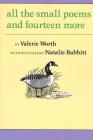
2. My mentor Myra Cohn Livingston recommended All The Small Poems and Fourteen More by Valerie Worth, filled with poems about every day objects. Myra constantly said, “Tell me something new—or tell me something old in a new way. Make it fresh.” She said that the poet’s challenge was to get someone to see something as they had never seen it before.
3. Many years ago, Gale, the company that publishes the reference guide Something About The Author, commissioned me to write my autobiography for this series. Up to that point I had only written picture books, so the prospect of writing something long was daunting.
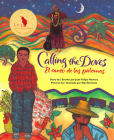
I read lots of autobiographies, trying to figure out how I wanted to tell my life. Finally, I came across Calling The Doves—el canto de las palomas by Juan Felipe Herrera.
4. The enchanting poetry book about the artist’s process, That's How it is When We Draw, written and illustrated by my dear friend, Ruth Lercher Bornstein, has taught me (again) that less is more.
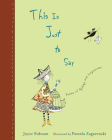
5. I found This is Just to Say—poems of apology and forgiveness, by Joyce Sidman when I was searching for books to add to my list about forgiveness and apologizing, to tie into the publication of my new book, New Year at the Pier—A Rosh Hashanah Story, which deals with these issues.
So for today, those are my Fav Five!
Here’s a poem about the pleasure of books which Lee Bennett Hopkins has accepted for a forthcoming anthology:
BOOKTIME
by April Halprin Wayland
I stand on our couch
closing windows,
pulling down shades,
shutting out shouting streets.
Wheels, squeals and dust driven past
disappear.
Those constant distant drums outside
are gone.
Inside I sit close to Mom.
I lay my head against her.
Listen to her heart
Listen to the words.
Listen to the whisper
of each
turned
page.
© April Halprin Wayland
=========================================
WRITING WORKOUT by April Halprin Wayland1) Choose a poem you like.
2) Read it to yourself.
3) Read it aloud.
4) Write it in your own handwriting.
5) Now—write your own poem that does one of the following:
a) answers this poem
b) imitates this poem in content
c) imitates this poem in structure
d) takes one phrase from the poem and uses it in a completely different way.
6) Write with joy!

Wednesday, June 17, 2009
Summertime = Reading for Pleasure
Posted by
Carmela Martino
As a child and teen, I always looked forward to summer as a time to read for pleasure (as opposed to assigned reading). Once a week, I rode the CTA bus to my local branch of the Chicago Public library to check out as many books as I could. Yet now, when students at school visits ask me my favorite books as a child, I draw a blank. Rather than specific books, I remember the genres.For example, I recall being obsessed with mysteries in fifth grade. I read every Nancy Drew and Hardy Boys book at my library branch. Unlike Mary Ann, it never occurred
to me to reread them. (Maybe if I had, I'd be able to remember some specific titles now) Reading mysteries was an adventure in puzzle-solving. Once I knew the solution, there was no motivation to read the story again. So after I finished all the mysteries in the children's section, I went upstairs to the adult section and checked out the Sherlock Holmes mysteries. I devoured those books so quickly that they, too, form a blur in my memory.
to me to reread them. (Maybe if I had, I'd be able to remember some specific titles now) Reading mysteries was an adventure in puzzle-solving. Once I knew the solution, there was no motivation to read the story again. So after I finished all the mysteries in the children's section, I went upstairs to the adult section and checked out the Sherlock Holmes mysteries. I devoured those books so quickly that they, too, form a blur in my memory.Some time in junior high, my interest shifted to fantasy. My favorite series was
J. R. R. Tolkien's Hobbit/Lord of the Rings. I was fascinated not only by the story, but also by the amazing world Tolkien created His were the first books I ever re-read, and they were just as fascinating the second (and later, third) time around. While I read lots of books during my "fantasy stage," the only others I recall are those in Anne McCaffrey's Dragonriders of Pern series. (Of course, Harry Potter hadn't been published yet.)
J. R. R. Tolkien's Hobbit/Lord of the Rings. I was fascinated not only by the story, but also by the amazing world Tolkien created His were the first books I ever re-read, and they were just as fascinating the second (and later, third) time around. While I read lots of books during my "fantasy stage," the only others I recall are those in Anne McCaffrey's Dragonriders of Pern series. (Of course, Harry Potter hadn't been published yet.) From fantasy I progressed to science fiction. Again, I read voraciously within the genre, but the ones that stand out are Isaac Asimov's Foundation series and Robert Heinlein's novels.
When I took a high school class in British literature,
I became a fan of Jane Austen's Pride and Prejudice. It, like Tolkien's books, is one I've read multiple times. In turn, my interest in British literature led to a "Charles Dickens stage." My favorites were Great Expectations and Tale of Two Cities. I have no idea what other teenagers were reading at the time, but I knew my friends would tease me mercilessly if they found out I read Dickens "for fun." So I kept my passion a secret. I didn't tell them about reading Tolstoy's War and Peace either.
I became a fan of Jane Austen's Pride and Prejudice. It, like Tolkien's books, is one I've read multiple times. In turn, my interest in British literature led to a "Charles Dickens stage." My favorites were Great Expectations and Tale of Two Cities. I have no idea what other teenagers were reading at the time, but I knew my friends would tease me mercilessly if they found out I read Dickens "for fun." So I kept my passion a secret. I didn't tell them about reading Tolstoy's War and Peace either.To help with that work, I attended the Historical Novel Society Conference in Schaumburg, Illinois last weekend. I neglected to bring my camera, but thanks to my friend and fellow young-adult author Sarah Barthel, I do have some pictures to share. Here, I'm seated with Julie Phend,
The conference was a great experience--I was inspired by the talented speakers, and I learned some helpful research tips.
By the way, if you can recommend any good books set in 18th-century Europe, do let me know!
Friday, June 12, 2009
A Little Mental Comfort Food
Posted by
mary ann rodman
When I think of "books I loved as a child", I don't have to think hard, because they are right here on my bookshelves. I am a big believer in re-reading. The ultimate book experience is when you literally "fall into" a story world that seems as real or more real, than the one you live in. As an adult, I can see that I coped with a pretty stressful childhood by escaping through books. I read everything that came down the pike...magazines, adult books, pamphlets in the doctor's office...but there were those special books that I read again and again and again (and still do.)
My parents never understand how I could read the same book over and over. "Not A TREE GROWS IN BROOKLYN again?" they would groan. Or THE DIARY OF A YOUNG GIRL. Or CHARLOTTE'S WEB. "Does it come out differently this time?" they would tease.
I couldn't explain that no, this time the Nazis don't discover the Franks or that Charlotte doesn't die. Re-reading was like visiting old friends who were always happy to see me. It was like snuggling into my favorite quilt, When I first heard the term "comfort food", I immediately thought of my beloved book friends. Time spent with Francie Nolan or Anne Frank was exactly like a good bowl of mashed potatoes and gravy.
Most of these books are middle grade or adult novels. I don't ever remember reading picture books or Dr. Seuss until I was an adult in library school. What follows is an oddball assortment, some of which are out of print (alas).
CHARLOTTE'S WEB by E.B White--This is the book that I would take to a desert island; it has everything. Humor (Templeton the rat is my all time favorite fictional character), suspense (Will Charlotte's plan succeed?) and the reassuring notion of no matter what, life goes on. I also learned the beauty of description, something I nearly always skipped in reading. But White's humorous descriptions, and lists of items (such as the contents of Wilbur's pig slops) serve as both scene setter and insight into the characters.
HARRIET THE SPY by Louise Fitzhugh--This was the first book I encountered where the adult weren't founts of wisdom (with the exception of Ole Golly). In fact, as viewed through the lensless glasses of Harriet M. Welsch, most adults were foolish or clueless or both. Harriet, as the title implies, was an unapologetic eleven-year-old snoop, and so was I. Harriet taught me how to listen to people through walls, via a water glass! Harriet also taught me that there was a time for the unvarnished truth, and a time to keep it to yourself.
THE DIARY OF A YOUNG GIRL by Anne Frank--Anne was the first person who told me I could be a writer. Well, not personally, of course, but as I read her diary I was enthralled by how she made what could have been a deadly dull reciting of daily events (even if they did happen during WWII while hiding from the Nazis) a fascinating narrative. I was even more impressed when I learned that she revised the journal at least twice before her discovery, with the thought of publishing it after the war. I found comfort with Anne. While the Nazis might not have forced my family into an attic, I did live in daily fear of the Ku Klux Klan. Anne became my junior high equivalent of the imaginary friend.
THE FAIRY DOLL by Rumer Godden; TIME FOR LISSA by Rebecca Caudill; THE CHINESE DAUGHTER by Frances Lattimore What do these three books have in common? Certainly not the settings (England, the U.S. and pre-Communist China, respectively). The common thread is that the main character has a special relationship with a doll. I was never much of doll girl, as far as playing with them. But the girls in these books treated their dolls as surrogate siblings. As an only child, I desperately wanted a sibling, or since that was not in my power, a special doll to bond with. These books represented to me that unattainable ideal. Word of warning if you search these books out, THE CHINESE DAUGHTER has some politically incorrect notions of Asians, by today's standards.
THE BEANY MALONE/KATIE ROSE AND STACY BELFORD BOOKS by Leonora Mattingly Weber. Once I ditched Nancy Drew and the Bobbsey Twins (cringe!) I discovered the World of Beany and Katie Rose and Stacy...specifically Denver, from the 1940's to the late 60's. Between the Beany books and the Katie Rose/Stacy books, there were 23 volumes, following the same characters as they moved through adolescence, college, marriage and parenthood. After Beany finally married The Boy Next Door, she turned up as a cameo character in the Katie Rose books, so I could still keep up with the Malone family. It was an insular little world where people dated and married their classmates, and no one ever seemed to leave Denver. This was comforting to someone like me, who attended 10 different schools before I graduated from high school. I loved the idea of people who were lifelong friends, a phenomena I had never encountered, Then I met my husband who went through elementary to graduate school with the same cast of characters. How I envy the continuity of his life. Just like fiction!
THE MELENDY TRILOGY by Elizabeth Enright. Since these books were published during WWII, I always considered them "historical fiction". I was adult before I realized that the Melendys could have been the contemporaries of my parents...and may have been the beginning of my interest in life on the Home Front (the origins of JIMMY'S STARS, perhaps) At any rate, like the Malones and Belfords, the Melendys were a large, single parent family, whose lives and adventures seemed blissfully unencumbered by adult interference. Ah!!!!
AN OLD FASHIONED GIRL by Louisa May Alcott--This was a book that turned up in my Easter basket one year, no doubt because it was next to the candy display at E.J. Korvette's. I believed that any book given as a gift should be read, no matter how deadly dull. I had read LITTLE WOMEN the year before, in third grade, and was unimpressed by the March girls. But Polly, the old-fashioned girl of the title, was much livelier and more naive than Jo et al, in this take on the " country mouse/city mouse." After a year or two with Polly, I was ready to re-read and enjoy LITTLE WOMEN...but OLD FASHIONED GIRL is the book I still return to.
A TREE GROWS IN BROOKLYN by Betty Smith. I read this only because 1) I had already read all the books I had brought with me to my grandmother's house and 2) it was the only book in her house that didn't have the word "arthritis" in the title. I was ten, and so was Francie Nolan, the main character. I was totally hooked by the first chapter's description of Francie's weekly visit to the library to choose books. Going to the library was the high point of my week, which occurred right after my weekly trip to the allergist. Francie might have been living in the slums of 1910 Brooklyn, but we were total soulmates on the subject of reading. My grandmother gave me her copy to take home. Although this book now resides in YA departments, when it was published in 1943, it was an adult bestseller. This was my first book that even MENTIONED the possibility of human reproduction. I thoughtfully dog-eared the "dirty" pages for my friends to view and share in the back seats of the school bus. I read everything else Betty Smith wrote (I had to have a note from my mother to check out books from the adult section of the library) and while I enjoyed them, nothing equaled the Nolans.
AUNTIE MAME and THE JOYOUS SEASON by Patrick Dennis. I discovered these two in a junk store bin on a trip to Florida. I had, once again, read everything I had brought with me, and would have read WAR AND PEACE if it had been in my motel room. These two books were never meant for children, even though the narrators are both young boys (in the first case, an adult looking back at his childhood). I thought they were hysterically, laugh-out-loud funny. I particularly like THE JOYOUS SEASON, a child's eye view of "jet set" New York of the '60's and divorce. (I told you they weren't really for kids!) I was twelve when I read them, and the combination of innocence and snarkiness in the voices of the fictional "Patrick" of AUNTIE MAME, and Kerry, in THE JOYOUS SEASON (which I think is out of print.)
As an adult, I no longer have the luxury of sprawling in the back seat of a car on a ten hour road trip with a stack of books and a bag of lemon drops to suck. Now I'm the one driving, and my daughter gets carsick if she tries to do anything that involves a printed page. Enter...the Recorded Book! Now, my Inner Child and my actual child enjoy those long drives with some of my old favorites (such as Beverly Cleary's HENRRY HUGGINS and RAMONA, THE PEST...both excellent readings by Neil Patrick Harris and Stockard Channing, respectively) and new ones (Carl Hiaasen's HOOT and Rick Riordan's Percy Jackson series come to mind.)
I'm taking off for the beach in a couple of weeks, and I think I'll take a few old friends...like Patrick and Polly and of course, Wilbur and Templeton. Time to reconnect with my real inner child again!
What I've been reading: I've been recovering from eye surgery, so I haven't been doing as much reading. But since we last talked, I've read NEW YEAR AT THE PIER by fellow blogger April Halprin Wayland (picture book), GEORGIA RISE: A DAY IN THE LIFE OF GEORGIA O'KEEFE by Katherine Lasky (Non-fiction picture book);UNDER THE BRIDGE by Rebecca Godfrey, BANGKOK DAYS by Lawrence Osborne, HUNGRY by Allen Zadoff, ANNIE'S GHOSTS by Steven Luxemburg (Adult non-fiction)
My parents never understand how I could read the same book over and over. "Not A TREE GROWS IN BROOKLYN again?" they would groan. Or THE DIARY OF A YOUNG GIRL. Or CHARLOTTE'S WEB. "Does it come out differently this time?" they would tease.
I couldn't explain that no, this time the Nazis don't discover the Franks or that Charlotte doesn't die. Re-reading was like visiting old friends who were always happy to see me. It was like snuggling into my favorite quilt, When I first heard the term "comfort food", I immediately thought of my beloved book friends. Time spent with Francie Nolan or Anne Frank was exactly like a good bowl of mashed potatoes and gravy.
Most of these books are middle grade or adult novels. I don't ever remember reading picture books or Dr. Seuss until I was an adult in library school. What follows is an oddball assortment, some of which are out of print (alas).
CHARLOTTE'S WEB by E.B White--This is the book that I would take to a desert island; it has everything. Humor (Templeton the rat is my all time favorite fictional character), suspense (Will Charlotte's plan succeed?) and the reassuring notion of no matter what, life goes on. I also learned the beauty of description, something I nearly always skipped in reading. But White's humorous descriptions, and lists of items (such as the contents of Wilbur's pig slops) serve as both scene setter and insight into the characters.
HARRIET THE SPY by Louise Fitzhugh--This was the first book I encountered where the adult weren't founts of wisdom (with the exception of Ole Golly). In fact, as viewed through the lensless glasses of Harriet M. Welsch, most adults were foolish or clueless or both. Harriet, as the title implies, was an unapologetic eleven-year-old snoop, and so was I. Harriet taught me how to listen to people through walls, via a water glass! Harriet also taught me that there was a time for the unvarnished truth, and a time to keep it to yourself.
THE DIARY OF A YOUNG GIRL by Anne Frank--Anne was the first person who told me I could be a writer. Well, not personally, of course, but as I read her diary I was enthralled by how she made what could have been a deadly dull reciting of daily events (even if they did happen during WWII while hiding from the Nazis) a fascinating narrative. I was even more impressed when I learned that she revised the journal at least twice before her discovery, with the thought of publishing it after the war. I found comfort with Anne. While the Nazis might not have forced my family into an attic, I did live in daily fear of the Ku Klux Klan. Anne became my junior high equivalent of the imaginary friend.
THE FAIRY DOLL by Rumer Godden; TIME FOR LISSA by Rebecca Caudill; THE CHINESE DAUGHTER by Frances Lattimore What do these three books have in common? Certainly not the settings (England, the U.S. and pre-Communist China, respectively). The common thread is that the main character has a special relationship with a doll. I was never much of doll girl, as far as playing with them. But the girls in these books treated their dolls as surrogate siblings. As an only child, I desperately wanted a sibling, or since that was not in my power, a special doll to bond with. These books represented to me that unattainable ideal. Word of warning if you search these books out, THE CHINESE DAUGHTER has some politically incorrect notions of Asians, by today's standards.
THE BEANY MALONE/KATIE ROSE AND STACY BELFORD BOOKS by Leonora Mattingly Weber. Once I ditched Nancy Drew and the Bobbsey Twins (cringe!) I discovered the World of Beany and Katie Rose and Stacy...specifically Denver, from the 1940's to the late 60's. Between the Beany books and the Katie Rose/Stacy books, there were 23 volumes, following the same characters as they moved through adolescence, college, marriage and parenthood. After Beany finally married The Boy Next Door, she turned up as a cameo character in the Katie Rose books, so I could still keep up with the Malone family. It was an insular little world where people dated and married their classmates, and no one ever seemed to leave Denver. This was comforting to someone like me, who attended 10 different schools before I graduated from high school. I loved the idea of people who were lifelong friends, a phenomena I had never encountered, Then I met my husband who went through elementary to graduate school with the same cast of characters. How I envy the continuity of his life. Just like fiction!
THE MELENDY TRILOGY by Elizabeth Enright. Since these books were published during WWII, I always considered them "historical fiction". I was adult before I realized that the Melendys could have been the contemporaries of my parents...and may have been the beginning of my interest in life on the Home Front (the origins of JIMMY'S STARS, perhaps) At any rate, like the Malones and Belfords, the Melendys were a large, single parent family, whose lives and adventures seemed blissfully unencumbered by adult interference. Ah!!!!
AN OLD FASHIONED GIRL by Louisa May Alcott--This was a book that turned up in my Easter basket one year, no doubt because it was next to the candy display at E.J. Korvette's. I believed that any book given as a gift should be read, no matter how deadly dull. I had read LITTLE WOMEN the year before, in third grade, and was unimpressed by the March girls. But Polly, the old-fashioned girl of the title, was much livelier and more naive than Jo et al, in this take on the " country mouse/city mouse." After a year or two with Polly, I was ready to re-read and enjoy LITTLE WOMEN...but OLD FASHIONED GIRL is the book I still return to.
A TREE GROWS IN BROOKLYN by Betty Smith. I read this only because 1) I had already read all the books I had brought with me to my grandmother's house and 2) it was the only book in her house that didn't have the word "arthritis" in the title. I was ten, and so was Francie Nolan, the main character. I was totally hooked by the first chapter's description of Francie's weekly visit to the library to choose books. Going to the library was the high point of my week, which occurred right after my weekly trip to the allergist. Francie might have been living in the slums of 1910 Brooklyn, but we were total soulmates on the subject of reading. My grandmother gave me her copy to take home. Although this book now resides in YA departments, when it was published in 1943, it was an adult bestseller. This was my first book that even MENTIONED the possibility of human reproduction. I thoughtfully dog-eared the "dirty" pages for my friends to view and share in the back seats of the school bus. I read everything else Betty Smith wrote (I had to have a note from my mother to check out books from the adult section of the library) and while I enjoyed them, nothing equaled the Nolans.
AUNTIE MAME and THE JOYOUS SEASON by Patrick Dennis. I discovered these two in a junk store bin on a trip to Florida. I had, once again, read everything I had brought with me, and would have read WAR AND PEACE if it had been in my motel room. These two books were never meant for children, even though the narrators are both young boys (in the first case, an adult looking back at his childhood). I thought they were hysterically, laugh-out-loud funny. I particularly like THE JOYOUS SEASON, a child's eye view of "jet set" New York of the '60's and divorce. (I told you they weren't really for kids!) I was twelve when I read them, and the combination of innocence and snarkiness in the voices of the fictional "Patrick" of AUNTIE MAME, and Kerry, in THE JOYOUS SEASON (which I think is out of print.)
As an adult, I no longer have the luxury of sprawling in the back seat of a car on a ten hour road trip with a stack of books and a bag of lemon drops to suck. Now I'm the one driving, and my daughter gets carsick if she tries to do anything that involves a printed page. Enter...the Recorded Book! Now, my Inner Child and my actual child enjoy those long drives with some of my old favorites (such as Beverly Cleary's HENRRY HUGGINS and RAMONA, THE PEST...both excellent readings by Neil Patrick Harris and Stockard Channing, respectively) and new ones (Carl Hiaasen's HOOT and Rick Riordan's Percy Jackson series come to mind.)
I'm taking off for the beach in a couple of weeks, and I think I'll take a few old friends...like Patrick and Polly and of course, Wilbur and Templeton. Time to reconnect with my real inner child again!
What I've been reading: I've been recovering from eye surgery, so I haven't been doing as much reading. But since we last talked, I've read NEW YEAR AT THE PIER by fellow blogger April Halprin Wayland (picture book), GEORGIA RISE: A DAY IN THE LIFE OF GEORGIA O'KEEFE by Katherine Lasky (Non-fiction picture book);UNDER THE BRIDGE by Rebecca Godfrey, BANGKOK DAYS by Lawrence Osborne, HUNGRY by Allen Zadoff, ANNIE'S GHOSTS by Steven Luxemburg (Adult non-fiction)
Still Memorable After All These Years Posted
Posted by
JoAnn Early Macken
When I speak at schools, students often ask me what books I read when I was their age. I can usually remember one or two, and I often say that I really ought to make a list someday. With help from my sisters, I finally started that list. I posted it on my web site. Here are some of my favorites.
The Color Kittens, the story of “two color kittens with green eyes, Brush and Hush,” who had “buckets and buckets and buckets and buckets of color to splash around with. Out of these colors they would make all the colors in the world.” They dreamed
“Of a purple land
In a pale pink sea
Where apples fell
From a golden tree.”
Until I found an old copy at a rummage sale a few years ago, I hadn’t realized that Margaret Wise Brown wrote it. I still love the soft illustrations, the gentle tone, and the playful language.
The 500 Hats of Bartholomew Cubbins by Dr. Seuss. I can remember Mom reading this one to my sisters and me. We all listened in suspense as the poor bewildered boy with the magically appearing hats bravely made his way up, up, up that winding staircase with the executioner following right behind him. The thought still makes me shiver.
Angelo the Naughty One by Helen Garrett. The story of a boy who runs away on his sister’s wedding day because he is afraid to take a bath. "Papa said he was a disgrace to the family and Mama was ashamed, but Angelo was always naughty. He even yelled when his face was washed!" I loved the friendly, exotic (to me) illustrations and the descriptive names of Angelo's brothers and sisters: Maria Rosa, the eldest one; Gloria, the rough one; Juanita, the sweet one; Louisa, the bright quick one; sturdy Thomas; Miguel, the tiny one; and Antonio, the baby, whom everybody loved. After a vigorous scrubbing, a ride on a prancing black stallion, and the festive wedding, Angelo’s father calls him the Brave One because he is no longer afraid of water.
Pippi Longstocking by Astrid Lindgren. A breakthrough book for me. What freedom she had! What a name! I delighted in reciting it: Pippilotta Delicatessa Windowshade Mackrelmint Efraim’s Daughter Longstocking. I loved how strong she was, how she lived with a horse and a monkey, and how she shared her gold with her friends Tommy and Annika. I wanted to be her.
Little Women by Louisa May Alcott. Naturally, I identified with Jo. I imagined myself a tomboy and a writer and even started calling myself Jo instead of JoAnn. I picked up a copy a few weeks ago and was amazed to recognize how familiar it all was. I must have read it many times.
What makes these books so memorable to me? The same things that grab any child's attention: thrilling, imaginative stories about brave, clever, determined characters who figure things out for themselves, who make mistakes and make amends and are loved in spite of their faults. Exciting language with rhythm, rhyme, and wordplay. Surprise and wonder, comfort and reassurance. I hope that kids today still find these things in books. Plus welcoming laps to sit in and people who care enough to read with them.
The Color Kittens, the story of “two color kittens with green eyes, Brush and Hush,” who had “buckets and buckets and buckets and buckets of color to splash around with. Out of these colors they would make all the colors in the world.” They dreamed“Of a purple land
In a pale pink sea
Where apples fell
From a golden tree.”
Until I found an old copy at a rummage sale a few years ago, I hadn’t realized that Margaret Wise Brown wrote it. I still love the soft illustrations, the gentle tone, and the playful language.
The 500 Hats of Bartholomew Cubbins by Dr. Seuss. I can remember Mom reading this one to my sisters and me. We all listened in suspense as the poor bewildered boy with the magically appearing hats bravely made his way up, up, up that winding staircase with the executioner following right behind him. The thought still makes me shiver.
Angelo the Naughty One by Helen Garrett. The story of a boy who runs away on his sister’s wedding day because he is afraid to take a bath. "Papa said he was a disgrace to the family and Mama was ashamed, but Angelo was always naughty. He even yelled when his face was washed!" I loved the friendly, exotic (to me) illustrations and the descriptive names of Angelo's brothers and sisters: Maria Rosa, the eldest one; Gloria, the rough one; Juanita, the sweet one; Louisa, the bright quick one; sturdy Thomas; Miguel, the tiny one; and Antonio, the baby, whom everybody loved. After a vigorous scrubbing, a ride on a prancing black stallion, and the festive wedding, Angelo’s father calls him the Brave One because he is no longer afraid of water.
Pippi Longstocking by Astrid Lindgren. A breakthrough book for me. What freedom she had! What a name! I delighted in reciting it: Pippilotta Delicatessa Windowshade Mackrelmint Efraim’s Daughter Longstocking. I loved how strong she was, how she lived with a horse and a monkey, and how she shared her gold with her friends Tommy and Annika. I wanted to be her.
Little Women by Louisa May Alcott. Naturally, I identified with Jo. I imagined myself a tomboy and a writer and even started calling myself Jo instead of JoAnn. I picked up a copy a few weeks ago and was amazed to recognize how familiar it all was. I must have read it many times.What makes these books so memorable to me? The same things that grab any child's attention: thrilling, imaginative stories about brave, clever, determined characters who figure things out for themselves, who make mistakes and make amends and are loved in spite of their faults. Exciting language with rhythm, rhyme, and wordplay. Surprise and wonder, comfort and reassurance. I hope that kids today still find these things in books. Plus welcoming laps to sit in and people who care enough to read with them.
Tuesday, May 19, 2009
Read Your Brains Out, Part Deux by Mary Ann Rodman
Posted by
mary ann rodman
I read so much that I keep a reading log of what I've read, when, and where or how I learned about the book. I thought I would share what I've read in the two weeks since I last posted (OK, not counting yesterday's post) With one exception, I don't personally know any of these authors, so these are not books I am plugging for a friend (and the exception is a book I would have read anyway as research for a future piece.) Here is the list by genre, including publishing date. Where I learned of the book is in parenthesis. * indicates that I couldn't decide if this was upper middle grade or lower YA.
Picture books--SONG OF MIDDLE C by Alison McGhee, 2009 (Kirkus Reviews) DIRT ON THEIR SKIRTS by Doreen Rappaport & Lyndall Callanm 1998 (Amazon search), THE BEST FIGURE SKATER IN THE WHOLE WIDE WORLF by Linda Bailey, 2001 (Amazon search).
Easy readers--SLIP, SLIDE, SKATE by Gail Herman, 1999 (Amazon search).
Middle grade fiction--THE CHOSEN ONE by Carol Lynn Williams, 2009*(Kirkus Reviews)
Middle grade non-fiction--ELLIS ISLAND by Raymond Bial, 2009 (Kirkus Reviews)
RED SCARF GIRL by Ji-Li Jiang, 1997 (Summer reading list), DENIED, DETAINED, DEPORTED by Ann Bausum, 2009 *(Kirkus Reviews)
YA--IF I STAY by Gayle Forman 2009 (YALSA list) THE OTHER HALF OF LIFE by Kim Alblon Whitney, 2009 (YALSA list) BECAUSE I AM FURNITURE by Thalia Chaltas, 2009
(YALSA list) WHAT I SAW AND HOW I LIED by Judy Blundell, 2008 (National Book Award Winner), ALL THE BROKEN PIECES by Ann E. Burg, 2009 *(YALSA list) THE SCHOOL FOR DANGEROUS GIRLS by Eliot Scherfer, 2009 (YALSA list) THIS FULL HOUSE by Virginia Euwer Wolff, 2009 (Publishers Weekly)
YA(or adult) non-fiction--HOPE'S BOY by Andrew Bridge, 2008 (Summer reading list)
Adult non-fiction--THE JOURNAL OF HELENE BERR, 2008 (Publishers Weekly), CLOSING TIME by Joe Queenan, 2009 (Publishers Weekly).
Tune in next time for my further adventures in reading. Looking over this post, I think I'll show this to my family. . .it might explain why our house has dust bunnies the size of tumbleweeds.
Sunday, May 17, 2009
Read Your Brains Out
Posted by
mary ann rodman
At least once a school visit, I am asked (usually by a teacher), "What advice can you give a young writer?" The answer is a two-parter. Part one, "Read your brains out." (Part two is another blog.) I never have enough time to elaborate during a 10 minute Q & A session, but I do right now!
Way back when I came face to face with my first computer, the operating mantra was "Garbage in, garbage out." We were told the computer could only produce what we put into it.
So what does this have to do with reading and writing? When I tell my writing students to read, I don't mean read indiscriminately. Analyze your own reading selections. Are you reading the kind of book you would like to write? (If the answer is yes, then you may skip the rest of this post!)
If the answer is "no" or "I don't know," read on. There are a lot of books out there, and all books are not created equal. "So many books, so little time" is a phrase that runs through my head constantly, in relation to both reading, and my own writing. I am taking a wild guess that none of us are unfettered by jobs, family responsibilities, and a multitude of other mundane things. When we have so little time of our own, we are tempted to invest it all in writing. Don't. You have to read as well. And when your reading time is also limited, try to find the best possible books to read.
I am not a literary snob. I like my literary potato chips on occasion. You know the kind of books I mean, the ones that you don't mind leaving on a plane or loaning to someone who never returns it. But just as a steady diet of junk food will leave you weak, overweight and retaining water, a reading diet of "those kinds of books" will leave you with bad writing habits that are hard to shake.
So how does the average aspiring writer (who isn't a librarian) find these "good" books? This is the time of year when schools send home the dreaded "summer reading list." Your local bookstore will have the list and the books on display. That's a good place to begin if you are writing for middle graders or younger.
For reasons known only to Those Who Make the Lists, very few new or YA books are included on middle and high school lists. In fact, the list my rising sophomore was given could have been the same list I had, circa 1969! The only remotely recent YA book she was required to read since sixth grade was Laurie Halse Anderson's Speak, published in 1999. My daughter loved it, although she was puzzled by a book about teenagers that did not text or IM or run up enormous cell phone bills. Which brings me to...
Keep current with what is being published. After years as a librarian, where I had free access to all the review journals, it was hard to carry on without my Horn Book and Publisher's Weekly. Most public library systems carry these review sources and others, but sometimes you have to go to the Main Library, instead of your local branch, to find them. If I had to select only one of these to read or subscribe to, I would choose Horn Book because it is the "choosiest." They are so selective in the books they review, that I have only had the honor once, for My Best Friend. In addition to the reviews, Horn Book has a wealth of articles, essays, and just plain good information on writing workshops and seminars.
I also check in every week at the Cooperative Children's Book Center website www.education.wisc.edu/ccbc for their Book of the Week review, and their monthly book discussion list. For the latest in YA books, I scan the YALSA (Young Adult Library Services Association) site (www.ala.org/yalsa/booklists). Their Best Books Nominations list is updated monthly.
Why all the reading? To write and write well, you have to books in your bones. This is not optional! When you think of it that way, you'll find a way to wedge in some reading time. I always have a book in my purse (which is my criteria for purse buying--must be big enough to hold book). I read in check-out lines, doctor's offices, during my daughter's daily skating lessons, and deadlocked Friday afternoon Atlanta traffic. (OK, I don't recommend that one.) The point is that you can read a book at times and places when you can't write.
So go find your library card. Now.
Subscribe to:
Posts (Atom)