Showing posts with label Writer's Block. Show all posts

Friday, May 6, 2022

A Writer's Playlist

(I touched on this topic in 2011 in a series about writing "soundtracks.") 

I'm always interested in other people's playlists, what's on them and how they are used. There are playlists of Summer Songs, Road Trip Music, and Beach Music. I always read the Rolling Stone column, "What's on Your Playlist?" I love knowing what Bruce Springsteen or Barak Obama or Lizzo is listening to.

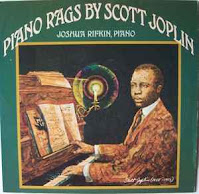
Long before Pandora or the Internet or even the Walkman, I had playlists. Back then they were called mixtapes. Somewhere in my office is a shoe box of Radio Shack brand (Realistic!)cassettes labeled "House Cleaning"(Scott Joplin rags) and "Cooking" (Bach piano inventions and The Brandenburg Concertos). I had "Blowing Off Steam" tapes (The 1812 Overture and Led Zepplin) and "Driving to Work" tapes (old school pop like Nat King Cole and Perry Como and Dean Martin). Right after my pregnancy test turned blue, I recorded a bunch of Gregorian chants for the delivery room. I wound up having a C-section, but that tape also worked for 2 am feedings.
I have to music around me all the time. I don't function well without it.

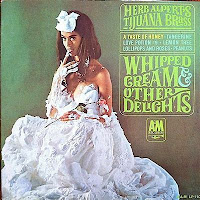
I grew up in a house where music played every waking hour. My dad had a deep, lifelong love of music, , all kinds of music. Classical, rock, modern, gospel, folk, international, soul, blues, tubal throat singing, he loved it all. He collected it all. The only genres you wouldn't find in Dad's collection were pop standards--Dad thought pop was "bland"--and jazz (he found it "undisciplined.") His job as an FBI agent was high stress. He would come home from work and head right to the stereo, the way some people get a beer from the fridge. It was his way of decompressing.  Mom, on the other hand, used Roger Miller and the Tijuana Brass combat her chronic depression.  I learned there was music for every mood and emotion.

Since I grew up doing homework with Mahler and Mozart in the background, my brain doesn't work without melody and rhythm. Just as music can get you "in the zone" when you're working out, it does the same thing with my head. Trying to write in silence fires up my Negative Mental Message Center. To avoid those messages, another part of my head meanders around, thinking of everything but writing. (Did I water the plants? What's the temperature outside? Is there any pizza in the fridge?)

Music smoothes the wrinkles in my soul and brain, leaving no room for stray thoughts or idle chatter. As a writing warm-up, I let the sound surround and enfold me. When I'm completely immersed in melody and meter, it's safe to think about my story. My brain takes on a certain rhythm...and the words come. The characters show up and talk to me. It's kind of magic. To paraphrase an old Coke jingle, "Things go better with music."

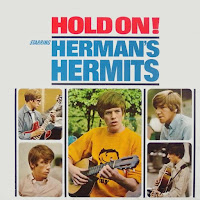
Don't lyrics distract me while I'm writing? They could, if I had on a streaming station, playing random music. I only play my own cultivated downloads or CD's (how Old School) of instrumentals, or songs so thoroughly familiar I don't think about the words. When I was writing Yankee Girl, which takes place in 1964-65, I wrote to the Top 40 music of those years. Music so familiar, the lyrics flow through my subconscious. Before I started Jimmy's Stars, I listened to Big Band music--Glenn Miller, Benny Goodman, Artie Shaw--and vocalists--Doris Day, the Andrews Sisters, early Sinatra--until the music became familiar. When I began writing, the sound was already a part of me and the story.
Although, I've always used my playlists for novel-writing, I've branched out into using it for shorter work. My newest picture book, Wibble Wobble Boom (out in early November from Peachtree) is about a first skating lesson, written at a skating rink, while my daughter took lessons. Revising it years later, I evoked that time by playing the music my daughter used for her competition programs--the Brian Setzer Orchestra,  The Godfather score, the Tijuana Brass (my mom's influence, for sure!)
"Soundtracking" doesn't work for everybody. But should you find yourself in a creative cul-de-sac, put on some music that speaks to you. Joyful, mournful, even that wispy kind of music massage therapists play, anything that takes you away from your Inner Critic and useless thoughts. Breathe in, breathe out and let the music find your story.

Written by Mary Ann Rodman


Friday, March 5, 2021

Welcoming Home the Prodigal Heart

 What keeps my writer's heart going?

Here is what I almost wrote:

Nothing keeps my writer's heart going. My writer's heart flatlined last March, the day the CDC announced that I was officially elderly and at risk.  Before last March, I thought of myself as a ten-year-old heart in a body of indeterminate age. Overnight, I became an old person who could die. My ten-year-old writer's heart curled up in a closet somewhere. Except for blog posts, I've written almost nothing since this time last year. 

Me, Carmela and April at a long ago conference

All the things that normally keep my "kid's heart" going...are gone. Young Writer's Camp. Didn't happen last summer, haven't heard about this year. Writer's group and conferences?  Gone or gone virtual. (I have difficulty hearing on Zoom.) Eavesdropping on random people. There are no random people because I don't leave the house unless it's a dire emergency. Talking to friends, over a glass of wine, meandering from subject to subject. (I mentioned my problems with Zoom, right?)

The world was so hateful and judgmental and scary...writing was the last thing I wanted to do. Not writing was the scariest thing of all, because writing is how I make sense of life. Now, the more I journaled, the less sense anything made.  Words not only failed me...I couldn't find words. I was using a thesaurus just to have a conversation with my husband. I couldn't remember why I ever thought I could write.

Maybe I couldn't write any more. 

Then something happened.

Yesterday morning, I started out on dire emergency errands...picking up prescriptions from various pharmacies. I left the house in cords and a flannel shirt. By the time I got home, the temperature was in the 70's and I was hot. So I changed into shorts and a t-shirt, and took my dog for a walk.

I wear shorts around the house in winter, because my husband insists on keeping the thermostat set to "The Tropics in July."  I walk my dog several times a day. Neither of these things are unusual. However, for the first time in months and months...I walked the dog while wearing shorts. A warm breeze tickled my knees. Boing! In an instant, I was ten years old again, wearing shorts after a winter of wool tights and storm boots. Free of slogging through slush and toe-freezing winds, I was barelegged and skipping along in my new Keds. (OK, yesterday I was wearing Vans.)

Mom and I brave another Chicago winter

My cousins and I (I'm the one shorts.)

My child's heart had returned. My inner ten-year-old is who writes my stories. Life was fascinating when I was ten, full of possibility and  hope, both sadly lacking this past year. Kids are all about hope. That's why I write for them and not their parents.

My family has been spared sickness this year, and for that I am truly thankful. But COVID and all the accompanying chaos did a number on my heart and soul. I thought my ten-year-old heart had packed her bags and hit the road, never to be seen again. 

My writer's heart has come out from wherever she was hiding, ready to hope again. And write. However, she needs time to recover. She might blow bubbles on the back porch.  Or dance around the den to her old Monkees albums.  She will most definitely re-read her favorite childhood books. And of course, dog walks in shorts and Keds. 

Some day, in-person writing conferences and long talks over wine will return. I've had vaccine shot number one, with number two scheduled for St. Patrick's Day. Until it's safe for me to re-enter the world, there is time to re-read the two best books ever written--Charlotte's Web and Harriet the Spy.  E.B. White and Louise Fitzhugh certainly knew how to keep their child hearts beating.


Posted by Mary Ann Rodman


Friday, January 22, 2021

Lessons from 2020

Our new topic is "What did I learn in 2020 that will help me in 2021?"

My first thought was  "Absolutely nothing! I'm drowning here!"

And then, in one of those serendipitous moments, my answer simply appeared...on my Kindle.(This happened last week, so this is a lesson from 2021 for...2021!)  I was checking for a new title I'd pre-ordered. Instead I found a book I bought last spring in the depths of my quarantined depression. No doubt I'd discovered it on a list of "Books to Get You Through Lockdown." Lists that included books like Yoga for Dummies, Breathe in the Moment and Sourdough Bread is the Answer! 

This one was called The Choice: Embrace the Possible by Dr. Edith Eva Eger.   I don't know how I missed it when it was first published in 2017.  Maybe because I'm suspicious of books with two word titles when one of the words is "The"...as in The Secret or The Answer, as if this book and only this book contains priceless information. Still..."embrace the possible"? 

I popped open Dr. Eger's book and scanned the table of contents. Now I remembered why I bought it. It was part self-help, part Holocaust memoir. How did these two things mesh in one book? The introduction mentions that Dr. Eger had been a protege of Dr. Viktor Frankl. I'd read Frankl's Man's Search for Meaning, his account of Auschwitz, years ago. Was there more to say on the subject of controlling your own mind in the worst of situations? Is that what The Choice was about?

Of course it's ridiculous to compare life in Auschwitz or surviving postwar Hungary to anything we might be experiencing. To quote Dr. Eger "...there is no hierarchy of suffering. There's nothing that makes my pain worse or better than yours...This kind of comparison can lead us to minimize or diminish our own suffering." The mindset of anyone who is in a situation they perceive as hopeless is the same, no matter the circumstances. 

What? It's OK to feel terrible?  Even if my family was healthy and employed? I didn't have to feel guilty for feeling bad for missing family and friends and day-to-day life? OK! I read on.

Edith Eger had been a 16-year-old dancer/gymnast on the 1944 Hungarian national team, when she and her family were sent to Auschwitz. How she survived by refusing to think like a victim is an incredible story, similar to Frankl's. However, Eger's book spoke to me in a way that Frankl's did not. The voice of the teenaged Edie was easier to identify with than Frankl's, who was a practicing doctor in his thirties during his imprisonment.

While this book has given me a different perspective on Life in the Land of COVID, it has also given me a new weapon in my never-ending battle with writer's block. All the negative inner chatter that broadcasts from the brain night and day can be silenced by...refusing to think like a victim. Dr. Eger went through many of the same self-defeating monologues herself in her post-war life. (You'd think if you survived Auschwitz, you'd feel invincible...but that was not always Dr. Eger's experience.) She had to re-discover that 16-year-old who never feared the Nazis. 

Edith Eger became a clinical psychologist in her fifties, and many of her fear-busting techniques are those she developed in her practice. Some I've encountered in therapy, some are new. They all have Dr. Eger's take-no-prisoner's philosophy. I feel as if she has actually has my back when I fall into hopeless thinking, or a panic attack.  

I leave you with one last image of Dr. Eger. As a teenage dancer/gymnast, she prided herself on the ability to kick higher than anyone in her class. Today, as a ninety-something psychologist, she can still do that high kick! In fact, that's how she ends her speeches. I couldn't do a high kick when I was sixteen, let alone now. But just picturing her doing that high kick (which by the way, you can see her perform, online) sets my spirit free, to embrace the possible.

Posted by Mary Ann Rodman

Wednesday, February 12, 2020

WWW: Seven Ways to Beat Writer’s Block!


In my last post, I shared ways to achieve 20/20 vision in 2020. So I’m especially grateful today’s Wednesday Writing Workout allows me to look back – to the 90’s, when SCBWI-Illinois connected me to terrific writer and friend Mary Sandford, next consider the present – the celebration of Mary’s debut middle grade novel UNWANTED (Ambassador International, 2019), and finally, eye the future - a world with lots of Mary Sandford books on my shelf.

Both Mary and UNWANTED deserve the best and biggest of celebrations.  Mary truly kept her eye on the prize as she did everything she could to ready this particular story for readers.  Everything, as in: participate in long-standing Writers Groups; attend classes and conferences; learn from critiques; enter and win contests; connect with fellow SCBWI children’s book creators across the Chicago area, Illinois, the Midwest, Tennessee and now Hickory Creek, Texas (though I still consider her my Illinois kin.); and of course, read, write and revisereviserevise. Her writer’s antennae were and remain always on alert for learning opportunities. She’s published more than 50 articles and stories along the way.

Mary’s historical middle grade novel UNWANTED takes place in Chicago in 1958 and is inspired by true events – the unfortunate December 1 fire at Our Lady of the Angels parochial school that took the lives of 100 students. UNWANTED tells the story of Debbie Spencer who is like most twelve-year-old girls.  She loves her friends, loves to laugh, and she’s not afraid to pray.  Debbie is an average seventh grader…except she lives at an orphanage…even though she’s not an orphan.  Convinced her family is damaged beyond repair, Debbie longs for a new one.  And she’s going to find one.  When the Our Lady of the Angels fire tragically takes the lives of her roommate Noreen’s friends, Debbie puts aside her own desires to help her friend.  Things, it turns out, aren’t always what they seem and forgiveness is always the best choice.

Thank you, Mary, for sharing your novel, your writing smarts, insights and terrific self with our TeachingAuthors readers. Just about all of us are familiar with Writer’s Block.  I especially like #6 in your tips.

Good Luck Beating Writer’s Block!

Esther Hershenhorn

. . . . . . . . . . . . . . . .

SEVEN WAYS TO BEAT WRITER’S BLOCK

I know it’s strange, but I’ve never struggled with writer’s block. So, it may seem like I’m the last person to write about how to avoid it. You may be thinking, “Write what you know.” How many times have we heard that? Or you may wonder, "How can I  have any idea about  something I can't possibly understand?" But I do understand. It’s just that my writing struggles were different. When I stared writing, my seven children were still young. So, I spent several years longing for time to write. I found myself creating paragraphs in my head about the things that filled up all my time. Paragraphs like this:

     Mary pulled the last shirt out of the dryer, folded it in the air and laid it on top of the stack for Terianne. Picking up four stacks of shirts, she checked on the kids who were making yet another tent  in the family room and headed upstairs. On her way through the kitchen she spotted Michael standing in front of the open refrigerator staring inside. “Aren’t you going to be late for work?” she asked.

And then, as usual, a real conversation kept me from finishing my mental paragraphs without any time at all to revise. And I really wanted to change that character’s name to Olivia or Cynthia or something more creative.

When my youngest, Jeff, started sleeping through the night and not waking up before six am, I started getting up at about five in the morning, so I could tiptoe downstairs and write for maybe an hour and a half before the craziness started. I even managed to write a few devotionals, children’s programs, and puppet performance scripts. But my children were always my priority. I loved playing with them and reading to them and just hanging out.

When Jeff started school, I had more time to spend on writing. That’s when I joined the Society of Children’s Book Writers and Illustrators and started to attend conferences and writing workshops. In the summer when my tribe grew older, I was the “good mom” who took her kids to the community pool every day because I discovered it was a great place to write and still respond to “Watch this, Mom!”

Now, the nest is empty, but all those years I spent focusing on my children filled my head with stories and taught me how to avoid writer’s block. So, here are my Seven Ways to Beat Writers Block.

1. Think. 
I imagine every writer does a lot of thinking before writing a new story. But I intentionally think about what I want to write and then I keep on thinking about what should happen next before I ever sit down at my computer. I think about what I want to write while I’m making breakfast or waiting in a check-out line at a store or walking on my treadmill or in my neighborhood. Even driving or commuting anywhere that takes more than five minutes is a great time to spend thinking and planning what to write next. My favorite time is when I can’t sleep. It might be when I first get in bed or maybe in the middle of the night when I wake up and can’t get back to sleep. I have learned, the hard way, to write a few notes on my phone so I won’t forget.

2. Reread what you wrote yesterday.
I confess I’ve never written the Lousy First Draft suggested by most successful writers and now that my first book is out I feel at least a little justified to admit it here. Every writer has a different process, right? Mine includes rereading and revising whatever I wrote the last time I sat down to write. Now that my life is my own most of the time, I’ve realized I am a very organized person. (I confess I like that my spices are in order alphabetically. Come on, it doesn’t take much time to keep them that way and it makes cooking much faster.) For me revision is just organizing what I’ve written. And I like to do it. Plus, it gets me completely back into my story making it easy to continue creating it.

3. Stop with a cliff hanger.

Here’s an excerpt from Unwanted:

     Noreen buried her face in her brother's chest, a fresh wave of sobs engulfing them both.
     “Shhh . . . ” I tried to quiet her. It was a small miracle that we’d made it all the way to the infirmary without anyone seeing us.
     Silently, I thanked God for the miracle and begged to know what to do next.
     That's when the door swung open. 

That’s a perfect place to stop writing. I know exactly what to write next – Patricia Olsen stepped into the infirmary – and what she says and what she does. Sometimes I stop in the middle of a scene. That’s usually because my phone reminds me I have an appointment I’ve forgotten. While I’m driving to my appointment I’m using technique number one.

4. Stop writing mid-sentence or mid-paragraph.
Like technique #3, this is easy to do when my writing time is interrupted, but sometimes I just make myself stop so I won’t struggle to start again. I know what’s coming next and just stop writing before I put it on paper; if I think I might forget I put down a few words as a reminder. This isn’t something I do often, but sometimes I know I need to stop. I know I haven’t done enough thinking to get much farther.

5. Read books in your genre.
This technique works great when I’ve used #4 or before I sit down to write when I’ll have several hours of uninterrupted time. Good writers are great readers, right? I usually read at least two or three middle grade books every week. Reading good books in your genre is a great way to improve your craft. I love reading middle grade, so it works for me. I always say I’m working when I’m reading and it makes me laugh. I have a wonderful “job.”

6. Work on something related to your Work-in-Progress.
When I know I am not ready to work on my manuscript, working on my synopsis or a query letter helps me see my story in different way. The concise format can trigger ideas of where to go with the story next. I might realize the need for a scene earlier in the story to make my reader keep reading or begin to wonder about something I plan to add later.

7. Keep your (saved) document on your desktop.
I’ll admit: sometimes my computer desktop is so full of documents and photos or whatever, I might not even notice my Work-in-Progress. But I know it’s there. When I’m reminded about my WIP, I remember technique #1 and I’m thinking about what I want to write next and so it goes.

I personally don’t struggle with Writer’s Block, but maybe using some of these techniques will help those of you who do to stop struggling and BIC -get your butt in your chair and write.


Friday, September 9, 2016

3 Insights Into Improving Writing Productivity


Our current series is about beginning a new writing career or jump-starting a stalled one. Carla shared 5 things she wished she’d known when starting out as a writer and JoAnn talked about coping with a lull in her enthusiasm for writing. My post today focuses more on the latter, but I think it's also of value to beginning writers. Before I get to that, I'd like to share two bits of news:
  • The revised edition of my middle-grade novel, Rosa, Sola, (originally published by Candlewick Press) is now available in both ebook and paperback, and includes a new "Discussion Questions" section for classroom use. I'm currently sponsoring a Goodreads giveaway, which I invite you to enter on this Goodreads page or via the widget below:  

Goodreads Book Giveaway

Rosa, Sola by Carmela A. Martino

Rosa, Sola

by Carmela A. Martino

Giveaway ends October 05, 2016.
See the giveaway details at Goodreads.
Enter Giveaway
  • Also, for those of you who live in the Chicago area: it's not too late to register for my class on "Finding Your Writer's Voice," which begins Tuesday, September 13, at the College of DuPage in Glen Ellyn. See my website for details. 
Now for today's post.

Like JoAnn, I’ve been stalled in my writing lately. The problem started back in April, when I was sidelined with a repetitive stress injury to my dominant hand. The injury has not only interfered with my ability to type and to write longhand, but it has also caused me to lose my enthusiasm for writing. Fortunately, though, I'm currently leading a small, private class on Julia Cameron’s The Artist’s Way. The timing of the class is perfect, as it’s helping me examine my writing process and the causes of my current lack of productivity. Here are three insights I’ve been led to recently, via Cameron’s book and other reading I’ve been doing:

1. “In order to do something well we must first be willing to do it badly.”

These are Cameron’s words in The Artist’s Way: A Spiritual Path to Higher Creativity (Tarcher Books), but they convey a concept I've found in other books on writing and creativity--think the “sh**tty first draft” in Anne Lamott’s Bird by Bird (Pantheon Books). Elizabeth Gilbert also touches on the topic in her book Big Magic: Creative Living Beyond Fear (Riverhead Books) when she talks about the necessity of accepting imperfection if we want to lead creative lives.


I’ve always been a perfectionist, and now that I’m a published author and a writing teacher, part of me thinks that I should be able to produce a polished draft right off the bat, with little or no editing. And when I don’t do that, I feel like a failure. So I was shocked when, in Big Magic, Gilbert confesses to publishing a novel she’d written without revising a major flaw that her beta readers had pointed out. I listened to the audiobook, so I can’t quote Big Magic directly. But I did find an interview in The Guardian where Gilbert is quoted as saying:
“Perfection murders joy. You cut yourself out of the game before you even start. You cut yourself out of the game because you’ve decided it’s never going to be as good as your ideal.”
I also found the following image, which I’ve printed out and posted in my office as a reminder that I will always be a beginner. I’m hoping that trying to keep an open, “Beginner’s Mind,” will help me overcome my perfectionism.

found here with caption "Image Source: Facebook user Elizabeth Gilbert"
2. If I can’t “find” time for my writing, I need to “make” the time.

My students often complain about not having enough time to write, and lately I’ve been using the same excuse. Julia Cameron addressed this recently in a blog post:
"Most of us think, 'If only I had more time, then I would work.' We have a fantasy that there is such a thing as a 'good' creative time, an idyll of endless, seamless time unfolding invitingly for us to frolic in creatively. No such bolts of limitless time exist for most of us. Our days are chopped into segments, and if we are to be creative, we must learn to use the limited time we have."
That's how I worked on this blog post, in little segments of time stolen between physical therapy appointments, lesson planning, household chores, etc. If I can make time to blog, I can make time for my own creative writing, too.

When I explain this to my students, they often reply that they can’t just sit down to write. They need to feel “inspired.” But, as M. L’Engle says in Walking on Water: Reflections on Faith and Art (Crosswicks):
“If the artist works only when he feels like it, he’s not apt to build up much of a body of work. Inspiration far more often comes during the work than before it, because the largest part of the job of the artist is to listen to the work, and to go where it tells him to go.”
3. My attitude has a profound effect on my productivity.

It’s not enough for me to “make time” for my writing. I need to bring the right attitude with me when I sit down to write. I’ve shared before about how research is showing that happy people tend to be more productive. But this is a lesson I need to constantly remind myself of.

In an excerpt from The Artist's Way posted on her blog, Julia Cameron says:
“Over any extended period of time, being an artist requires enthusiasm more than discipline. Enthusiasm is not an emotional state. It is a spiritual commitment, a loving surrender to our creative process, a loving recognition of all the creativity around us. 
Enthusiasm (from the Greek, 'filled with God') is an ongoing energy supply tapped into the flow of life itself. Enthusiasm is grounded in play, not work. Far from being a brain-numbed soldier, our artist is actually our child within, our inner playmate. As with all playmates, it is joy, not duty, that makes for a lasting bond.”
Hmm. There’s that word again: JOY.

For years I’ve been signing my posts here with “Happy writing!” I think I need a more expansive catch phrase. What do you think of this:


For more joy and inspiration, head over to this week's Poetry Friday round-up at The Poem Farm.
Carmela

Friday, September 2, 2016

Carrying On Anyway

In this series of posts, we're discussing how to start or reboot a career in writing for children. Carla gave us five really helpful things she wished she had known when she started. I'm focusing more on the reboot.

In my last post, I wrote about That Awful Balky Feeling and carrying on anyway. Here are a few things that helped me:

1. Ugh. Summer cold. Enough said.

2. I'm halfway through Julia Cameron's It's Never Too Late to Begin Again: Discovering Creativity at Midlife and Beyond. I've long been a fan of The Artist's Way, and although much of this book repeated what I'd already read, I found the reinforcement helpful.

3. Around here, we've been clearing out clutter. For me, that means sorting through and recycling lots of paper--ancient work-for-hire contracts, poems that students wrote in my workshops, half-baked ideas, and previous drafts of work I've since revised. It's a big relief to let go of that stuff! The good news: I found a few nuggets I'm excited about working on again. The other good news: If and when we find the perfect new home, we'll have less to move.

Our latest Book Giveaway: Pamela C. has won an autographed copy of Amy Cattapan's middle-grade mystery Seven Riddles to Nowhere. Congratulations, Pamela!

Penny Parker Klostermann has today's Poetry Friday Roundup. Enjoy!

JoAnn Early Macken

Monday, May 9, 2016

The Cure for Writer’s Block: A Deadline


For me, writer’s block does not come when I have a contract for a book-and a deadline that goes with it.  No, then I can focus on the work at hand.  As the deadline creeps closer and closer, the hours I pour into my manuscript are longer and longer.   When a team of people at my publisher is waiting on my manuscript, there is no time for writer’s block. 

It is between contracts, when I’m trying to figure out what project I want to tackle next, that is the closest thing to writer’s block for me.  That is when I clean out closets, drawers, and go to the mall where I wander around.  It is then I wonder what to do next in sort of a writer’s block. 

When I was first starting out, I wondered how authors could possibly come up with ideas.  Now I understand that ideas are everywhere and all around me.  The challenge is figuring out which idea is the right idea to become my next book.  Is the idea marketable?  Has the topic been written about thousands of times?  Are there any books on the topic?  If not, why not?  And is this a subject I can think about every day for the next several years?  Can I invest my mind and heart to the topic?  Is this topic worth my devotion? 

Let me give you an example.  A few months ago I was asked if I would be interested in writing about the Salem witch trials.  I said yes, I’d look into it.  (No contract, just discussing possibilities.)  But after I did a lot research, I found the topic so dark and disturbing that I knew this was not a topic for me.  I could not write a book on this topic no matter what.  I could not live with this topic for years. 

Yet around the same time, I decided to write about George Washington’s slaves.   The subject of slavery is also a disturbing topic, but the idea of this book is exciting.  It is a topic that is marketable, has never been done, and I am willing to invest my mind and heart to this topic because it is worth my devotion for years to come.   This is a book that I’m meant to write, and I am enjoying the research.   In other words, this book is worth my time.  

So while I’m working on BURIED LIVES: GEORGE WASHINGTON’S SLAVES OF MOUNT VERNON I do not time for writer’s block.  

But once this manuscript is done, watch out messy closet.  

Me signing the contract for BURIED LIVES.   Happy day!


Carla Killough McClafferty


Friday, May 6, 2016

I bought a chair.

I bought a chair. I wish I had time to take and post a picture, but I’m heading to Minneapolis today for the Children’s and Young Adult Literature Conference 2016 at The Loft, where I’ll speak about Activating Passive Language in Picture Books.

You’ll have to imagine the chair. Really, it’s a pretty standard office-type model—black with adjustable arms, seat, and back—and it fits me better than the dining room chair I’ve been using lately or the rummage sale varieties I used before that. I’ve needed a decent chair for a long time.

Last weekend’s mail brought a pleasant surprise in the form of a larger-than-I-expected royalty check. Of course, I’ll pay some bills. Of course, I’ll set something aside for the future. But I knew right away what I would spend some of my hard-earned money on.

I bought a chair.

In this series of Teaching Author posts, we’re discussing writer’s block. In previous posts on the topic, Mary Ann described her Work in Progress as the Scariest Thing on Earth. Bobbi explained some theories about writer’s block. Lately, I’ve found inspiration here and here and especially here.

Some people insist that writer’s block doesn’t exist. I wish I were in that camp, but I’ve experienced it myself too often. I wish I could tell you how to solve it. Walking helps me a lot. So do Morning Pages. And as I realized this week, so does money.

Believe me, I know how lucky I am to be able to pursue writing as a career. (Gratitude helps, too!) But in those long gaps between royalty statements, it can be hard for me to stay motivated if the work itself is the only reward. I wish money didn’t matter, but it does. In spite of all my years of effort, that check (probably not a big deal in some people’s bank accounts) felt like a gift. It lifted a weight and reminded me that anything can happen. It made me remember why I do this work after all—certainly not for the money.

So I bought a chair, both because I needed it and because I needed to make a commitment to writing again. Boy, this was a tough winter. But we persevered, didn’t we?

Walking helped.

Morning Pages helped.

Gratitude helped.

And now that I finally have a comfortable chair that fits me, nothing can hold me back from the best work I’ve ever done.
I bought myself a brand-new perch—
a chair that doesn’t tip or lurch,
grumble, grind, collapse, or creak,
or drop with just a warning squeak.
So if you need me, I’ll be there,
writing in my writing chair. 
Don’t forget to enter our Seventh Blogiversary Book Giveaway! You could win the updated edition of Carmela Martino’s middle-grade historical fiction novel Rosa, Sola.

Sylvia Vardell has the Poetry Friday Roundup at Poetry for Children. Enjoy!

JoAnn Early Macken


Monday, May 2, 2016

Once Upon a Block-ness Monster


Mary Ann wrote about her emotional journey as she worked on her MBN (My Big Novel), and how a devastating writer’s block stopped its progress for ten years. I’m still reeling from her honesty about her struggles. 

The term “writer’s block” was coined by psychiatrist Edmund Bergler in the 1940s. He studied writers for two decades, trying to understand why they suffered from “neurotic inhibitions of productivity.” There were several popular theories at the time. Some thought the writers simply used up all their inspirations and was dry of further creative thought. The landlord theory supported the notion that the writing stopped as soon as the rent was paid, implying that it was the struggle itself that fed the creative juices. In 1950, Bergler published his findings in his article, Does Writer’s Block Exist? His conclusions were that a writer was like a psychoanalyst. And a blocked writer was, in essence, blocked psychologically.

There have been other studies since Bergler, all trying to understand this creative “block-ness.” (See Maria Konnikova, How to Beat Writer’s Block, The New Yorker: March 11, 2016) Despite the many, many reasons why one suffers from creative block, everyone has in common certain experiences: their motivation has wavered, they felt less joy in the process, and they had “low levels of positive and constructive mental imagery.”


Writer’s block doesn’t only happen to writers, despite the term. Anyone who creates anything in any format can find herself in a position of “block-ness.” You have an idea, or you have a thousand ideas all at once, but either way, you don’t know where to begin. Or you’re rolling along on your MBN when suddenly, life happens. When you finally return to your MBN, you’re stuck and have no idea how to get unstuck. You’ve fallen and can’t get up. Or worse, not only did you hit a dead end, you’ve come to believe you are not good enough, and no amount of revision is going to improve the MBN, or you. During these times, you may give up completely, and abandon your dreams. When this happens, the block-ness monster wins.


There are many popular strategies you can use to overcome creative block. Keep a journal. Take a break. Take a walk, or a run. Take a nap. Find a guru. Talk to a friend, or a therapist, or both. In the end, I think it’s also about rediscovering your purpose. To illustrate what I mean, I offer the following story, written by Marc and Angel Chernoff. (This is my revamped synopsis, shortened significantly to fit our TA  format. For the full text and discussion, see Marc & Angel, An Open Letter to Those Who Have Lost Their Motivation)


Once there was a young girl who dreamed of traveling the world. But as she grew up, she found many reasons why she couldn’t go. She was always busy building a good life for herself.


When the young girl turned 65, and was now an old woman, she decided it was time to finally travel the world. She sold all of her possessions, keeping only those precious essentials she could carry in a backpack.


 And then, finally, finally, she set out to have the adventure of a lifetime.   At first, she was amazed at everything she saw. She was filled with awe at every turn.  She kept walking, even when it rained. When there was no road, she walked across fields. She slept outside so she could see the stars.


A few weeks into her journey, however, she began to feel her age. Her feet were sore, and every bone in her body ached. She was tired of the rain, and the hills. She was tired of sleeping on rocks. She began to miss the comforts and routines of her old life. She wondered what her friends were doing. Every day, she grew more tired until finally, she couldn’t take another step.


 She sat down, on the side of the road, looking ahead. There was no end in sight. It seemed an impossible task. She began to cry, and with every tear, her despair grew.

“I have nothing left!” she shouted. “I’ve sold everything to do this, and now I can’t go another step! This was such a stupid idea!”


It just so happens, a Master Guru lived in the woods, and he listened to the old woman wail. He decided to help her, because that’s what Master Gurus do. He waited until she slept. And then, ever so quiet, he took her backpack, and disappeared back into the woods.

When the old woman finally woke, she discovered her backpack – all that she had left in this world – was missing. Now she felt really lost. Now she really did have nothing. She cried until she had no tears left. She sat there, for a long long time, wondering what to do. Finally, she gathered herself together and started walking. Her feet still hurt, and her bones ached. Her back didn’t feel very good after a night on the rocky road. But she kept going, one step at a time. And with every step, her strength returned.

Miles later down the road, lo and behold, there lay her backpack, filled with her most precious items. She smiled, ear to ear, and said, “At least now I can keep going…”

"Keep going.

One small step at a time." -- Marc and Angel
Chernoff


Bobbi Miller
(PS all photos are courtesy of morguefile.com. I thought the cat was particularly charming.)