Showing posts with label JoAnn Early Macken. Show all posts

Friday, June 25, 2021

Jill Esbaum Interview and Book Giveaway!

Happy summer! I'm glad to be back for one more visit to share an interview with our dear friend Jill Esbaum, who is a brilliant writer, a former Teaching Author, and a genuinely nice person. Jill lives on a family farm in eastern Iowa and is the author of nearly 50 fiction and nonfiction books for kids. Please visit her website for more information or follow her group blog, Picture Book Builders.

Jill Esbaum

We're giving away a copy of the first book in Jill's delightful new graphic early reader series, Thunder and Cluck. You can enter below, but first, find out more about Jill and her books.

***

Who or what inspired the characters Thunder and Cluck?

The opening scene sort of fell into my head one morning in that fuzzy period just before you wake. When these two kooky prehistoric characters started talking, I thought the best thing to do was take notes and hope they kept it up.
Friends Do Not Eat Friends is the first book
in Jill Esbaum's new graphic early reader series.

How is planning and writing a series different from writing a stand-alone book? Can you give us any hints about other books in the series?

This is the first time I've done any kind of fiction series, and it wasn't planned, so an expert, I am not. I first wrote Thunder & Cluck as a picture book, a funny story of how they became unlikely friends. That was rejected a few times. My agent suggested I use these characters to write a 3,000 word young chapter book. That manuscript had a nibble, but was ultimately rejected, as well. My agent then suggested I try the duo in an early reader--a pair of manuscripts she could submit together. 

Too invested in these characters to throw in the towel, I cut and cut and cut until nothing was left but a 500-word, all-dialogue story. My stubbornness paid off when we got the call that Simon & Schuster wanted Thunder & Cluck - Friends Do Not Eat Friends as one of the lead titles in their new graphic early readers line. A happy dance moment, for sure!

They wanted to release three books quickly, so then came the frantic planning of book #3. Fortunately, I had that chapter book to pull scenes from. Guess it's true that nothing you write ever goes to waste. Book #2, Thunder & Cluck - The Brave Friend Leads the Way, will release in late August. In that story, the duo clashes over which of them is braver. Next spring comes Book #3, Thunder & Cluck - Smart vs Strong.

Did you have to learn any new techniques to write in the graphic format? Did you have to modify your usual writing process? If so, how? 

No, I wasn't even aware it would be a graphic format until the manuscripts sold. After the first book's art was in, I learned my series would be a Level One, which meant I had to eliminate all contractions. That, I learned, was easier said than done -- tough to keep characters sounding natural when every can't becomes cannot, etc. But I'm a word nerd, so revision is my idea of fun.

Inside the first book: Thunder meets Cluck.

You’ve written a number of funny books. Does humor come naturally to you, or do you have to work at it?

Both. Lines that make me laugh out loud the first three or four times I read a manuscript quickly lose that element of surprise. By the 50th read, those funny bits are stale, stale, stale--or maybe I've tweaked the story structure so they no longer even work. But the revision process, when I'm honing the voice and really knowing, finally, what I want the story to sound like, often leads to serendipitous moments, when lines pop up I never would have thought of the first 50 times through. 

Many early readers have strict requirements, such as using specific vocabulary, avoiding contractions, and defining new words in the text, all of which could add more words. It seems to me that the graphic format would require a writer to be very brief. How do you balance those requirements?

Parameters are imperative, of course, but I don't have any in mind while creating. I've perused K-2 word lists, so those are likely stuck in my head. Or it could be that my writing spills out at a 1st-grade level because of the many books I've written for National Geographic over the years. 

Or maybe I just think/talk like a 6 year old. 

All I know when I begin is that I have about 500 words and 64 pages to play with. One of the most enjoyable things about writing these is that I get to add very detailed art notes that include body language, attitude, facial expressions...that's a blast and an ENTIRELY different mindset from writing picture books. Once I saw the kind of magic brilliant illustrator Miles Thompson was capable of, the writing/cutting process became a lot more fun. 

Here's another sneak peek.

Do you have a favorite piece of advice for writers? 

Learn to critique your own work as an editor would. You can develop your critical eye by 1) endless reading and writing, and 2) critiquing other people's manuscripts in a crit group or some kind of manuscript exchange. There's nothing like critiquing other people's writing to help you zero in on your own problem areas. 

***

Thank you so much, Jill! We're all looking forward to reading more of your work, and we wish you the best of luck with this series!

And now for the giveaway! To enter our drawing, use the Rafflecopter widget below. You may enter via 1, 2, or all 3 options. (Note: if the widget doesn't appear, click on the link at the end of this post that says "a Rafflecopter giveaway" to enter.)

If you choose option 2, you MUST leave a comment on TODAY'S blog post or on our TeachingAuthors Facebook page. If you haven't already "liked" our Facebook page, please do so today!

If you prefer, you may submit your comment via email to: teachingauthors [at] gmail [dot] com.

Note: if you submit your comments via email or Facebook, YOU MUST STILL ENTER THE DRAWING VIA RAFFLECOPTER BELOW. The giveaway ends July 9, 2021 and is open to U.S. residents only.

If you've never entered a Rafflecopter giveaway, here's info on how to enter a Rafflecopter giveaway and the difference between signing in with Facebook vs. with an email address.

Good luck!

Posted by JoAnn Early Macken


a Rafflecopter giveaway

Friday, May 14, 2021

Three Ps in Spring and in Writing

Happy Poetry Friday! I'm back with another guest post in our series about patience, persistence, and perseverance. Zeena started the series with a look at how these traits apply to children. Now that spring has finally arrived in Wisconsin, I’m spending as much time as I can outside. Today’s post is an amalgamation of observations from walking and gardening, along with some thoughts about writing.

When I think of persistence, I remember my mother saying, "Try, try again."


chomping and building
beavers establish their world
tree by tree by tree

Writers build worlds and revise manuscripts one page at a time. Those pages add up! I've found over the years that I feel better when I write at least a little something every day. I  miss it when I don't.

I think of perseverance as persistence against an obstacle. Tenacity is required. Success includes a sense of triumph.


stuck in a tough spot
between maybe and no way
maple branches out


Finishing a polished draft requires perseverance. For me, teamwork is often involved. The obstacles to publishing are more easily overcome with trusted writing companions at my side, providing support and feedback.

Patience might be required while waiting for sprouts—or new ideas to appear.


plant a seed and wait
water but don't look too soon
magic is sprouting

Over the years, I've learned that the best way to wait is to keep myself occupied with another project. In my last post, I mentioned that Grow evolved over many years. Each time I put it aside or waited for feedback, I tried to find or start another manuscript to work on. 

The best techniques are the ones that work for you. Good luck!

Irene Latham has today's Poetry Friday Roundup at Live Your Poem. Enjoy!

JoAnn

Thursday, April 15, 2021

A Blogiversary Blast from the Past: Encouraging Words

 Happy Blogiversary!

Hard to believe that we Teaching Authors have been together a dozen years!  I've known Carmela, and former members Jean Marie and JoAnn since our Vermont College days, but I've made so many new writing friends as others joined the blog. I especially can't imagine life with out our original and "still present" members Esther and April.

To celebrate, we are looking back at our favorite posts by fellow TA's. Difficult to select just one post to "remember' here. However, as I continue to struggle to "find the writing me" again, JoAnn's post of August 5, 2011 jumped out and said "Pick me! Pick me!" Encouraging Words reviewed Seeing the Blue Between: Advice and Inspiration for Young Poets by Paul B. Janezcko. I am always looking for author interviews, secretly hoping that one of them will have the answer to writer's block. Based on JoAnn's recommendation, I bought Seeing the Blue Between. The subtitle says it all; lots of good advice and inspiration. (However, no one has a magic formula to banish writer's block.)

Speaking of "seeing the blue," this is the current writing view from my writing porch, Ocean Isle Beach, NC. If that sort of blue doesn't inspire, I don't know what will!

Posted by Mary Ann Rodman

Thursday, April 1, 2021

National Poetry Month, Poetry Friday, and a Book Giveaway!

Happy National Poetry Month! Happy Poetry Friday! You might remember me as a former Teaching Author. Today, I'm back to visit and celebrate.

Happy spring! Here in Wisconsin, spring weather means alternating between basking in delicious sunlight and piling on warmer clothes.


boing

sproing

spring bounces

dances 

gallops through gardens

leaving green footprints


Signs of spring are popping up all over! We have lots to celebrate today—including a giveaway of my new picture book Grow, illustrated by Stephanie Fizer Coleman and published by Boyds Mills & Kane. With a multicultural cast of characters and STEAM-related content, Grow is a celebration of the wondrous ways young animals and people grow into unique individuals. 


Inspired by encounters with wildlife in woods and ponds and our own backyard, Grow began long ago as a message of hope for our two young sons, who are now grown and on their own. Never give up!

Poetry Friday!

Mary Lee at A Year of Reading has today's Poetry Friday Roundup. Enjoy!

Book Giveaway!

Enter the giveaway for a chance to win an autographed copy of Grow! The giveaway ends April 16, 2021 and is open to U.S. residents only.

To enter, use the Rafflecopter widget below. (If the widget doesn't appear, click on the link at the end of this post that says "a Rafflecopter giveaway" to enter.) You may enter via 1, 2, or all 3 options. Here's info on how to enter a Rafflecopter giveaway and the difference between signing in with Facebook vs. with an email address

If you choose option 2, you must leave a comment on TODAY'S blog post, on the TeachingAuthors Facebook page, or in an email to teachingauthors [at] gmail [dot] com. If you submit your comment via email or Facebook, you must still enter the drawing via Rafflecopter. 

Good luck!

JoAnn


a Rafflecopter giveaway

Thursday, April 11, 2019

Tenth Blogiversary! Poetry Friday! Book Giveaway!


Hip-hip-hooray for ten years of Teaching Authors blog posts! In honor of this momentous milestone, all ten current and former Teaching Authors are sharing some of our favorite posts.

We’re also giving away a signed copy of The Magic Words: Writing Great Books for Children and Young Adults by editor and author Cheryl B. Klein. You’ll find giveaway instructions in Carmela’s March 29 post. The giveaway ends on April 26. Good luck!

Because April is National Poetry Month and I’m posting on a Friday, I chose a post about poetry so I can participate in Poetry Friday and celebrate some more. I pored over all my old posts and picked one about the process of Revising a Poem because it still speaks to me. I hope you’ll also find a helpful tip or two!

Here in Wisconsin, this week’s April showers are snowflakes. Surprise!

We just returned from a vacation in gorgeous Hawaii, where sunshine felt like a soothing balm. We visited Hawaii Volcanoes National Park, watched the sun set from the southernmost point of the big island, hung out with hungry geckos, and ate our fill of tropical fruit. Here’s a glimpse of me with a massive bloom on a rainy day in the Hawaii Tropical Botanical Garden, a paradise of flowers and stunning ocean views. And here’s a Hawaii Haiku:
yellow butterflies,
green sea turtles, black sand beach—
everything ebbs and flows
I’m happy to report that since I last posted here in August 2017, I signed a contract for a new picture book to be published in spring 2021, and two of my poems have been accepted by magazines. My recent writing has focused mostly on poems, some of which I’ve posted on my blog.

I’ve been spending more time at the sewing machine than at my writing desk lately, making Boomerang Bags reusable shopping bags. A post I wrote for the Authors for Earth Day blog explains more. But I’m missing the joy of writing, so I hope to snuggle back into a daily routine soon. I’m considering this post a start. Thank you, Teaching Authors, for inviting me to contribute!

Irene Latham has today’s Poetry Friday Roundup at Live Your Poem. Enjoy!

JoAnn Early Macken

Friday, August 11, 2017

When We Were Young

Today, I’m continuing the Teaching Authors series that Bobbi started on Monday about what we wrote when we were young. I especially appreciated this thought: “It is the  nature of reading that every story we’ve read stays with us, and its characters become a part of our lives.”

I grew up with six sisters, a mother who read us Dr. Seuss books and occasionally wrote rhyming poetry, and a father who built a huge blackboard on a kitchen wall where we big sisters taught our little sisters their letters and numbers.

My earliest known writing was on that yellowish double-lined paper we used in grade school back then. I wrote about walking my neighbor’s black cocker spaniel Zsa Zsa. As I remember, the story was enthusiastic and joyful. The dog, however, was mean. I was writing fiction. I wanted to bring that paper along on my school visits, but alas, I couldn’t find it.

In high school, I spent much of my time in the biology room. My friends and I took care of the plants and snakes and frogs at lunch time and after school. We went off to the Trees for Tomorrow conservation camp, marveled at the really truly dark, and brought back tiny trees to plant at home. One of the two I planted at our old house is still standing tall.

My sisters and I swooned over the Diary of Anais Nin. I wrote poetry back then, but alas, I didn’t save any. My sister Judy and another friend and I memorized a collection of poems by Joseph Pintauro called A Box of Sun. I couldn’t find any online to share, but I still remember.

In a college creative writing class, I wrote a poem about my sister Judy’s cats. Twenty years later, I was reading a rhyming picture book to our sons. I thought it might be fun to write a children’s book, and I remembered that poem, which I had saved in a file cabinet. When I dug it out, I was amazed to find a note from my instructor saying that it might make a good children’s book.

Cats on Judy 
Judy sleeps with cats on her bed.
One in her arms and one on her head.
She rather likes their company
Because they keep her warm, you see.
So she’s content to get her rest
With one on her stomach, one on her chest.
She cannot make them go away.
When she rolls over, so do they.
She thinks they’re really very sweet,
One on her back and one on her feet.
And so they dream the whole night through.
When Judy wakes up, the cats do, too.
And into the kitchen for breakfast she goes,
With one at her heels and one at her toes.

I sent it out to a number of editors, got some helpful feedback (in those days, they had time to respond), revised it, and sent it out again. After a year or so, that poem, expanded to fit a 32-page format, was accepted to become my first published book, Cats on Judy.

That’s when I decided to get serious about writing for children.

Today’s Poetry Friday Roundup is at Reflections on the Teche. Enjoy!

JoAnn Early Macken

Thursday, July 27, 2017

Spending the Summer Outside

For this series of posts, we Teaching Authors are sharing the views from our summer workplaces. Bobbi,  Carmela, and Esther have already posted about their locations. I’m spending most of my time at home. During a recent local weather forecast, I heard that the longest we’ve gone without rain so far this summer in Southeastern Wisconsin is three days. Everything is really green!

The flowers on our front hill are thriving!
Between thunderstorms and neighborhood construction projects (including our own new roof), it’s been hard to find quiet time. But in spite of noise and dust, I’m trying to write outside whenever I can.

In the backyard, I raise monarchs in a mosquito net tent and grow milkweed in pots.
Reading outside is a pleasure, too. I’ve been studying The Granite Pail: The Selected Poems of Lorine Niedecker. Niedecker’s poetry focuses on nature, especially around her Wisconsin home. Here are three of my favorites from that collection:


Get a load
         of April’s
fabulous 
frog rattle—
lowland freight cars
in the night


bee in milkweed flower

Poet’s work 
Grandfather
  advised me:
Learn a trade 
I learned
  to sit at desk
and condense 
No layoff
  from this
condensery


monarch butterfly, just released from the backyard tent

For best work
you ought to put forth
some effort
to stand
in north woods
among birch


Rosy, my backyard companion, in my favorite spot
Inspired by Niedecker’s approach to structure, I’m playing around with this draft:

wet notebook—
wind tips
leaf pockets 
last night’s rain falls
again

Where are you working?

Happy summer, all! Happy Poetry Friday! Today’s Roundup is at A Word Edgewise.

JoAnn Early Macken


Friday, June 16, 2017

Summer Scheduling (with a Few Distractions)


Summer Scheduling

Today is a good day for writing,
with my morning and afternoon free.
I’ll bring my pen and my notebook
to the backyard beneath a tree.

But first, I’ll just water the garden,
walk the dog around the block,
hang some laundry to dry in the sunshine,
find a spot for a meaningful rock.

I’ll fill up the empty bird feeders,
move the trellis where roses can climb,
check the milkweed for signs of monarchs—
oh, my goodness! Just look at the time!

JoAnn Early Macken

a bit of our backyard milkweed
I’m tickled that the tree in our backyard has grown enough to shade most of the yard, that the weather has been pleasant enough to make me want to spend most of my available time outside, and that I have such good company. Although I can be distracted by monarchs, the dog, or a hummingbird, I’m happy to say that most days are not like the one I’ve described in this poem!

Rosy on the glider
Be sure to see Carmela’s latest post for details about her Cover Release Giveaway! It’s not too late to sign up for her Creativity Newsletter and join the fun!


Today’s Poetry Friday Roundup is at Carol's Corner. Enjoy!

JoAnn Early Macken

Friday, May 26, 2017

Creating a Character, Starting with a Questionnaire

Hello again! In my last post, I said I’d be taking a break. Surprise! Mary Ann explained our schedule shift. As it looks now, I’ll be posting at least once more before our Summer Blogging Break. Although I’m busy with writing (including a new work-for-hire series), sewing reusable shopping bags, and a little bit of gardening (the milkweed is finally coming up--hooray!), I’m enjoying all of these projects. Lucky me!


Bobbi started this series about creating characters with a thoughtful explanation of motivation. Take a moment to explore her process if you haven’t yet. (While you’re looking back, be sure to read Michael Leannah’s four wonderful Wednesday Writing Workouts, one for each week in May.)

When we create a character, we have to decide on a number of traits and behaviors. We explore the character’s history and geography, put ourselves in her shoes and discover her world through her senses, and create conflict based on what she wants. We might base a character on people we know (including ourselves). We can combine traits we admire and dislike. Some writers sketch their characters or find photos that look like what they imagine. Some interview their characters. Some lucky authors hear their characters speaking. I'm always trying to listen!


Several years ago, we Teaching Authors presented at the Illinois Reading Council conference. My part in the presentation included a handout on creating authentic characters. I’ve updated it several times to use it for my writing classes. Here is an excerpt:
Getting to Know Your Character: A Character Traits Exercise
  • Is your character a person or an animal? An actual creature or a mythical or imaginary one?
  • What is your character’s name? Does he or she like it? What would he or she prefer? What does the name mean, and why was it given to the character?
  • How old is he or she? What grade in school is he or she in?
  • What does your character look like? Describe his or her height, weight, hair, eyes, build, and any special or unusual physical characteristics, habits, or actions.
  • How many people are in your character’s family? Who are they, and how old are they? How close are they? What kind of history do they have? What is their financial status?
  • Does your character practice a religion? Which one, and how strictly?
  • Where does he or she live? (City, country, small town, suburb?) What country or what part of the country? What kind of home?
  • What kind of music does your character like? Does he or she play an instrument, sing, or dance?
  • Does your character have a pet? What kind? How does he or she treat it?
  • What does his or her voice sound like? Is it loud or quiet, clear or hard to understand?
  • Does your character play a sport? Which one, how well, and why?
  • What kind of clothes does he or she wear? Why? What would he or she like to wear?
  • What does he or she want? Why? What would happen if he or she didn’t get it?
  • What is he or she good at, both in school and out? What does he or she struggle with? What does he or she like and dislike?
  • Who are your character’s friends? How close are they? What do they have in common?
  • What generation does your character belong to? What period in history? Does he or she fit in?
  • What is your character’s favorite food? Least favorite? Describe his or her eating habits.
  • Does your character have any bad habits? Are they obvious or hidden? Is the character aware of them? How do they affect the character’s relationships with other people?
  • What is your character afraid of? Why? What would happen if his or her worst fear came true?
  • What does he or she carry in a pocket, a purse, or a backpack? What is in his or her desk?
  • Does your character have a secret? What is it? What would happen if the wrong person found out about it?
  • What else do you need to know about your character to tell his or her story?


Intended for authors of fantasy (and useful for all of us), the terrific “FantasyWorldbuilding Questions” by Patricia C. Wrede includes more detailed questions about characters and how they fit into their environments, especially in the “Peoples and Customs” section.

Today’s Poetry Friday Roundup is at Reflections on the Teche. Enjoy!

JoAnn Early Macken

Thursday, March 16, 2017

Creativity: One Little Thing

Writing is our work and our passion, but let’s face it: most of us can’t write all day long. Besides the necessary family, household, and job responsibilities, many authors I know have other creative outlets that feed their writing, benefit from it, and even provide inspiration. Some creative pursuits allow us to occupy our hands while our brains unravel other mysteries. Some are welcome distractions when we’ve reached a limit of time or attention.

For years, my sisters and I have made hats and donated them to homeless shelters and other charities. With a Knifty Knitter loom, I can crank out a small hat during an evening of TV watching—and not feel so guilty about watching TV. The process is so simple I can do it almost without looking.

Now I’ve found a new passion. Writing a nonfiction work-for-hire book about plastic (Take a Closer Look at Plastic) gave me a reason and an opportunity to explore how and why plastic is so harmful to our environment. A newspaper article about a group in a nearby suburb trying to do something about the problems of plastic led me to investigate what could be done in our progressive village.

Attending our local Conservation Committee meetings, I met other like-minded people who wanted to do something. We formed a group, Bring Your Bag Shorewood, with a focus on education and a Facebook page. We posted signs in local stores to remind people to bring their own shopping bags. We gave away reusable bags donated by the Conservation Committee and a grocery store. We handed out “I brought my bag!” stickers to people who remembered. With people from that nearby suburb, we started a web site to try to connect with similar groups across the state.

Now we’re embarking on our most ambitious project yet: sewing reusable shopping bags to leave in stores. People who forget theirs can borrow one and bring it back for someone else to use. We’ve joined with Boomerang Bags, which started in Australia and is rapidly spreading around the world. We’re collecting fabric donations, fundraising, and planning our first Sewing Bee.

I’m so excited about this project, which helps the planet by reducing the use of single-use shopping bags while keeping leftover and unwanted fabric (and gently used tablecloths, sheets, and clothing) out of landfills. I just made my first Boomerang Bag from hand-painted fabric donated by my neighbor. Next, we’ll add a pocket with our silk screened logo.


I love being part of a worldwide movement with women from all over the globe. I love the idea that one little thing we can all do can make a big difference in the world. And it’s giving me new ideas to write about. Hooray!
all over the world
many little things add up:
one big difference
What’s your One Little Thing?

Book Giveaways!
Peggy F. won the 2017 Childrens Writers and Illustrators Market. Congratulations, Peggy!

Be sure to enter our new giveaway for a chance to win a copy of Matt Bird’s The Secrets of Story.

Happy St. Patrick’s Day! Happy Poetry Friday! Robyn Hood Black has the roundup. Enjoy!

JoAnn Early Macken

Friday, February 24, 2017

Resources, Resources, Poem, Book Giveaway!


I'm continuing our Teaching Authors series on helpful writing resources. April wrote about apps for writers.  Esther posted about the SCBWI Conference and the official conference blog. I'm adding a list--hope you find something useful in it!

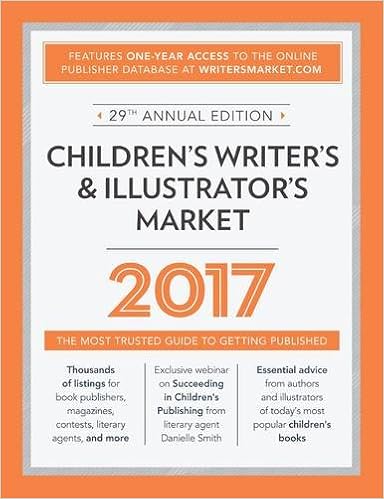
One of my favorite resources is always Children's Writer's and Illustrator's Market (CWIM). My article, "Be Your Own Literary Agent," appears in the 2017 edition. We're giving away a copy. Look below for giveaway details.

The ReFoReMo Challenge, or Reading for Research Month Challenge, was founded in 2015 to help picture book writers reform writing by reading and researching mentor texts in the month of March. ReFoReMo 2017 starts on February 27.

Laura Purdie Salas sends out a helpful monthly e-newsletter for children’s writers, A Writer Can Be…. (sign up here) and also a monthly e-newsletter for educators (sign up here).

Picture Book Builders is a group blog that explores "how one element of a picture book’s story or art manages to grab us or wow us or strike an emotional chord." Our good friend Jill Esbaum is part of the group. Pat Zietlow Miller's February 17 post, "Crunch: It’s not just for cooking," lured me in again recently after I hadn't visited for a while. Then I just kept reading.

The Art of Storytelling is an exploration of the storytelling process at Pixar.

Increase your vocabulary and help fight world hunger. For each answer you get right, Free Rice donates 10 grains of rice to the United Nations World Food Program.

The Writer's Almanac with Garrison Keillor is a daily email that includes a poem and brief biographical information about writers whose birthdays fall on that day. Yesterday's poem, "Lucky"
by Kirsten Dierking, grabbed me.
All this time,
the life you were
supposed to live
has been rising around you
like the walls of a house... 
(Thursday, Feb. 23, 2017)
Finally, your best resources might be your own desk drawers or computer files. Last night's storm reminded me of this poem I wrote in 1999.

Illumination

Snowflakes whirl at night,
Circling around the streetlight
Like bright summer moths.
snowy owl on streetlight
What surprises lurk in your old files? See what you can revisit, rework, and repurpose. Good luck!

Book Giveaway Details 

Marie D. won our latest book giveaway of Tuktuk: Tundra Tale by Robin Currie, Congratulations, Marie!

To enter our new drawing for a chance to win a copy of the Children's Writer's and Illustrator's Market 2017, use the Rafflecopter widget below. You may enter via 1, 2, or all 3 options.

If you choose option 2, you must leave a comment on today's blog post below or on our TeachingAuthors Facebook page. If you haven't already liked our Facebook page, please do so today! If you prefer, you may submit your comment via email to: teachingauthors [at] gmail [dot] com.

Email subscribers: if you received this post via email, you can click on the Rafflecopter link at the end of this message to access the entry form.

Note: if you submit your comments via email or Facebook, you must still enter the drawing via the widget below. The giveaway ends March 10, 2017, and is open to U.S. residents only.

P.S. If you've never entered a Rafflecopter giveaway, here's info on how to enter a Rafflecopter giveaway and the difference between signing in with Facebook vs. with an email address.

Today's Poetry Friday Roundup is at Karen Edmisten*. Enjoy!

JoAnn Early Macken


a Rafflecopter giveaway

Friday, December 16, 2016

A List of Good Book Lists from 2016 Plus a Few Other Books I Enjoyed

I love the year-end lists of good books that are appearing all over the Internet now. Every year, I pore over them, trying to memorize intriguing titles, noticing which books appear on several lists, and adding as many as I can to my teetering reading pile. Today, I continue our own Teaching Authors series on the books we've enjoyed from 2016.

Esther, Mary Ann, and Bobbi have already posted their favorites. I've agreed with many of their recommendations, but I won't repeat them here. Instead, I'll post a few titles that I haven't seen on other people's lists, at least not yet. Because there's never enough room on the lists for all the good books.

First, some of the lists I've been using to order books for my reading pile:

19 books to help children find hope and strength in stressful times: A librarian’s list from Karen MacPherson, the children’s and teen services coordinator for the Takoma Park, MD, library

Holiday Gift Guide: Here's Some Great Latino Books for Kids, Teens by MONICA OLIVERA

The Best Children’s Books of 2016 BY MARIA POPOVA (Brainpickings)

The best kid's books to give this year from Minnesota Public Radio News by Holly Weinkauf, owner of the Red Balloon Bookshop in St. Paul and a former children's librarian, and Lisa Von Drasek, curator of the Children's Literature Research Collections at the University of Minnesota Libraries.

Best books of 2016 to give -- and receive: Children's and middle-grade favorites by Tracy Mumford, MPR News Staff

Best books of 2016 to give -- and receive: Young adult favorites by Tracy Mumford

Best Picture Books of 2016 from The Huffington Post

Best Informational Books for Older Readers of 2016 from the Chicago Public Library

31 Days, 31 Lists: Day Four – 2016 Great Picture Book Readalouds by Elizabeth Bird, School Library Journal (Be sure to see the links to more lists at the end of the article.)

The Best Middle Grade Books of 2016 from Entertainment Weekly

Next, a few of the many books I've enjoyed in addition to those on the lists, with their library summaries:

writing book: The Kite and the String: How to Write with Spontaneity and Control - and Live to Tell the Tale by Alice Mattison. A targeted and insightful guide to the stages of writing fiction and memoir without falling into common traps, while wisely navigating the writing life, from an award-winning author and longtime teacher.

picture book: Wonderfall by Michael Hall. Follows the story of a single tree through the changing of the seasons from fall to winter, as people, animals, and vehicles pass in front of the tree, celebrating holidays, playing in the leaves, and building nests. Includes blended words.

poetry: Every Day Birds by Amy Ludwig VanDerwater. Young readers are fascinated with birds in their world. Every Day Birds helps children identify and learn about common birds. After reading Every Day Birds, families can look out their windows with curiosity--recognizing birds and nests and celebrating the beauty of these creatures!

middle grade: Beautiful Blue World by Suzanne LaFleur. Sofarende is at war and the army is paying families well to recruit children, so if twelve-year-old Mathilde or her best friend Megs is chosen, they hope to help their families but fear they will be separated forever.

young adult: Still Life with Tornado by A.S. King. A talented 16-year-old artist slowly discovers the history of domestic violence behind why her brother left the family years earlier and why she suddenly cannot make art.

Have fun browsing! Have fun creating your own reading pile! Have fun reading!

Today is the last day to enter our current Teaching Authors Book Giveaway for a chance to win a copy of the new verse novel by Jeannine Atkins, Finding Wonders: Three Girls Who Changed Science, which certainly belongs on a Best Books list. Good luck!

Tabatha Yeatts has today's Poetry Friday Roundup at The Opposite of Indifference. Enjoy!

JoAnn Early Macken

Wednesday, November 16, 2016

Wednesday Writing Workout: Keeping it Real plus a Two-Book Giveaway!

I’m happy to bring you this Guest Teaching Author post by Sandy Brehl, author of Bjorn’s Gift, a historical novel of Norway’s occupation years. Sandy visited us in 2014 when her first novel, Odin’s Promise, was published. Read that post for more about Sandy's background, her research process, and using historical fiction in classrooms. Below, you can enter to win autographed copies of both novels.

*****

It’s a privilege to return to the Teaching Authors blog with a guest post, especially for a Wednesday Writing Workout about creating characters. My recently released middle grade historical novel, Bjorn’s Gift, is the second book in a trilogy that emerged from my debut novel, Odin’s Promise, in 2014.

The initial book was written as a stand-alone historical novel based on the first year of the German occupation of Norway. I had spent years researching, writing, and revising, never quite finding a main character who was as eager to tell the story as I was. I worked on it through years of sporadic efforts tucked in between teaching and writing other things. Then, in a scholarly resource, I found and read journal entries written by young Norwegians. Mari emerged from those excerpts, stepping into my long years of false starts and reshaping them to reveal her point of view and life struggles. She added elements and eliminated others, confidently guiding my words on the page. Within months of finding Mari’s spirit within those journal samples, I completed a full draft. Less than a year later, it had been revised, submitted, and was contracted for release.

Once it was published, readers consistently asked, “When is the sequel coming out?” I worried that the ending hadn’t been satisfying. The gratifying response was that the ending made perfect sense, but the occupation wasn’t over and readers felt they HAD to know what would happen to Mari and her family during the remaining war years. They cared about Mari as much as I did, as if she were “real.” And they wanted to learn more about Norway’s fate and hers. Their questions were both specific and global.

Can you imagine how wonderful that felt? A character that was born of my research, imagination, and storytelling had “come to life” on the page for my readers.

But it was also terrifying!

I had never considered a sequel, and I didn’t know how to write one. It had taken me decades to write about just one year of the occupation, and there were four more years before Hitler was defeated. At that rate I wouldn’t live long enough to answer their questions.

I knew how to do research, though, and to tell a story. And I had Mari to guide me along the way. In the process she and I both had some growing up to do. It was a struggle, and a steep learning curve, but Bjorn’s Gift is on the racks, and the final book, Mari’s Hope, will release in spring, 2017.

When I finally put pen to paper, feedback on my first draft from critique partners and my editor had this in common:  “Less history, more story-telling, please.” Apparently I had written Mari’s story with too much of my “teacher voice,” eagerly “reporting” what I had learned about the remaining occupation years. Once again I needed to turn the story over to Mari. I began by “asking” her, “Does this matter to you?”  “Does this make your story stronger?” That applied in several categories:

Do these research discoveries matter?
I reviewed the stacks of facts and personal stories I had collected. Each was examined though Mari’s eyes and sorted into MUST HAVE, MAYBE, or DUMP. I retained no veto power over her decisions, although I rescued some personal favorites from the DUMP. Those tidbits may find their way into website resources, other writings, or program presentations.

Is each scene and situation necessary?
Scenes and subplots were held up for Mari’s scrutiny. She insisted that anyone who reads only this book of the three should feel as engaged and positive about it as they did about the first. Once again, her categories were MUST HAVE, MAYBE, or DUMP. Any MAYBE scenes that weren’t improved by moving or refocusing on Mari’s story made their way to the DUMP. Some of Mari’s rejects had been favorites of mine, but I let her have the last word, although I snuck behind Mari’s back, collecting her discards for repurposing in the future.

Is every character pulling his/her load?
The toughest part of this analysis was that Mari and I cared differently for various secondary characters, and for different reasons. Salvaging in this category involved giving the survivors more complex personalities and roles, incorporating elements from the rejected players. Here, too, voice was a crucial consideration. In at least one case I won a reprieve by going back to rewrite a character’s point of view and voice, removing the adult-ish tone of a young character and proving that the part still mattered to the story. Mari was convinced, and the character stayed.

The workout I’m suggesting isn’t about writing a sequel. Despite reading many series with a writer’s eye and now writing a trilogy, I’m a novice at it. There are better teachers of sequel-writing than I can be.

What I did write successfully was characters who are REAL. I hope you can see from the process I used that Mari was both real and reliable in guiding my writing and revision. The process itself made her even more real to me, allowing me to debate various decisions and dig more deeply into what mattered most to her.

Having Mari as a fully developed character going into this process was a huge advantage. Nevertheless, there are things writers can do to achieve that same level of confidence in your characters, to lift them from being two-dimensional “character-actors” to a level worthy of decision-makers and writing partners.

Here’s a workout to try:

Identify several questions related to the time and circumstances of your character’s story, whether the text is for a picture book, a short story, or a novel. It may be a question or proposition that’s not even a part of your story, just a topic that your main character would know and care about.

Challenge your character to support or criticize the proposition relative to his/her/its life experience, using one or more of these approaches:

  • Role play a debate: Take the part of your character and invite writing partners or others to argue the opposite position. Maintain your character’s voice and point of view throughout the debate, making notes about what arguments, logic (or lack of it) comes through, what values are espoused, what temperament your character displays, what mannerisms or language patterns are used.
  • Assign your character to make a pro-con list regarding the proposition or decision: Again, keeping yourself in the mindset and voice of the character, list and support both sides of the case as fully as possible, then arrive at a conclusion. Write a summary of the conclusion in the character's voice.
  • Offer your character a red pencil: Allow your character to read through your draft and redline any/all parts that distract, diminish, or otherwise impede the progress of the story the character needs to tell. Require explanations for the choices and be ready to “listen” openly to what is said.
It’s likely to take several tries to remove yourself from the process and become a spectator/conduit to the characters’ thoughts, feelings, and reactions. You’ll catch yourself (repeatedly) inserting your own arguments, your own values, and drawing on your own experiences. That will force you to realize that you’re still writing “your” story, not the one your character is trying to tell. Back off, sit quietly. Allow time and space for the characters to breathe themselves into being. Then, and only then, will you trust them to help you find the heart of your REAL story.

I applied this process to historic characters and stories. For additional exercises on creating REAL contemporary characters, I strongly recommend Kate Messner’s Real Revision: Authors' Strategies to Share with Student Writers (Stenhouse Publishers, 2011), in particular, her Chapter 9, "Are the People Real?" It’s a treasury of practical and effective craft suggestions, but the entire book is a must-have for writers, especially those of us who teach.

One last tip: if you find yourself struggling to hear your own character’s voice and views in this workout, try it with something you’ve read and loved. It will be particularly helpful if it is something you consider comparable to your own work. If the author has done his/her work well, you should be able to crawl into the skin of that character and, in the process, recognize how complex and real even picture book characters can be to readers.

*****

Thank you, Sandy, for your helpful suggestions! Readers, you can enter to win autographed copies of both of Sandy's novels, Bjorn’s Gift and Odin’s Promise, with the Rafflecopter widget below. If you choose option 2, you must leave a comment on today's blog post or on our Teaching Authors Facebook page. If you haven't already "liked" our Facebook page, please do so today! (If you prefer, you may submit your comment via email to teachingauthors [at] gmail [dot] com.)

Email subscribers: if you received this post via email, you can click on the Rafflecopter link at the end of this message to access the entry form.

The giveaway ends November 30 and is open to U.S. residents only.

If you've never entered a Rafflecopter giveaway, here's info on how to enter a Rafflecopter giveaway and the difference between signing in with Facebook vs. with an email address.

Good luck!

JoAnn Early Macken

a Rafflecopter giveaway

Friday, November 4, 2016

Thank You, Authors, and a Poem to Ponder

With this blog post, I begin an annual Teaching Authors series we call Three Weeks of Thanks-Giving. This year, we decided to focus on our favorite authors.


Of course, I couldn't pick just one. As Election Day approaches, I'm grateful for people who stick their necks out, contribute their time and energy, and work to make the world a better place. (Note that I'm speaking for myself here and not necessarily for any other Teaching Authors.)

Children's book authors are generous people. Our own April is a co-founder of Authors & Illustrators for Children, an organization of more than 1200 children’s book creators committed to vote, campaign, and speak out for candidates who will create a safe, healthy, and inspired future for children everywhere.

Are you Facebook friends with authors? Read their posts to find out how they are involved. Christine Taylor-Butler, Marilyn Nelson, Ilsa Bick, and our own Bobbi offer their thoughtful analyses of news articles based on fact, not opinion. Carol Munro volunteers at a polling station. Shana Corey and Kendra Levin work to Get Out The Vote.

In "Election Reflections & Caring for Your Creative Heart," Cynthia Leitich Smith writes about participating in the election "in a way that preserves, reflects and/or affirms your creative life." Deborah Underwood and Jacqueline Woodson offer encouragement to those of us who are overwhelmed by the negativity in this campaign.

These are just the authors whose posts I've noticed in the past few days. I know there are many others who care and give and help. Feel free to add their names in the comments if you want to recognize their contributions.

Here's an excerpt from a powerful Election Day poem, "Let America Be America Again" by Langston Hughes.
O, let America be America again—
The land that never has been yet—
And yet must be—the land where every man is free.
The land that’s mine—the poor man’s, Indian’s, Negro’s, ME—
Who made America,
Whose sweat and blood, whose faith and pain,
Whose hand at the foundry, whose plow in the rain,
Must bring back our mighty dream again.
If you haven't already done so, please vote!

Rosi H. is our winner in the 2017 Children's Writer's and Illustrators Book Giveaway. Congratulations, Rosi!

Be sure to enter our current Book Giveaway for a chance to win a copy of Toby by Hazel Mitchell and a swag bag filled with all sorts of Toby goodies.

Today's Poetry Friday Roundup is at Laura Purdie Salas's Writing the World for Kids. Enjoy!

JoAnn Early Macken