Showing posts with label Music and Writing. Show all posts

Friday, May 6, 2022

A Writer's Playlist

(I touched on this topic in 2011 in a series about writing "soundtracks.") 

I'm always interested in other people's playlists, what's on them and how they are used. There are playlists of Summer Songs, Road Trip Music, and Beach Music. I always read the Rolling Stone column, "What's on Your Playlist?" I love knowing what Bruce Springsteen or Barak Obama or Lizzo is listening to.
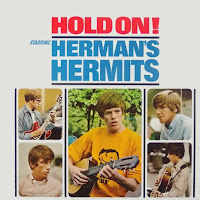
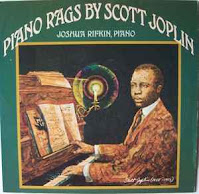
Long before Pandora or the Internet or even the Walkman, I had playlists. Back then they were called mixtapes. Somewhere in my office is a shoe box of Radio Shack brand (Realistic!)cassettes labeled "House Cleaning"(Scott Joplin rags) and "Cooking" (Bach piano inventions and The Brandenburg Concertos). I had "Blowing Off Steam" tapes (The 1812 Overture and Led Zepplin) and "Driving to Work" tapes (old school pop like Nat King Cole and Perry Como and Dean Martin). Right after my pregnancy test turned blue, I recorded a bunch of Gregorian chants for the delivery room. I wound up having a C-section, but that tape also worked for 2 am feedings.
I have to music around me all the time. I don't function well without it.

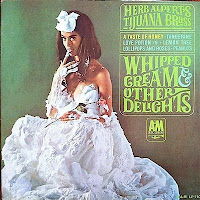
I grew up in a house where music played every waking hour. My dad had a deep, lifelong love of music, , all kinds of music. Classical, rock, modern, gospel, folk, international, soul, blues, tubal throat singing, he loved it all. He collected it all. The only genres you wouldn't find in Dad's collection were pop standards--Dad thought pop was "bland"--and jazz (he found it "undisciplined.") His job as an FBI agent was high stress. He would come home from work and head right to the stereo, the way some people get a beer from the fridge. It was his way of decompressing.  Mom, on the other hand, used Roger Miller and the Tijuana Brass combat her chronic depression.  I learned there was music for every mood and emotion.
Since I grew up doing homework with Mahler and Mozart in the background, my brain doesn't work without melody and rhythm. Just as music can get you "in the zone" when you're working out, it does the same thing with my head. Trying to write in silence fires up my Negative Mental Message Center. To avoid those messages, another part of my head meanders around, thinking of everything but writing. (Did I water the plants? What's the temperature outside? Is there any pizza in the fridge?)

Music smoothes the wrinkles in my soul and brain, leaving no room for stray thoughts or idle chatter. As a writing warm-up, I let the sound surround and enfold me. When I'm completely immersed in melody and meter, it's safe to think about my story. My brain takes on a certain rhythm...and the words come. The characters show up and talk to me. It's kind of magic. To paraphrase an old Coke jingle, "Things go better with music."

Don't lyrics distract me while I'm writing? They could, if I had on a streaming station, playing random music. I only play my own cultivated downloads or CD's (how Old School) of instrumentals, or songs so thoroughly familiar I don't think about the words. When I was writing Yankee Girl, which takes place in 1964-65, I wrote to the Top 40 music of those years. Music so familiar, the lyrics flow through my subconscious. Before I started Jimmy's Stars, I listened to Big Band music--Glenn Miller, Benny Goodman, Artie Shaw--and vocalists--Doris Day, the Andrews Sisters, early Sinatra--until the music became familiar. When I began writing, the sound was already a part of me and the story.
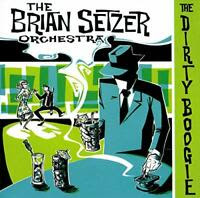
Although, I've always used my playlists for novel-writing, I've branched out into using it for shorter work. My newest picture book, Wibble Wobble Boom (out in early November from Peachtree) is about a first skating lesson, written at a skating rink, while my daughter took lessons. Revising it years later, I evoked that time by playing the music my daughter used for her competition programs--the Brian Setzer Orchestra,  The Godfather score, the Tijuana Brass (my mom's influence, for sure!)
"Soundtracking" doesn't work for everybody. But should you find yourself in a creative cul-de-sac, put on some music that speaks to you. Joyful, mournful, even that wispy kind of music massage therapists play, anything that takes you away from your Inner Critic and useless thoughts. Breathe in, breathe out and let the music find your story.

Written by Mary Ann Rodman


Friday, June 23, 2017

You Can Sit on my Poem in NC!

.
Howdy, Campers, and happy Poetry Friday! The link to today's PF is below.

To find out how to win a copy of Darcy Patterson's newest book, Sleepers, read Carla's terrific interview with her here.

This is TeachingAuthors last post before our Summer Blogging Break. Ah, summer! Time for lemonade, reading in the shade, diving under waves, travel and parades, festivals galore and more and more and more! 😊 (Pssst--I've never used an emoji in a blog post before. I promise not to use one ever, ever again).

I received an interesting email in early January, 2016 (edited):
Dear April Wayland,

I write to you regarding your poem,
 “Taking Violin at School”, and my request to incorporate your poem into a public art project for the Town of Cary, North Carolina
[This, Dear Readers, is when I died and went to heaven.]
In 2013 the Town commissioned a design team to create a new streetscape for Academy Street, the Town’s “Festival Street,” in the heart of downtown. Concerts, street fairs, and major regional festivals are staged along this 6-block street throughout the year. 

As the pubic artist on the project, I designed twelve granite benches based on dulcimers, dobros, violins, and mandolins – all instruments that found their unique American voices in the hills and mountains of the Appalachians. These benches will be cut from native stone, then carved and etched at the quarry in Mt. Airy, NC. Once completed these stone benches will be set in configurations offering opportunities for musicians to play in duet, trio, quartet, quintet, sextet and as single artists – with room for small audiences to gather around. 

Into these stone benches I'm cutting text that speaks to either the specific instrument or more broadly to music and its presence.  My search for the right text led me to your poem, as well as to the poetry of North Carolina native Carl Sandburg, of Mary Anne Evans writing as George Eliot, of Coleridge, of Yeats, and others. Your poem, sited along the entry to the Town’s Library and adjacent to a violin studio, resonates as a perfect fit.    

My best regards, and thank you for your chosen work.
Jack Mackie

Needless to day, Jack and I became penpals. 
Jack Mackie
.
There is so much to tell you about my new best friend! His commissioned artworks include the Gift, Health Sciences Learning Center, University of Wisconsin; Vessel Fenceline, Santa Cruz California; Seats & Gavels, Scottsdale Arizona Justice Center; Dance Steps on Broadway, Seattle; Trillium Patch, Norfolk VA light rail station pavings: Charging Gates, Puget Sound Energy, Redmond WA: and the Trout Lily Clock, East Lancaster Transit Center, Ft. Worth TX. Wow--what great names he gives each project!

In addition, he's developed the Public Art Plans for the Memphis/Shelby County Central Library System; the Performing Arts Center, Mesa, Arizona; Historic Downtown Alexandria Riverfront, Alexandria VA; Charlotte NC Area Transit System; South Bay Area Rapid Transit, San Jose CA...and so much more--woo-woo!

And after many years of planning, Academy Street Melodies, in Cary NC is born.

I wanted you to meet him, so I've invited Jack to climb onto the porch of the TeachingAuthors tree house where I've just served him homemade lemonade...

Welcome, Jack--I'm so glad you're here. It sounds like you've created a truly beautiful streetscape. How did you come up with your design? I love sidewalks. It’s where people go to get from here to there, from home to work, from work to lunch, from work to home, from home to school, from school to home, from school or home to the art gallery or museum or café or swimming pool or movies or friend’s home, for a walk, or from home to violin practice… it’s a place best described as “the in-between,” not where I was nor where I’m going... This is where I love to work...possibly creating a moment, an aha.

Every place has stories to tell, as a public / civic artist it’s my task to find the stories and find the story-teller’s voice. The work is not about me, it must be about the people who live in a place, people who make that place their homes. I’m just the go-between who illuminates what’s already there. That’s where I always begin.

In the long list of “stuff” for a streetscape are benches, a place to invite us to have a seat, take a look around, ask, where are we?
bench designed by Jack Mackie
text by Mary Anne Evans (writing as George Eliot)
.
Jack, your answer's poetry! And why did you choose musical instruments? I approached people walking along Academy Street. I asked about Cary, why they live here or, if visitors, why they’ve come; what is it about Academy Street that brings them here; what should I explore?

It was in these conversations that the idea of musical instrument benches started to bubble up, and the idea of placing them in small “rooms” we could make with different paving materials, a cluster of trees, and always grouped, set for buskers, duets, trios, or a string quartet.

Next question was “which instruments?” I looked into the instruments of the festivals and found that many were immigrants –the Mandolin came to America as a Lute, with a deep rounded body and strings that were plucked. The Dobro, a unique American instrument, is claimed to be a mix of the guitar from Spain and the banjo. Dulcimers arrived as the German zither, the Swedish hummel, Norwegian langeleik, and the French epinette des Vosges. And the violin simply became the fiddle.

bench designed by Jack Mackie
text by Maya Angelou

How did you choose the poetry and quotes? I searched for text which speaks to and of the instrument that carries it or, of music, of dance, singing, or song. The text I chose was written by: Jonny Angel, Maya Angelou*, George Carlin, Samuel Taylor Coleridge, Mary Anne Evans  [writing as George Eliot], Martin Hugo, John Muir, Walter Hines Page, Tan Pratonix ,R.R.Richardson*, Carl Sandburg*, April Halprin Wayland, William Butler Yeats  (* North Carolina Poet).

Some examples (most are just snips of the entire text used):

"Sweet Dulcimer.../in your strings and swirly grains /lie my life's story /and the way my river runs..." from R.R.Richardson, North Carolina poet

“Mandolin harmonies / trailed up Bear Hair Gap, / echoed between / the chestnuts, hickories & sweet blackberries.”  from Jonny Angel

"Sell me a violin, mister, of old mysterious wood.../ Sell me horsehair and rosin.../ Sell me something crushed in the heartsblood of pain readier than ever for one more song." from Carl Sandburg, North Carolina Poet

“and those who dance are considered insane by those who cannot hear the music”  credited to George Carlin


"I believe in the free public training of both the hands / and the mind of every child born of woman." WalterHines Page 

...and:

TAKING VIOLIN AT SCHOOL by April Halprin Wayland
I open my case
tighten my bow
pluck a string to tune.
I love to listen to it chirp across the echoing room.

My friends are in class
reading about
a famous English king,
But I am training this wooden bird upon my arm to sing.
from CALL DOWN THE MOON, Poems Of Music, selected by Myra Cohn Livingston (Margaret K. McElderry Books, 1995); reprinted in CRICKET Magazine 4/9; reprinted in GIRL COMING IN FOR A LANDING (Knopf 2002)

bench designed by Jack Mackie
text by April Halprin Wayland

What has surprised you about this project? I’m already receiving reports of buskers setting up on violins near the Town Library and children going from bench to bench making rubbings as they go. I never anticipated that we’d be going home with them to become their proud refrigerator art!

Readers, don't you agree that Jack is a poet in thought, words, design and art?  Thank you so much, Jack, for joining us today and for sharing your process. I am deeply honored that you chose my poem. Some day I hope to tune up my fiddle and play Pig's Ankle Rag next to one of your beautiful violin benches!


benches designed by Jack Mackie

photo of Emily (last name unknown) by Jack Mackie, who writes:
"as Emily sat to play, she read your poem saying, 'Oh, that’s so lovely….  I’m her….'"
(Yes, I'm now officially on cloud nine.)
Thank you, Heidi, for hosting Poetry Friday at My Juicy Little Universe!
~ a perfect picture of summer ~

TeachingAuthors will be back refreshed and rarin' to go on Monday, July 17th. It'll be hard, but we know you can hold on without us until then. We believe in you.

posted with gratitude by April Halprin Wayland with help from Jack Mackie, of course...and from the delicious cauliflower-curry soup from a friendly Mediterranean restaurant that let me work at a table as long as I wanted.


Friday, March 11, 2011

March is Music In Schools Month! And Happy Poetry Friday!

x
Howdy Campers--Happy Poetry Friday!  And thank you, Liz Garton Scanlon, for hosting Poetry Friday this week!   
Did you know that March is Music in the Schools Month? Well, it is!  In fact, today's TeachingAuthors poem is actually a song written by our guest singer/songwriter who brings music to schools all over the country.  x

Hmmm...music in the schools...I remember Mrs. Priday, an older, potato-shaped woman with orange-ish hair, who played piano and joyfully taught us to sing at Franklin Elementary School in Santa Monica, CA.  And Richard Wagner, the Leonard Bernstein of Santa Monica schools, who lit a fire inside us when he turned on the William Tell Overture and let us put our heads down on our desks to listen.

And Sherman Plepler gave me private violin lessons once a week (during the school day!) in the musty basement of Franklin School.

Ahhh...the golden age of music in the schools.  But, hark! You can still find fabulous teachers using music in these days of school budget guillotines.

If you're lucky enough to be a fifth grader in my friend Allison Ho's classroom in Gardena, CA, you'll learn about heritage and different cultures through Broadway musicals. Allison opens her students' eyes to the world of arranged marriages ("Tradition" from Fiddler On The Roof and "You Are Beautiful" from Flower Drum Song), two cultures ("Farmer and the Cowman" from Oklahoma and "America" from Westside Story) and much, much  more--teaching them the songs and the dances, too.  Wouldn't you love to be in Allison's class?

And my buddy, folksinger/songwriter Bob Reid, teaches kids how to write their own songs.  So I've invited Bob in to talk about how he writes and teaches.
This is Bob Reid

There's a Light In You (click to listen...you must hear these kids singing it...)
words & music © Bob Reid 1995

Chorus:
There's a light in me, there's a light in you
Whatever language you speak
Whatever your point of view
Whatever people may say
Whatever people may do
There's a light in you
You must let your light shine through.

I am short, he is tall
It doesn't matter if I'm small
Whatever size I happen to be
There's a light in me
Please take the time to see.

Chorus

My eyes are brown, hers are blue
We may not share the same point of view
Whatever our hopes, our wishes, and dreams
There's a light that beams
We're closer than it seems.

Chorus

My friend Sam says she doesn't fit
When she wants to play the others want to sit
Times are hard, I must admit
I hope she doesn't quit
She's got to keep it lit.

Chorus

When the world is looking grim
It can happen to her, it can happen to him
That's when you need that light to glow
Come on and let it show
It's brighter than you know.

Chorus

When the sun has left the sky
Bringing darkness to the eye
Night reveals what can't be seen in the day
A glorious display
Behold, the Milky Way.

Chorus (2x)
AHW: What inspired you to write this song?

BR:  "There's A Light In You" was written in response to the flurry of songs I was hearing about people identifying by the color of their skin, giving attributes to people due to the color of their skin, black, yellow, red, or even songs that challenged that practice. They seemed to be framing the issue in a way that I felt was unhelpful and didn't seem to offer an alternative. I wanted to find a commonality, something that we all had, to bring us together.

The song is reminiscent for me of a song I sang as a child at Unitarian gatherings, "This Little Liberal Light of Mine" a variation of "This Little Light of Mine". There was a verse that said, "Don''t you try to poof it out!" "I'm gonna let it shine". The idea that there was this thing in us that we have to actively defend and tend and an awareness that the world may sometimes be inhospitable to our light, but it is our work to let it shine despite that.

AHW: What's your writing process?

BR: I wrote the song over several years. The chorus came first and then I worried that I would never find verses that could live up to the chorus. I sang it with fill in verses and added more and more, until my friend, Bill Harley, told me, "Bob, it's done!"

Bill, and my friend David Grover, both made recordings of it before I did. David sang it on the "Today Show" and at the White House Easter Event. We performed it at United Nations Headquarters with the United Nations International School Choir and Pete Seeger in a half hour concert we did for the kick-off of the International Year of Freshwater in 2003.
WATER   ...    photo by April Halprin Wayland (c) 2011
AHW:  Wow--pretty cool!  Do you have a favorite music-in-the-schools story?

BR: My favorite story is the group some 25 years ago with which I wrote the song, "Water." They were quite proud of that song. It was made into a clay animated film by Kristine Albrecht, an artist in Santa Cruz, CA, which won awards at film festivals around the country. In 2003, it was this song that was of interest to the United Nations, when Pete Seeger recommended it as the theme of their "International Year of Freshwater". I traveled to New York several times to perform it a several UN functions, such as "World Environment Day".
You can listen to it here.

Writing Workout: picking a topic ~ asking the right questions

AHW: How do you begin writing songs with students? I'm sure it's complex, so this really isn't a fair question... but can you point the way to help a teacher or parent help students write a song?

BR: I usually write in two sessions, one to come up with a topic in response to the question, "If a song can focus your attention on something for 3 or 4 minutes, what do you think is important enough to focus attention upon?"  I've usually sung them songs written with other groups to give them some idea of what can be done. Then I'll ask, "What will I play for someone when they ask what this class thought was important?"

Thanks for your time and inspiration
and thanks for stopping by, Bob!

Okay, readers...it's time for you to write your own song.  So ask yourself Bob's questions, take a good deep breath, and write with joy ~ 

Out & About!  
Three TeachingAuthors: (Esther Hershenhorn, Mary Ann Rodman and I) will join two fabulous professors (Roxanne Owens and Marie Donovan from DePaul University) at the Illinois Reading Council's Annual Conference in Springfield, IL on Thursday, March 17th.  We'll be teaching a workshop (two times!) titled: Helping You (and Your Students!) Connect to the Writer Within.  In addition, I'll be participating in IRC's Poetry Coffeehouse on Friday, March 18th.  Woo-woo!  We think it's going to be a hot time in the old town and hope you can join us!


Wednesday, March 9, 2011

Music and Writing: Does Your Story Have a Soundtrack?

Music in Our Schools Month logo
In honor of this being Music in our Schools Month here in the U.S., we TeachingAuthors are doing a series on the connections between music and writing/reading. If you're a teacher, check out the Writing Workout below for links to lesson plans on creating playlists for classroom literature. And for more information about Music in our Schools Month 2011, see the official website.

Reading Mary Ann's post kicking off the series on Monday, I could definitely relate to what she said about writing with music playing in the background. At this moment, Pachelbel's Canon in D Major is playing on my computer. I first started writing with music years ago to drown out the television and other sounds coming from my family. When I'm actively writing, the music has to be instrumental--lyrics distract me from the words forming in my head. I used to load my CD player with a collection of classical albums that included Music for the Mozart Effect and Vivaldi's Four Seasons. Nowadays, I play the music directly on my computer via the "radio stations" I've set up at Pandora.com. (Pandora is a convenient way to create a quick playlist that "matches" a specific song or type of music.) Like Mary Ann, when working on historical fiction, I listen to music from the era in which my story is set. That means that lately I've been hearing lots of 17th and 18th century pieces featuring the harpsichord and violins. Such music is especially appropriate as the main character of my young adult novel-in-progress plays the harpsichord and her love interest is a violinist.

I've noticed that some authors are now sharing their personal playlists with their readers. For example, on Kathryn Erskine's website, you can click on the titles of the songs she listened to while writing Mockingbird, winner of the 2010 National Book Award for Young People's Literature. Young adult author Rachel Cohn has even created iMixes of her playlists on the iTunes Music Store. These playlists can be a great way to connect with young readers, especially teens. Teen (and adult) readers can also find playlists on sites like Novel Novice, which often includes playlists for the young adult novels highlighted there, such as Elizabeth Eulberg's Prom and Prejudice.

I know that listening to music while writing isn't for everyone. Years ago, the topic came up on a discussion board for children's writers, agents, and editors. I still remember a comment by a famous children's author who scoffed at the idea of background music, saying it interferes with hearing the rhythm of our writing. For me, that's only an issue when I'm working on a late draft of a project. That's when I turn the music off and read the work out loud. Most of the time, at least for me, the music doesn't interfere with my work. In fact, I think it has the opposite effect by helping me concentrate. Turning on my music has become part of my preparatory ritual, signaling my creative mind that "it's time to write."

How about you? Do you listen to music while writing? If so, what kind? Have you ever created a playlist for a writing project? If not, see the Writing Workout below.

Blog update: In case you haven't noticed, or you receive our posts via email, we've added a new page to our blog: "Markets for Young Writers." The link is at the top of our home page, just below the logo. The new page features links to information and markets for young writers. As far as we know, this is the largest roundup of sites open to submissions from young writers. (If you know of a larger list, please tell us!) We encourage you to share the page with any young writers (or teachers of young writers) who may be interested. Also, if you know of sites we missed, please post that information in a comment. We plan to update the page regularly, so do check back.  

Writing Workout:
Creating a Story Soundtrack

If you're a writer: create a soundtrack for your current writing project. Consider the following:
  • What songs might reflect or reinforce the mood you're trying to create in a specific scene or chapter?
  • Are there songs that mirror some aspects of your main character's situation or personality? 
  • Are any songs mentioned by the characters in the story, or that are specifically suited to the story's setting?  
  • If your project were turned into a movie, what would be on the soundtrack?
If you're a teacher, have your students create a soundtrack for a book they've read. For a detailed lesson plan, see "On a Musical Note: Exploring Reading Strategies by Creating a Soundtrack." Or take a look at this lesson plan: Creating a Playlist for a Novel.

Happy Writing (and Listening)!
Carmela

Monday, March 7, 2011

How Pink Floyd and My Dad Made Me a Writer

    I am a music freak who is a terrible musician. I took piano for six years.  Every year's recital was the same story.  I'd play the first four measures. Then I'd play them again.  And again, my musical memory as stubbornly stalled as a balky mule. With a sigh, my piano teacher would hand me my music, and the show would go on. I took classical guitar with similar results. I have sung in choirs for years, but give me  a two note solo, and I sound like a thirteen-year-old boy going through "that changing voice thing."  I love music; I'm just not a musician. A music lover who writes.

   I never realized how much music influenced my writing until I was critiqued by an Award Wining Writer who I knew was also a music freak. I sweated bullets, waiting to hear I'd written yet another piece of junk.  AWW looked up and asked...."Were you a music major in school?"  Oh no. This was going to be he worst kind of critique;  the snarky kind. Somehow AWW knew my musical history and say I was as talentless at writing as I was at piano.

    "Um, no," I stammered. "Drama major."Such a weird question since the story had nothing whatsoever to do with music, musicians or freaking out at recitals.

     "Odd," said AWW.  "Do you play an instrument?"

    AWW had a kind voice and mild manner that snookered me into admitting my Miserable Musical Past.  But he wasn't giving up on his theory, whatever it was.  "Are your parents musicians?"

    Trying to keep a straight face, i told him my father was an FBI agent who had played high school trombone, my mother a Russian translator for the National Security Agency, and both of them were absolutely tone deaf.

    My critique time I was running out, and I still didn't know what AWW thought of my story, so I cut to the  chase.

    "Not to be rude, or anything," I began in the humble-sort of voice one uses talking to Award Winning Authors, "but what does this have to do with my story?"

    AWW tapped his glasses on the desk. "I don't understand," he said.  "You write like a musician."

    "Well, I am kind of a music freak," I offered.  "I usually write to music."

    "Aha!" AWW exclaimed. "What kind of music?"

    I figured "everything" was too general a response, although true. On the the other hand listing the musical genres I had heard in childhood would be too specific, to say nothing of bring. So I told him about my dad.

   My dad, former first chair high school trombonist whose tiny rural high school won a national high school band competition his senior year, is a music nut job, a phrase not often used to describe FBI Agents. After work,when other Mad Men era fathers might go straight from work to Martiniville, my dad made a beeline to his "hi-fi" system. He'd pile the spindle (remember spindles?  remember LP's?) with anything from Harry Belafonte and Mahalia Jackson to Mahler and Mozart. Our house was wall to wall music until bedtime. As an adult, I realize he wasn't your average music lover.  Music was his release from had to be the most stressful job in America.

    I did my homework to Carmen and Copeland and Beethoven's Ninth (which I still think of as The CBS News theme.)  Mahler's First Symphony still brings back memories of my war with Algebra I. According to my mother, the only thing that shut me up when I was teething was the "Circus Band" section of Walter Piston's The Incredible Flautist.  I fell asleep to whatever was on the local classical radio station. Whenever my mother couldn't take the pressure of living in Mississippi in the 60's, she would break out her secret stash of Herb Alpert and the Tijuana Brass. I still play Tijuana Taxi and Spanish Flea as a cure for Them Old Book Rejection Blues.

   Dad's tastes ran to classical organ, marching bands and anything Beethoven, but he was no musical snob. He introduced me to Creedence Clearwater Revival, Pink Floyd and the eighteen minute version of the Chambers Brothers Time Has Come Today. I often wondered what J. Edgar Hoover, a man with an incredibly rigid set of standards for his agents, would say about Dad's "inner musical freak." When 8-tracks got hot, Dad was first in line for his player. (A fortunately short-lived trend, since Dad was going through a George Jones/Willie Nelson stage, and the only 8 track was in his bathroom. At 87, my dad has not only moved on to CD's (but not Ipod) and is planning to transfer his 12,000 LP 's (no, there is not an extra 0) in there to CD with some new gizmo he's found.

    "Well, there you are," said AWW. (Remember him and my critique?)  "You wrote as a child and absorbed all this music into your creative mind." He finally began the critique, pointing out the rhythm of my prose. Staccato here, legato descriptions.  Similes involving squeaky clarinets, out-of-tune guitars, the pure tone of a Bechstein piano.  And the music references---the Beatles, Benny Goodman, Vladimir Horowitz. Well, duh, Mary Ann.   How could you have missed all that?


   I missed it because music is so much a part of who I am, that I didn't think anything of it when it turned up in my writing.  I can't imagine writing in utter silence. The few times I have been forced to, I wind up playing Boggle on my laptop.  There is a musical "prescription" for everything. When I am working on a picture book, I haul out the Tijuana Brass.  Dramatic or sad scenes call for Mahler or Erich Korngold who composed a lot of movie scores in the 30's and 40's.

  When I am writing historical fiction, I research the music of the period more than all the other details put together. The music is my private time-machine, sending me instantly to my setting, with my characters dancing in its wake. Thanks to the five years I spent writing Yankee Girl, my 16-year-old not only knows the lyrics to every Beatles, Beach Boys, Supremes or Temptations song, she can tell you who sang lead, who was on keyboard, etc. Living with Artie Shaw and Benny Goodman during the Jimmy's Stars years were fun for me, but not so much for the rest of the family (although Lily fell in love with the song Pistol Packin' Mama, of all things.)  The music envelopes me and my fictional world so completely, it takes me about an hour to re-orient myself to 2011 when I finish for the day.

   Right now, I am "living" in 1925. Thanks to Dad, who is also on every catalog list known to man, I found an obscure company that transfers pre-World War II recordings to CD.  When they hear "Ma, He's Making Eyes at Me" or "The Tiger Rag" coming from my office, the family flees to their Ipods or the neighbors.  I hardly notice; my characters and I are off somewhere doing the Charleston.

    But maybe Lily, my daughter, has absorbed more of her mom's "weird" musical soul than she knows.
When she competed in her first figure skating competition in second grade, her coach allowed her to choose her own music. After watching at least ten girls skate to music from The Little Mermaid or Pocahontas (Disney is big in that age group) Lily's music cues up. I look at the judges, all my age or older.  They grin from ear-to-ear as Lily bunny hops to Whipped Cream by the Tijuana Brass (aka
The Theme from the Dating Game.)  Yes, she won.

As for me,I win every time I turn on the CD player and laptop.

Thanks, Dad.

Posted by Mary Ann Rodman