Showing posts with label Joyce Sidman. Show all posts

Friday, January 16, 2015

More, More, More

Today, I continue our Teaching Authors “What Are We ‘Plotting’ for 2015?” series. Deadlines loom for two educational publisher projects as well as a couple other things I hope to accomplish soon, so I promised myself I would keep this short. What I’m plotting is mostly more of the same: more writing, more submitting, and—this is the new part—more sticking my neck out.

On the first of the year, I wrote about my schedule for 2015. I blocked out more time to exercise and added in some time every week to focus on long-term goals. I have been walking more, which is good for my writing because something about the rhythm makes me think differently. I find myself jotting down notes and dictating text messages to send to my email. When I get home, surprise! Ideas!

my walking companion, Bea
One way I hope to stick my neck out is by participating in Poetry Friday more often. Today, I posted a poem on my blog in response to a challenge Joyce Sidman issued last week in an interview with Michelle Heidenrich Barnes on Today’s Little Ditty: a “Deeper Wisdom” poem, modeled after Joyce’s thoughtful “What Do the Trees Know?” in her gorgeous new poetry collection, Winter Bees & Other Poems of the Cold. I really enjoyed the process, especially with such an inspiring model poem.

I’m also researching editors and trying to submit more manuscripts more regularly. I’d love to participate in conferences. And my web site desperately needs updating. I’d better get to work!

JoAnn Early Macken

P.S. Today's Poetry Friday Roundup is at Live Your Poem. . . with Irene Latham. Enjoy!

Thursday, May 8, 2014

November Night and My Clippings


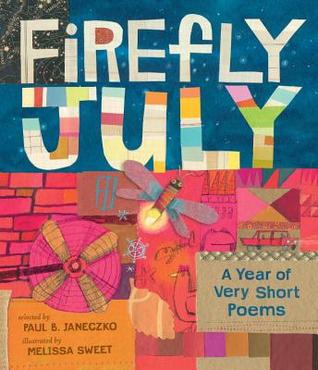
I just read the beautiful book, Firefly July, full of super-short poems (I LOVE super-short poems) celebrating the seasons. Our own April Halprin Wayland is in there, and Joyce Sidman, and so many other fantastic poets.

18166919

Here's one of my favorites. I adore both cinquains and fall, so this poem really hits me every time! This is by Adelaide Crapsey, who invented the cinquain form of 2-4-6-8-2 syllables.


November Night

Listen...
With faint dry sound,
Like steps of passing ghosts,
The leaves, frost-crisp'd, break from the trees
And fall.


--by Adelaide Crapsey, all rights reserved

It's Poetry Friday, and the very generous Jama Rattigan at Alphabet Soup has the Roundup today. Head on over and check out all the lovely poems!

We're talking about writing clippings here on Teaching Authors, so I will share a few of mine. I collect mostly two kinds of things: 1) bits of text from other books (usually fiction) that I think might make a cool jumping off point for my own poetry or picture books, and 2) articles I tear out of science magazines or bookmark that I think are good topics for assessment nonfiction or poetry passages.

Here are 3 random ones:

1) "serpentine spaghetti" - highlighted in a book I was reading on my Kindle. That has got to make it into a poem!

2) "We see their flights as perfect forward motion, but nothing could be further from the truth. In truth, every flap is followed by a tuck and a sweep, hasty and high stakes; hot on the heels of every flickering gain in altitude comes a small, heart-thudding drop." - a description of bird flight, also highlighted in a book on Kindle. I love this concept. No idea how I might use it in my writing, but I love it.

[I don't know what books the above came from. I just started saving highlighted quotes in a Word document a couple of months ago. I'm realizing that I need to also note what book they came from!]

3)
http://discovermagazine.com/2012/oct/16-things-you-didnt-know-about-cars - Here's an article I read in Discover Magazine. Then I searched for it online and saved it as a bookmark, because my paper files are so overstuffed! I thought these nifty facts might spark a nonfiction passage for older readers.

Happy reading, writing, and clipping!

--Laura Purdie Salas

P.S. I'm in New Orleans for IRA and beignets! So I likely won't be able to respond to comments for about a week. But I'd love to hear from you:>)


P.S.S: From Carmela: If you haven't entered our current giveaway yet, don't forget to check out Jill Esbaum's post about her most recent publication, Angry Birds Playground: Rain Forest (National Geographic Books), and enter for a chance to win your own autographed copy. 

Friday, December 6, 2013

One Good Thing About Winter


The weather outside is—how many synonyms can I find for brisk that don’t imply awful? I’m trying to remain positive. One thing that helps at this time of year is finding so many recommendations for wonderful books to read.

Last Saturday, I took part in Small Business Saturday by helping out at Boswell Book Company in Milwaukee. The only difficult task in the whole process was limiting my book recommendations to five. I couldn’t do it, so I suggested a few extras and let the booksellers narrow down the list. Eleven authors participated, and all our suggestions are listed here.

Here at Teaching Authors, we’re posting about the best new books of 2013, so I’ll highlight just three of my recommendations: one poetry collection, one book for adults, and one nonfiction picture book.

April Pulley Sayre’s wonderful Touch a Butterfly: Wildlife Gardening With Kids would make an excellent gift for parents, teachers, or any other adults who want to share outdoor experiences with children. On her web site, April says, “Turn your garden into a hummingbird hotspot, a haven for butterflies, and a thriving ecosystem. This family-friendly guide is my most personal book yet, sharing the wildlife gardening knowledge that Jeff and I have gained over the years. By reading it we hope you will begin to see your yard from an animal’s perspective; discover plants that attract colorful birds and bugs; embrace sensory experiences that native plants and creatures bring; and understand how your yard fits into the surrounding landscape.”

The Case of the Vanishing Honeybees: A Scientific Mystery by Sandra Markle spotlights a critical issue we all need to know more about. From Booklist: “. . . this attractive volume explores the world of honeybees and the mysterious malady that threatens them. After an opening in which a beekeeper discovers that most of the bees in his 400 hives are gone due to colony collapse disorder (CCD), the book describes how healthy honeybees pollinate flowering plants, gather nectar, and raise their young. The next section, which explains bee development, is particularly vivid and informative. Finally, Markle discusses the many possible causes of CCD, such as mites, fungi, pesticides, and the stressful conditions (overwork and poor diets) sometimes endured by bees in commercial hives. She also comments on the work of researchers exploring likely sources of the problem. Throughout the book, excellent color photos illustrate the text.”

Joyce Sidman’s terrific YA poetry collection What the Heart Knows: Chants, Charms & Blessings, illustrated by Pamela Zagarenski, has received at least four starred reviews and has been featured on many other Best-of-the-Year lists. I’m tickled to see this book getting so much attention. It made me laugh, it made me cry, it made me wish that I might someday write something half as lovely and evocative. Here is the poem that cracked me up.

Silly Love Song

If you are the blazing riff,
then I am the piccolo.

If you are the Maserati,
then I am the oil change.

If you are the midnight neon flash,
I am the silver hint of dawn.

If you are the raptor’s wings,
I am the elephant’s eyelashes.

You are the knife, I am the spoon.
You are the sun, I am the moon.

You are this, I am that.
Just kiss me.
—Joyce Sidman

For those of you who enjoy reading about other people’s favorites as much as I do, here are a few more links: 


Today's Poetry Friday roundup is at Life on the Deckle Edge.

Enjoy!
JoAnn Early Macken