Friday, May 22, 2009

This Is My Brain—This Is My Brain On Books--by April Halprin Wayland

I have something embarrassing to tell you. Something that makes me feel as small as a flea, especially in the kidlit blogosphere.


I am a v-e-r-y s-l-o-w reader.


Or maybe I’m simply a distr—did you see that!?!—acted reader.


Either way, though I do read, I don't eat novels for breakfast like every single solitary author, teacher and librarian I know.


On the other hand, I love listening to books while I drive. Those I eat for breakfast, lunch and dessert.


Reading is a sometimes frustrating search for that satisfying click in my brain. Why don’t I read as fast as my very smart husband? He’s a CPA but he reads as if he were a librarian.


Maybe it has to do with the way I was taught to read (an experimental method of the 1960s) or maybe my brain is just wired differently than yours. Probably.


In any case for me, getting into a book is like diving into black water with a braided rope I’m supposed to slip onto a hook on the bottom of a boat.


I can’t see, I don’t want to be there, I don’t like the yucky taste in my mouth. I just want to do it and get back to dry land, ASAP. My fingers feel the boat bottom. They slide over the slimy wood, searching for the blasted hook. Where the heck is it?


And then…wait. Here it is! I loop my rope over the hook and make a good strong knot.


I float. Look around. And hey—the water’ s clear here! And…was that a cobalt blue fish? Schools of silvery things swim past my cheek. Elegant plants sway with the current.

Now I’m in no rush. In fact, I don’t want to leave this place. Ever. Now I’m the one that’s hooked.


That’s what cracking a new book feels like to me. A grumbly sort of “should” on my to-do list…resentment at having to take the time…and then, finally, click: that glorious never-wanting-to-put-this-book-down rush.


Here’s a poem about reading, a WIP—work-in-progress—for my novel-in-poems about a girl struggling with issues of food, fat, faith and friends. The book is called THIRTEEN, FOURTEEN, FATTEEN.


I AM READING NOVELS AGAIN FOR DR. T’S CLASS


I wade into a weedy,

dog-doo

squishy place.


Something slimy

tangles around my ankles,

drags me down.


I breaststroke

through

muddy pages,


close my mouth

against who-knows-what

in this water.


I put my head down,

pull hard against this current,

this black water,


until…

my body

lifts.


I flow

to the wide part,

to the clear water.


No undertow.

Floating.

Ohhhhhh…


Each page

pours something silky-milky

into the bliss of my brain…


Let me linger.

Let me remain.

Let me never go back to dry land.


(So why—why—WHY!?!?—

aren’t I reading 24/7

instead of eating 24/7?)


from the unpublished novel in poems, THIRTEEN, FOURTEEN, FATTEEN © April Halprin Wayland

So, tell me--does anyone else feel like this? Please tell me I’m not the only one! **********************************************************************************


It's Poetry Friday--write a poem today! Try the following Writing Workout. It's one of my favorite ways to crank up my poetry engine.

WRITING WORKOUT

FIVE RANDOM WORDS--A POETRY GAME


One summer, Myra Cohn Livingston gave her Master Class several variations on this exercise. She liked our poems so much, she collected them into a collection called, I AM WRITING A POEM ABOUT...


It was like a game. Like magnetic words on the refrigerator door. A word bowl filled with slips of paper, one word per slip. A word written on the bottom of each shoe, tossed into the center of the classroom.


Play this game alone, in class, with a group of friends, with another poet via email.


Here's all you do: choose five nouns.


Four could be related in some way and the fifth? Completely unrelated. For example: match, flame, fireplace, logs, walrus.


Or pick five unrelated words like: piano, blueberry, pigeon, cliff, map

.

To find them, look around the house, use a dictionary, leaf through a book or newspaper, take a walk outside, or ask family members for a word. (I just called to my teen son in his room, "Give me a noun!" He called back, "Map!")


Don’t think too hard, too long. Pull them out of your hat and write them down. Now.


Feel the words in your body. Close your eyes and find associations. Play with the words! Write a poem. Rhyme only if it serves the poem.

Cut words. Cut more.


Poetry is meant to be read aloud. So read it aloud. To your cat.


Change what needs to be changed. Shift for the gold.


Read it aloud again. Is it finished? Do you like it? Then stand, stretch, smile.

Do the poetry dance!

Now, share your poem with someone you love.

**************************************************************

Wednesday, May 20, 2009

Reading Like a Ten-Year-Old

by Jeanne Marie Grunwell Ford

My childhood days conjure memories of chocolate ice cream and Cheetos fingerprints smeared across dogeared pages. Books accompanied me to baseball games; they lulled me to sleep (or kept me awake); they helped pass the time on long winter days while I snuggled under a blanket fort or on endless summer days poolside. In short, reading was sheer pleasure.

At some time during the seismic shift that was puberty, books ceased to provide the steady, reliable comfort I'd always known. Not to say that I'd always read about happy topics. But seventh grade was the beginning of the end of my literary innocence. Perhaps my enjoyment of Treasure Island was foiled by too-high expectations for entertainment and excitement. But a successive spate of reading assignments like The Last of the Mohicans, The Scarlet Letter, Billy Budd, and Intruder in the Dust had a cumulative effect of making literature distinctly unfun.

I am not, of course, arguing against a solid education in the classics. I am arguing against a rigid curriculum that allows very little room (or time) for individual choice. By high school, busy as I was between track and soccer and band and SATs and drawing Venn diagrams about Tom Jones for homework, I am sad to admit that I was no longer an avid reader.

Our high school reading list (and this was in the '80s, not the Dark Ages) was comprised entirely of novels and plays written by men. I appreciated many gems my teachers introduced -- Cry, the Beloved Country; Huck Finn; Macbeth; The Grapes of Wrath. I especially appreciated the wisdom of a teacher, Mr. Bennett, when I complained about the the appearance of a five-and-a-half-page sentence in a Faulkner novel. Was the point of writing not to be clear? I asked him. After all, I had studied Strunk and White and George Orwell in his class. Bless him, he did not disagree with me.

In college, I read dense journal articles and was expected to learn to emulate this jargony "academic" style in my own writing. I decided a career in academia was not for me.
Now, reading and writing both being highly subjective activities, I realize that my Little House on the Prairie might be someone else's Treasure Island.

But as I grew more serious about writing for children, I also realized that kids' literature has changed significantly since my own childhood. The body of work is, as a whole, much higher in quality; it is also, as a whole, much darker.

Again, my argument is not that children can't handle depressing material or that they should be shielded from it. However, I do believe that it is in many ways easier to write passably well about death, depression, rape, abuse and other weighty issues than it is to present a convincing slice-of-life story that is relatable and also manages to stand the test of time.

When I was at Vermont College, MFA students were required to write two critical essays per month. I read so many books in a row that I disliked that a wise mentor advised me to go back to a book I'd loved and examine what I'd loved about it. Relief! Bliss!

A lot (nearly everything) may have changed in 30 years; but the same words and characters that delighted me as a kid are still there, still as powerful and magical to me as ever.

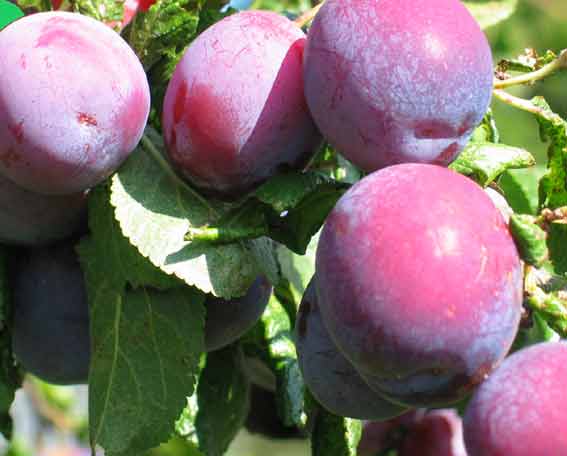
I am a person who subsisted for a week of my adult life on Cheetos and chocolate alone. While I agree with Mary Ann that a diet of literary potato chips is not good for the digestion or for the soul, my humble hope is not to write Ulysses. I'd be much happier leaving my mark with the literary equivalent of a Hershey's Kiss or, perhaps, a nice, juicy plum.

This Is Just To Say

I have eaten
the plums
that were in
the icebox
and which
you were probably
saving
for breakfast.
Forgive me
they were delicious
so sweet
and so cold.
-- William Carlos Williams

Tuesday, May 19, 2009

Read Your Brains Out, Part Deux by Mary Ann Rodman

I read so much that I keep a reading log of what I've read, when, and where or how I learned about the book. I thought I would share what I've read in the two weeks since I last posted (OK, not counting yesterday's post) With one exception, I don't personally know any of these authors, so these are not books I am plugging for a friend (and the exception is a book I would have read anyway as research for a future piece.) Here is the list by genre, including publishing date. Where I learned of the book is in parenthesis. * indicates that I couldn't decide if this was upper middle grade or lower YA.

Picture books--SONG OF MIDDLE C by Alison McGhee, 2009 (Kirkus Reviews) DIRT ON THEIR SKIRTS by Doreen Rappaport & Lyndall Callanm 1998 (Amazon search), THE BEST FIGURE SKATER IN THE WHOLE WIDE WORLF by Linda Bailey, 2001 (Amazon search).

Easy readers--SLIP, SLIDE, SKATE by Gail Herman, 1999 (Amazon search).

Middle grade fiction--THE CHOSEN ONE by Carol Lynn Williams, 2009*(Kirkus Reviews)

Middle grade non-fiction--ELLIS ISLAND by Raymond Bial, 2009 (Kirkus Reviews)
RED SCARF GIRL by Ji-Li Jiang, 1997 (Summer reading list), DENIED, DETAINED, DEPORTED by Ann Bausum, 2009 *(Kirkus Reviews)

YA--IF I STAY by Gayle Forman 2009 (YALSA list) THE OTHER HALF OF LIFE by Kim Alblon Whitney, 2009 (YALSA list) BECAUSE I AM FURNITURE by Thalia Chaltas, 2009
(YALSA list) WHAT I SAW AND HOW I LIED by Judy Blundell, 2008 (National Book Award Winner), ALL THE BROKEN PIECES by Ann E. Burg, 2009 *(YALSA list) THE SCHOOL FOR DANGEROUS GIRLS by Eliot Scherfer, 2009 (YALSA list) THIS FULL HOUSE by Virginia Euwer Wolff, 2009 (Publishers Weekly)

YA(or adult) non-fiction--HOPE'S BOY by Andrew Bridge, 2008 (Summer reading list)

Adult non-fiction--THE JOURNAL OF HELENE BERR, 2008 (Publishers Weekly), CLOSING TIME by Joe Queenan, 2009 (Publishers Weekly).

Tune in next time for my further adventures in reading. Looking over this post, I think I'll show this to my family. . .it might explain why our house has dust bunnies the size of tumbleweeds.

Sunday, May 17, 2009

Read Your Brains Out

posted by Mary Ann Rodman

At least once a school visit, I am asked (usually by a teacher), "What advice can you give a young writer?" The answer is a two-parter. Part one, "Read your brains out." (Part two is another blog.) I never have enough time to elaborate during a 10 minute Q & A session, but I do right now!
Way back when I came face to face with my first computer, the operating mantra was "Garbage in, garbage out." We were told the computer could only produce what we put into it.

So what does this have to do with reading and writing? When I tell my writing students to read, I don't mean read indiscriminately. Analyze your own reading selections. Are you reading the kind of book you would like to write? (If the answer is yes, then you may skip the rest of this post!)

If the answer is "no" or "I don't know," read on. There are a lot of books out there, and all books are not created equal. "So many books, so little time" is a phrase that runs through my head constantly, in relation to both reading, and my own writing. I am taking a wild guess that none of us are unfettered by jobs, family responsibilities, and a multitude of other mundane things. When we have so little time of our own, we are tempted to invest it all in writing. Don't. You have to read as well. And when your reading time is also limited, try to find the best possible books to read.

I am not a literary snob. I like my literary potato chips on occasion. You know the kind of books I mean, the ones that you don't mind leaving on a plane or loaning to someone who never returns it. But just as a steady diet of junk food will leave you weak, overweight and retaining water, a reading diet of "those kinds of books" will leave you with bad writing habits that are hard to shake.

So how does the average aspiring writer (who isn't a librarian) find these "good" books? This is the time of year when schools send home the dreaded "summer reading list." Your local bookstore will have the list and the books on display. That's a good place to begin if you are writing for middle graders or younger.

For reasons known only to Those Who Make the Lists, very few new or YA books are included on middle and high school lists. In fact, the list my rising sophomore was given could have been the same list I had, circa 1969! The only remotely recent YA book she was required to read since sixth grade was Laurie Halse Anderson's Speak, published in 1999. My daughter loved it, although she was puzzled by a book about teenagers that did not text or IM or run up enormous cell phone bills. Which brings me to...

Keep current with what is being published. After years as a librarian, where I had free access to all the review journals, it was hard to carry on without my Horn Book and Publisher's Weekly. Most public library systems carry these review sources and others, but sometimes you have to go to the Main Library, instead of your local branch, to find them. If I had to select only one of these to read or subscribe to, I would choose Horn Book because it is the "choosiest." They are so selective in the books they review, that I have only had the honor once, for My Best Friend. In addition to the reviews, Horn Book has a wealth of articles, essays, and just plain good information on writing workshops and seminars.

I also check in every week at the Cooperative Children's Book Center website www.education.wisc.edu/ccbc for their Book of the Week review, and their monthly book discussion list. For the latest in YA books, I scan the YALSA (Young Adult Library Services Association) site (www.ala.org/yalsa/booklists). Their Best Books Nominations list is updated monthly.

Why all the reading? To write and write well, you have to books in your bones. This is not optional! When you think of it that way, you'll find a way to wedge in some reading time. I always have a book in my purse (which is my criteria for purse buying--must be big enough to hold book). I read in check-out lines, doctor's offices, during my daughter's daily skating lessons, and deadlocked Friday afternoon Atlanta traffic. (OK, I don't recommend that one.) The point is that you can read a book at times and places when you can't write.

So go find your library card. Now.

Friday, May 15, 2009

Celebrate Spring!

Posted by JoAnn Early Macken

For me, winter is a long, solitary season. My only contacts with the children’s book world are online and in occasional meetings with my brilliant writing group. Even writing sometimes feels like (gasp!) drudgery. At last, along with wildflowers and migrating songbirds, children’s books are bustin’ out all over. Apologies to Rodgers and Hammerstein, but truly, children’s book lovers have reasons to celebrate.

In spring, with travel less risky, schools open doors to visiting authors. What joy! My spring school visits with enthusiastic students remind me of those first glorious warm days when everyone abandons a jacket on the playground.

This year, May 1-7 marked the first annual National Picture Book Writing Week. What fun! I wrote one on an airplane, a couple at my desk, and several in the backyard. The stories are all dreadful, but I have something to work with. Yippee!

I spent Tuesday, May 5, at the 54th Annual Convention of the International Reading Association in Minneapolis. I strolled through aisles between wonderful books, rubbed elbows with enthusiastic teachers, stood in line for autographs of amazing authors, and shared my thoughts about writing poetry. Wandering through the convention center, I recognized Susan Marie Swanson signing her award-winning book The House in the Night and Jacqueline Woodson, author of many award-winning books of her own.

I turned a corner and found Phyllis Root signing copies of her adorable new picture book Flip, Flap, Fly.


I bumped into Kimberly Willis Holt, who contributed to a Children’s Writer’s and Illustrator’s Market article I wrote about writing fiction inspired by real life (a future Teaching Authors topic, thanks to a reader request).

I met Laura Purdie Salas for a quick conversation and recognized a dedicated poet and teacher.

The teachers who attended my workshop ("
Write a Poem, Step by Step: A Simple, Logical, Effective Way to Write Poetry With Your Students") plunged right into the process. A few shared snippets of their work. Many said they were surprised and pleased by the results. I was pleased, too, but not surprised. As the IRA Mission explains, teachers are always looking for new ways to advance the quality of literacy instruction. These teachers, from elementary, middle, and high school, diligently wrote their own poems, step by step, so they could understand the method inside out and use it to help their students write poetry. Writing is work, and here you can see every teacher hard at it.

On Saturday, May 9, I met Kevin Henkes at the Council for Wisconsin Writers Annual Awards luncheon. My nonfiction picture book
Flip, Float, Fly: Seeds on the Move received an Honorable Mention (the thought-provoking Mousetraps by Pat Schmatz received the main award) in the Tofte-Wright Children’s Literature category. Kevin Henkes received a Lifetime Achievement Award for his contributions to children’s literature. He spoke about his creative and publishing history and read hilarious, heartfelt letters from young fans. To quote his Lily’s Purple Plastic Purse, just about all I can say is “wow.”

In spite of the dismal economy, school budget cuts, and upheavals in the publishing industry, readers still read, teachers still teach, and writers still write. Although Children’s Book Week is officially May 11-17, for everyone who loves children’s books, every day (especially in spring) deserves a celebration. Hooray!

Thursday, May 14, 2009

Author Talk: Turning the Tables

Posted by Esther Hershenhorn

What’s good for the goose is good for the gander, yes?

So, in that spirit, I invited author, children's book historian and critic Leonard S. Marcus, whose books were the subject of my post yesterday, to complete my Author Talk-related Writing Workout. His answer illuminates the all-important reader-writer connection.

You can learn more about Leonard Marcus and his books by visiting http://www.leonardmarcus.com/.

Question: Did you enjoy reading?

Yes, but only after I got past the, for me, excruciatingly painful process of learning how to read. My kindergarten teacher, who started us on Dick and Jane rebuses, was a classic old-school battle-ax. Nothing progressive about her! She made learning to read all about giving the correct answers. I became so nervous in her presence that I would sometimes respond with the word “run” when the word I meant to say was “jump”!

Eventually I was assigned to a remedial reading teacher who saw me privately once a week and who noticed that, notwithstanding my difficulties, I was an extremely verbal child. With wonderful insight, it now seems to me, she suggested one day that I write a poem over the coming week and that I read it to her at our next session. I enjoyed the assignment and, because I had written the poem myself, had no trouble at all reading it.

Writing became gateway to reading, and once “inside,” I pursued my love of true stories about the past (a.k.a. history and biography) whenever I had the choice. As a fourth grader, I campaigned for John Kennedy, distributing leaflets in our neighborhood, and when Harper released a young readers edition of Profiles in Courage around the time of the inauguration, I got my parents to special order a copy for me at our local stationery store. (I still have it.) And in fifth grade our school librarian organized a writing club and I met the author she invited to talk to us. It was Jean George. Ever since then, reading and writing have been like breathing in and breathing out for me. Only harder, of course.

Wednesday, May 13, 2009

So, I'm Not Alone?!

by Esther Hershenhorn

Happy Children’s Book Week, to readers and writers!

Like children’s author Andrew Clements, I’ve yet to meet a writer who wasn’t a reader first.

I know from experience: every published book is a Teacher-in-Waiting.

For instance, I learned and honed my craft reading as a writer, deconstructing children’s books – first picture books, then easy-to-reads, next chapter books, then middle grade novels. A story’s architecture, its movement, its elements, suddenly made sense once I rebuilt the text.

Reading children’s books also helped me understand My Writer’s Story, a Quest Tale fraught with obstacles and woes. William Steig’s Brave Irene still fortifies my Spirit; M.B. Goffstein’s A Writer still comforts my Soul. And Leonard Marcus’ children’s books, his conversations with children’s authors about their writers’ lives and process? These books shout, “You are not alone!”

Marcus’ first book, Author Talk (Simon & Schuster), offers a steady supply of non-stop Ah Ha! Moments. As my young writers and I turn the book’s pages, I join in their Ohs! at the marked-up manuscripts of Judy Blume, Karen Cushman and James Howe, at editor Jean Karl’s typed acceptance letter of E. L. Konigsburg’s The Mixed-Up Files of Mrs. Basil E. Frankenweiler, at the childhood photos of Lois Lowry and Jon Scieszka. The fifteen interviewed authors’ honest answers allow each of us peeks at how writers work their magic.

Marcus’ next compilation of author interviews, The Wand in the Word (Candlewick), elicits oohs and ahs too. Marcus’ conversations with a Baker’s Dozen of awarding-winning writers of fantasy, including Lloyd Alexander, Susan Cooper, Nancy Farmer, Ursula K. Le Guin and Madeline L’Engle, is a must read for fantasy fans and future writers alike.

Tee-hees will likely join the Ohs! and Ah hahs! when September brings Marcus’ newest title, Funny Business: Conversations with Writers of Comedy (Candlewick). Utilizing the same question-and-answer format of his previous conversation-based titles, Marcus lets readers listen in as funny writers, including Norton Juster, Daniel Handler, Daniel Pinkwater and Christopher Paul Curtis, share their stories and writer’s lives.

This week, Children’s Book Week, May 11- 17, celebrate books, celebrate reading, and celebrate your Writer Self reading Marcus’ books.


Writing Work-out: Author Talk

Readers always want to know all about the author.

And, if you’re writing for children, young readers especially want to know about your childhood, your life (including age and income!) and how and when you write.

So, try your hand at answering several of the questions Leonard Marcus asked celebrated and acclaimed children’s authors in his “conversational” books.

Save your answers in a computer file or notebook marked “Bio.”

Don’t be surprised if your answers reveal hidden Truths. In fact, treasure those Truths; they’ll keep you writing!

(1) What kind of child were you?

(2) When did you decide to become a writer?

(3) What is a typical workday for you?

(4) Where do you get your ideas for books?

(5) What is the best thing about being a writer?

Tuesday, May 12, 2009

Out and About

posted by Carmela Martino

I have a busy week! This Wednesday and Thursday, I have the honor of being a visiting author in the Joliet, Illinois School District, as part of their "Reading Week" Celebration. I'll be speaking to groups of students in grades K-2 and 3-5 at four different schools. Should be fun!

Then on Saturday, May 16, I'll be teaching "Turning Life into Fiction," a new all-day workshop for adults at the Mayslake Peabody Estate in Oak Brook, IL. If you'd like to attend, there are still a few seats left. For registration information, see the Programs page of my website.

Monday, May 11, 2009

Children's Book Week--Reading as a Writer

Posted by Carmela Martino

Most writers I know are avid readers. I have been for as long as I can remember. I read so much as a child that my mother often scolded me, saying things like, "You spend too much time sitting around with your nose in a book. Get up and DO SOMETHING!"

But I was doing something. I was learning how to be a writer. Without even realizing it, I was studying how writers use language, create tension, bring characters to life, etc. All that reading expanded my vocabulary, refined my literary tastes, and taught me genre-specific conventions. And the best part? My education-by-osmosis was not only painless, it was pleasurable.

When I eventually went to Vermont College to work on an MFA in Writing, I learned a more direct approach to my education as a writer. At the beginning of each semester in the program, I was required to create a personal reading list pertinent to my writing goals. The list included books on craft as well as children's/young adult books in the genre I was writing. Each month, I then had to write two critical essays discussing what I had learned from my reading.

Often, it wasn't until I sat down to write those essays that I recognized what I had absorbed.

I know the essays were the bane of many of my fellow students. But for me, the process of organizing my thoughts about a book I'd read and then putting those thoughts into writing led me to new insights--insights I might never have discovered by osmosis alone. (For an example of how this works, see the Writing Workout below.) Perhaps this is one of the reasons so many writers are also bloggers--the web has become a place to organize our thoughts and share our insights about both reading and writing.

Earlier this year, I wrote at length about the benefits of reading for writers of all ages in "Reading as a Writer," an article for the SCBWI-Illinois online newsletter. In a follow-up to that article, "More on Reading as a Writer," I shared feedback from other writers on how reading influences their work.

In case you don't have time to check out the articles, below are the books on "reading as a writer" that I mention in the first column. These books include specific strategies for getting the most from reading.

  • How to Read a Book: The Classic Guide to Intelligent Reading by Mortimer Adler and Charles Van Doren
  • How to Read Literature Like a Professor: A Lively and Entertaining Guide to Reading Between the Lines by Thomas Foster
  • How to Read Novels Like a Professor: A Jaunty Exploration of the World's Favorite Literary Form also by Thomas Foster
  • Reading Like a Writer: A Guide for People Who Love Books and for Those Who Want to Write Them by Francine Prose
"Reading as a writer" has become second nature to me, even when I'm reading "for fun." I also continue to choose books that will help me learn specific techniques. Just yesterday, I finished reading the young-adult novel The Vanishing Point: A Story of Lavinia Fontana by Louise Hawes. Fontana was a Renaissance artist who lived in 16th-century Bologna, and the novel is a fictionalized account of her adolescence. My current writing project is a historical novel set in 18th-century Italy, and is also based on the life of a real woman of the time. While reading Hawes's novel, I studied how she wove in setting details specific to the time period along with known facts from Lavinia Fontana's life. The book taught me a great deal!

Next time you (or your students) practice "reading as a writer," consider trying the following Writing Workout to deepen your experience.

Writing Workout: Reading as a Writer

In preparation for "reading as a writer," decide what aspect of writing you (or your students) will study. For example, you may choose to focus on characterization, dialogue, description, plot, setting, use of flashbacks, etc. When I started at Vermont College, I knew one of the shortcomings in my own writing was a lack of specific detail. So, in my first two semesters, I read to study how authors incorporated details into their writing.

Ideally, you will read the book you are studying more than once. The first time is to simply enjoy the story. However, if you're pressed for time, you can read for pleasure and analyze at the same time.

If you are able, purchase a paperback copy of the book you've chosen. With a highlighting pen, mark occurrences of the technique you are studying. For example, while studying the use of details, I highlighted every use of sensory detail that I found. (If you're working with a borrowed book, then take notes describing each occurrence of the technique. Make sure to include the corresponding page numbers.)

Doing the above alone will likely be an eye-opening experience. But to take this exercise a step further, write a 300-800 word essay or blog post discussing what you learned from your reading. [Classroom teachers: instead of a written essay, you could have students give an oral presentation.] Your essay should include some of the examples you highlighted or noted in the text. Important: be sure to discuss how you will apply what you learned to your own writing. And don't forget--you can learn as much, if not more, from a book you don't like as from one you do.