Monday, May 12, 2014

Children's Book Week!

Happy Monday! My clippings all have to do with this being the start of Children's Book Week.


It's not too late to make it a big deal for your kids/students. How? Check out these websites:

What is Children's Book Week?  http://www.bookweekonline.com

From the Pennsylvania School Library Association – Top 10 Ideas for Celebrating Children's Book Week:  http://www.psla.org/assets/Documents/Advocacy/Top-Ten-List/Childrens-Book-Week.pdf

Fabulous ways to celebrate CBW from Smore.com:
https://www.smore.com/ef611-children-s-book-week

My favorite from the site above? Take a pic of yourself with your favorite children's book, then share it on Twitter using the hashtags #plaea #cbw14. Fun!

From Colorado Parent, 5 ways to celebrate CBW:
http://coloradoparent.com/article/5-ways-to-celebrate-childrens-book-week.html

And all the way from Australia, here are easy book-related costumes:
http://www.kidspot.com.au/kids-activities-and-games/book-week+47.htm

Enjoy!

Also, if you happen to be in a bookstore this week, my newest picture book debuts Thursday (we'll have a book giveaway sometime this fall). Keep your eyes peeled for I Am Cow, Hear Me Moo!


Or the Australia/New Zealand edition:


Jill Esbaum


Thursday, May 8, 2014

November Night and My Clippings


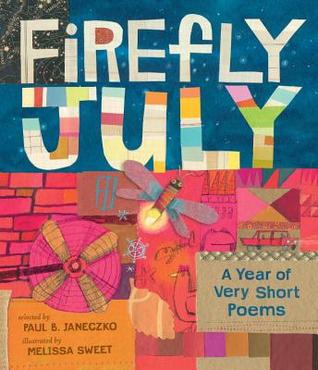
I just read the beautiful book, Firefly July, full of super-short poems (I LOVE super-short poems) celebrating the seasons. Our own April Halprin Wayland is in there, and Joyce Sidman, and so many other fantastic poets.

18166919

Here's one of my favorites. I adore both cinquains and fall, so this poem really hits me every time! This is by Adelaide Crapsey, who invented the cinquain form of 2-4-6-8-2 syllables.


November Night

Listen...
With faint dry sound,
Like steps of passing ghosts,
The leaves, frost-crisp'd, break from the trees
And fall.


--by Adelaide Crapsey, all rights reserved

It's Poetry Friday, and the very generous Jama Rattigan at Alphabet Soup has the Roundup today. Head on over and check out all the lovely poems!

We're talking about writing clippings here on Teaching Authors, so I will share a few of mine. I collect mostly two kinds of things: 1) bits of text from other books (usually fiction) that I think might make a cool jumping off point for my own poetry or picture books, and 2) articles I tear out of science magazines or bookmark that I think are good topics for assessment nonfiction or poetry passages.

Here are 3 random ones:

1) "serpentine spaghetti" - highlighted in a book I was reading on my Kindle. That has got to make it into a poem!

2) "We see their flights as perfect forward motion, but nothing could be further from the truth. In truth, every flap is followed by a tuck and a sweep, hasty and high stakes; hot on the heels of every flickering gain in altitude comes a small, heart-thudding drop." - a description of bird flight, also highlighted in a book on Kindle. I love this concept. No idea how I might use it in my writing, but I love it.

[I don't know what books the above came from. I just started saving highlighted quotes in a Word document a couple of months ago. I'm realizing that I need to also note what book they came from!]

3)
http://discovermagazine.com/2012/oct/16-things-you-didnt-know-about-cars - Here's an article I read in Discover Magazine. Then I searched for it online and saved it as a bookmark, because my paper files are so overstuffed! I thought these nifty facts might spark a nonfiction passage for older readers.

Happy reading, writing, and clipping!

--Laura Purdie Salas

P.S. I'm in New Orleans for IRA and beignets! So I likely won't be able to respond to comments for about a week. But I'd love to hear from you:>)


P.S.S: From Carmela: If you haven't entered our current giveaway yet, don't forget to check out Jill Esbaum's post about her most recent publication, Angry Birds Playground: Rain Forest (National Geographic Books), and enter for a chance to win your own autographed copy. 

Wednesday, May 7, 2014

Kate Hannigan's Story-Building Recipe: Today's Wednesday Writing Workout


Today’s Wednesday Writing Workout on how to turn an idea into a satisfying story was cooked up by Chicago debut novelist Kate Hannigan.  The timing is perfect: Kate’s CUPCAKE COUSINS (Disney-Hyperion) releases this Friday, May 9, with an official 2:30 pm cupcakes-included launch at 57th Street Books in Hyde Park in Chicago, if anyone’s in the area (1301 E. 57th St.) J

Kate also blogs at Author Of, interviewing fellow authors of books for young readers of all ages.

Illustrated by Brooke Boynton Hughes, CUPCAKE COUSINS tells the story of almost-10-year-old cousins Willow and Delia who have been asked to be flower girls and wear bright pink dresses for their aunt’s upcoming wedding.  But the cousins would much rather don white aprons and be flour girls, whipping up some culinary magic to share with their entire family.  Scrumptious recipes for whoopee pies, peach pancakes and other tasty treats are included.

Kate’s next release is in April 2015: THE DETECTIVE’S ASSISTANT (Little, Brown Books for Young Readers), an historical fiction middle grade novel.

Kate also co-authored with Karen Duncan the community service book THE GOOD FUN! BOOK (Blue Marlin) which offers 12 months of parties kids can throw to help their communities and the world.

Thanks to Kate, for sharing her writer’s recipe for story-building with our TeachingAuthors readers. Her tips are write-on!


Finally I can say, what I knew I'd say some day,
having had the honor of working with Kate on earlier manuscripts:
Hurrah! Hooray! 
Kate's on her way!
Esther Hershenhorn

PS: Reminder from Carmela: If you haven't entered our current giveaway yet, when you're done reading Kate's terrific WWW, be sure to check out Jill Esbaum's post about her most recent publication, Angry Birds Playground: Rain Forest (National Geographic Books), and enter for a chance to win your own autographed copy. 
                                                        . . . . . . . . . . .
Kate Hannigan’s WWW

A hot mess.

Whenever I’m just starting out with an idea, but it’s got no shape or clear direction, I call it a hot mess. It’s a bubbling stew of characters and plot twists and good intentions. But it’s definitely not a story yet.

So how do we take a hot mess of a book idea and turn it into an actual manuscript?

Lots of writers have ideas and techniques that work: You can find sites that offer up tools for outlining or worksheets or even fancy methods with clever names. But you also might benefit from a simpler, broad-based sketch. You’ll know what works best for you as you try them out.

I have a few exercises that help me move from brain hiccups to first drafts, and I’ll share them here. They involve distilling ideas to their essence, literally sketching out the story arcs with little arrows and rainbow curves, and old-school outlining.

When I came up with the idea for Cupcake Cousins, I was driving on the highway between Chicago and Western Michigan, where the book is set, and letting my mind wander. But it wasn’t until I had quiet time to put pencil to paper that I could begin to see an actual story take shape.

You’ll hear plenty of naysayers who distrust the notion of outlining. “It’s too confining,” they complain. “I like to let my characters take me wherever they’re going,” they declare. Sure, but remember that those are the kind of people who run with scissors, who leave the house without a hat and eat high-cholesterol dinners.

Let ’em partake in such risky behavior. Because as they’re enjoying the wind-in-the-hair rush of chasing their unruly characters, you’ll be too busy getting yours lovelies from Point A to Point Z to pay them any notice. And before long, you’ll have a solid first draft of a manuscript while they’re still lost on a literary back road.

I’m a Type A person trapped in a Type B body, so you won’t hear me advocating for a rigid outlining regimen. But I will say that distilling, sketching, and outlining saved me and my stories. And I won’t begin a project without first coming up with the wire hanger on which to hang my story.

Here’s a simple three-part exercise I do when I want to get my middle-grade story started, moving from hot mess of an idea to tangible first draft in hand.

1. Start with one sentence. Distill your book into one simple sentence. Two cousins are tired of being treated like babies, so they try to prove themselves through amazing feats of baking. This helps you focus in on the essence of your book. And simple language can be repeated: imagine your potential book editor walking down the hall to another cubicle and pitching your one-sentence summary to her neighbor.

2. Sketch out your story arcs. Seriously, grab a paper and pencil and start drawing curvy arcs. What does your main character learn over the long journey of your book? She starts out at Point A as what kind of person? And where is she at the story’s end? What about sub-characters? What do they want? How are they changed?

If you’re a visual learner like me, you might benefit from seeing the way these story arcs rise and fall. And if you are setting up a lot of story threads, these sketches can help you make sure when and where you’re going to tie them off.

3. Flesh out your idea with an outline. Going from one-sentence summary to 30,000-word novel is an overwhelming notion. If you’re like me, you might get completely flummoxed at this point and bail on your project entirely. Don’t. Instead, create a simple outline of the book.

And start by giving yourself some parameters, like word count. Early middle-grade books tend to hit about the same length. Let’s say you’re shooting for 28,000 words. Divide that total over 10 chapters, and you’re looking at writing 2, 800 words for each chapter. That’s a manageable target, right? Now you have a daily writing goal.

But what do you want to say? Before you begin doing the writing, you have to do some heavy lifting – think of it as arranging the furniture. What are the 10 touch points you want to hit on in your book? Build your outline by writing down a quick one- or two-sentence summary of what needs to happen in each chapter as you move from the story’s beginning to end.

Chapter 1: Willow stares at the ugly flower girl dress and determines she won’t wear it for the wedding. She and Delia can’t wait to get into the kitchen so they can cook their way out of these dreadful gowns.

Chapter 2: Cat the new caterer appears in the kitchen, and she’s intimidating. But Willow and Delia aren’t convinced Cat knows how to make things as good as they do, so they “fix” her lemonade. The results are disastrous.

And so on.

Be flexible. Say you decide your chapters are too long for the pace you’re setting. So instead of 10 chapters of roughly 2,800 words each, you’re going to write about 20 chapters with 1,400 words per chapter and zip right along.

Go back to your original outline and divide each chapter idea in half:

Chapter 1: Willow stares at hideous pink dress and determines she won’t wear it for the wedding. Family heads off for vacation in Michigan with Willow feeling frustrated.

Chapter 2: Willow and Delia meet up, extended family too. Aunt Rosie is crazy for the pink dresses while Willow and Delia are plotting NOT to wear them. They race off to the kitchen together, where they believe their true talents can flourish.

Chapter 3: Inside the kitchen. The girls hear the screen door open, and they meet the new caterer, Cat. She poses a threat to their plan for cooking their way out of the ugly dresses.

            Chapter 4: The cousins tinker with Cat’s lemonade to disastrous results, getting    
            them off on the wrong foot with her and ousted from her kitchen.

And so on.

Outline as roadmap. Creating a reliable, functional outline doesn’t have to lock you in. There is still the freedom to let your creative voice take you places. But it does help you stay focused on your destination. While we might enjoy a Sunday drive in the country, we eventually need to get to where we’re going, right? Let the outline serve as your roadmap.

Flesh out your ideas even more with each pass. As you refine your outline, flesh out the ideas for each chapter in greater and greater detail, making sure to pace out the tension and conflict as you go. With each pass, your outline details should grow from just a few sentences into a few longer paragraphs.

Almost writing itself. When it comes time to sit down and begin writing your manuscript, you’ll might be surprised how clearly focused your story is. The book could almost right itself! Okay, that’s not true, but you are in good shape because of your outline. You can see where your action peaks and where you provide the reader a rest. You can see where you’ve laid in turning points and tension, and where you’ve set up and then resolved the conflict.

Outline into manuscript. As you keep refining your outline and begin the writing process that makes the chapters hang together, you’ll see your great idea transform into a real story. And that story will soon take the shape of a solid, working draft.

And from there, you can just imagine the book it will soon become. You’re off and running! But not with scissors; you’re too smart for that.

Monday, May 5, 2014

A Writer's Potpourri of Clippings


I confess: I clip articles almost daily from printed newspapers and magazines delivered to my address.
(Home-delivered newspapers?  How about THAT for dating myself?!) 

Article-clipping is a Family Thing.
My mother clipped.  My sister still clips. 
My nieces and cousins do too.
Recipes. Advice columns.  Interviews.  Book reviews.  Movie write-ups.  Funny cartoons.  Touching quotes. 
Oh, and death notices and marriage announcements.
In other words, anything and everything that when sent says, “I saw this and I thought of you!”
I and my family’s current generation of women use – with great optimism, the U.S. Mails to share our clippings. 
The younger generation sends link-bearing emails or attached scans.
For obvious reasons, many of the articles my family sends on to me pertain to writing, children's books and authors.  Those clippings have a pile all their own, a pile I, the Happy Clipper add to often.  I call it My Writer’s Pile and it’s totally separate from my Story Ideas Pile.
Sometimes when I’m clipping an article, or truthfully, unevenly tearing out a section of a page, I have no idea WHY. 
The piece or item simply spoke to me and I think, “I bet I could use this someday.”
Sometimes, though, I know the recipient instantly– a fellow writer, a former student, a school class I’m about to visit, or even my TeachingAuthors readers.
Thinking Spring, I titled this post “A Writer's Potpourri of Clippings."
In checking the correct spelling and definitions, however – “a mixture of flowers, herbs, and spices that is usually kept in a jar and used for scent” and “a miscellaneous collection,” my eyes slipped down the page to discover the word’s 1749 origin – the French words -  “pot pourri” for “rotten pot.”
Which got me thinking…
I often liken the writing process and that of growing a story (as well as a career) to the process inherent in maintaining a compost pile and its clippings.
Maybe magic of sorts is going on within My Writer’s Pile and I don’t even know it!
Toss the following three clippings into your Writer’s (Compost) Pile and see what happens.

FLORAL NAMES FOR BABIES
HAS BECOME A BLOSSOMING TREND
By Nara Schoenberg, Tribune Newspapers – March 4, 2014
 “Plant-based baby names for girls overall are on the rise, and 10 previously low-profile botanicals – Lily, Violet, Willow, Hazel, Ivy, Olive, Dahlia, Juniper and Azalea – have risen rapidly.
 These 10 fast-rising names were given to a total of 19,500 baby girls in 2012 – more babies than received the No. 3 girls’ name, Isabella (18,900), according to data from the Social Security Administration."
I sent the original of this article to Cousin Jane in New Jersey whose first-born granddaughter is named Violet – after - I scanned and filed the article on my computer’s Hard Drive.
FYI: apparently there’s no parallel botanical trend in naming boys although the nature name “Canyon” has had recent traction (No. 1,462).
Naming characters is any writer’s job!
(Photo courtesy of Morgue File/mirabbi249-37-0)

WRITTEN IN INK
An eclectic blog uncovers the tales behind strangers’ tattoos
By Lauren Morrow, O Magazine - April, 2013
I loved reading about and visiting illustrator Wendy MacNaughton’s and writer Isaac Fitzgerald’s blog Pen & Ink which reveals “the often hilarious, sometimes poignant stories behind these permanent remnants of our fleeting opinions, passions, and phases.”
Apparently I wasn’t alone.
This Fall Bloomsbury USA releases the two bloggers’ book PEN & INK: TATTOOS AND THE STORIES BEHIND THEM.
I haven’t used the idea or passed it on – ’til now.
Don’t you wonder sometimes, when you see an inked dolphin peeking out above a neighbor’s collar, “Why a dolphin?”
Or just what tattoo you might choose, if you haven’t already, and you want to break loose?
A character’s tattoos are a great way to come at knowing your Hero and knowing your Villain.

MIXED-MEDIA MAVENS
Artists’ book celebrates the
freedom and craft of art journaling
By Heather Schroering, Tribune Newspapers – April 20, 2014
Another two-partner idea – this time by Jenny Heid and Aaron Nieradka: scrapbooking with more layers and textures.                                                                      
Another blog: Everyday Is a Holiday.
And another book: MIXED MEDIA MASTERPIECES WITH JENNY & AARON (Page Street).
When speaking to Young Authors, I advocate Journaling every chance I get.
I liked the fun idea this article suggested of adding Ephemera – such as handwritten letters, maps, vintage photos, fabric, movie and concert tickets, old game pieces, you-name-it.
I bet kids would like it too!
And instantly they’d SEE the value of concrete details.
I also think it’s yet another way for writers, young and old, to come at knowing their characters – and that’s why I scanned this article and emailed it to two of my writers.
For the record, and though a Luddite at heart,
I do actually read newspapers, journals and magazines online daily and find myself more and more (sigh) cutting-and-pasting, copying and/or scanning and emailing myself links to fascinating articles.
I hate to waste an interesting idea!
Esther Hershenhorn

Friday, May 2, 2014

Post-Poetry Month Tidbits

What a Poetry Month we've celebrated! Now I hope to backtrack and read the many intriguing posts I've bookmarked for later enjoyment. In case you missed any of ours, here's a recap:

We each read one of our favorite poems aloud. (Of course, it was a difficult choice!) You can hear:


I had tons of fun writing Wednesday Writing Workouts about different poetry forms. I gave myself a weekly writing assignment and wrote a new poem (or several) to accompany each one:


For our Fifth Anniversary Blogiversary Book Bundle Giveaway, we gave bundles of 5 books each to 5 winners. We are thrilled with our readers and tickled to read all of your smart, funny, thoughtful comments. Thank you for inspiring us!

If you haven't yet, you can still enter for a chance to win a copy of Jill's Angry Birds Playground: Rain Forest.

And now it's May, which so far looks a lot like April . . .

. . . except in my neighbor's yard!

May is Get Caught Reading month!

Be sure to check out the We Need Diverse Books Campaign. Use the hashtag ‪#‎WeNeedDiverseBooks on Twitter and/or find it on Facebook.

Katya hosts today's Poetry Friday Roundup at Write. Sketch. Repeat. Enjoy!

JoAnn Early Macken

Wednesday, April 30, 2014

Wednesday Writing Workout: Social Media Poems!

Throughout April (National Poetry Month), I'm posting poetry-themed Wednesday Writing Workouts. This week, I was in the mood for something short. I thumbed through my worn copy of The Book of Forms by Lewis Turco, but none of the 175+ forms jumped out at me. I wanted something new.

Then my son Jimmy sent me an article, "The Ideal Length of Everything Online, Backed by Research," which defines (among other things) the ideal length of a tweet as 100 characters and the ideal length of a Facebook post as less than 40 characters. Naturally, I thought about writing poems short enough to be posted on social media.

I searched online to find out what already existed on the topic. In an article from 2011, Carol Ann Duffy, Britain's Poet Laureate, said poetry is "a way of saying more with less, just as texting is. We've got to realise that the Facebook generation is the future – and, oddly enough, poetry is the perfect form for them. It's a kind of time capsule – it allows feelings and ideas to travel big distances in a very condensed form."

To celebrate National Poetry Month, New York City hosted its fifth annual "#NYCPoetweet" Twitter poetry contest. So obviously, I didn't make up the idea of writing poems to post on social media sites, although I've posted a number myself. Haiku fit perfectly, as you can see in Laura's daily Riddle-Ku. Liz Garton Scanlon is posting a haiku on her blog every day this month. My cousin Maureen sent me an article about H. W. Brands (@hwbrands), an author, historian, and history professor who is tweeting "Haiku History: The American Saga Seventeen Syllables at a Time."

But a brief poem intended for social media doesn't need a specific form—it just has to be a short poem, maybe with a tangy metaphor, an alliterative pun, or a haiku-like twist. Writing short-short poems is practice in writing concisely. Here are a couple new ones of mine, both about this spring in Wisconsin:

Gray skies, more rain.
One goldfinch brightens 
the world.

Wet sidewalks = worm traps.
Stop wiggling—I'm trying to help!

I found social media-length poems on Twitter using these hashtags:
#micropoem
#micropoetry
#poemtweet
#poetrytweet
#poetweet
#twitterhaiku
#twitterku
#twitterpoem
If you search (as I did), be aware that you will find poems of uneven quality, from brilliant to confusing to downright offensive. But do try writing some of your own just for fun—and then share them online!

Congratulations to our Fifth Blogiversary Book Bundle winners!
Rafflecopter lists our prize winners on the original post, so you can always check back there after a drawing ends to see who won. Five entries were chosen to receive five books each. Here are the winners:


New Teaching Author Book Giveaway!
Don't forget to enter for a chance to win a copy of Jill Esbaum's Angry Birds Playground: Rain Forest.

National Poetry Month
On my own blog, I'm posting more poetry writing tips and assorted poetry treats on Fridays through April. This week's post includes the final National Poetry Month giveaway of Write a Poem Step by Step. Be sure to stop by!

JoAnn Early Macken

Monday, April 28, 2014

Blogiversary; Goodbye, Poetry Month; and Angry Birds Playground: Rain Forest Book Giveaway

Happy Spring!

Since I didn’t get to post about our 5 year blogiversary, I’ll jump in here to say a quick THANK YOU to friends who have been with the blog since the beginning or found us somewhere along the way. I love knowing that 5-book bundles are even now winging (wheeling?) their way to 5 of you who entered our contest. Woot!

Another of my National Geographic books was released a couple of weeks ago, so it’s time for a book giveaway. If you have any kiddos in your life who like the Angry Birds or might enjoy a lively book about the Amazon rain forest and its animals, please enter. I’d love to send you a copy of Angry Birds Playground:  Rain Forest.


This fourth book in the series (the third written by me) was my favorite to research. I quickly compiled a lonnng list of the amazing creatures that live in the Amazon. Narrowing it down was actually the toughest part of writing this book. Reading about some of them made my jaw drop.

-Like Hoatzin chicks. Those are born with temporary claws on the front edges of their wings. When a hawk or other predatory bird attacks a nest (which are built hanging over the water), the chicks can ploop to the water below, then swim underwater to the bank until the threat is over. Then they use those wee claws to climb back up the tree to their nest. (I couldn’t get photo permission in time for this post, but check out this quirky, chicken-sized bird!)

-Like the wide-mouthed Amazon Horned Frog. This bugger will attack and try to swallow anything that crosses its path – including human ankles. They're so aggressive that they're often found dead with some poor, too-big-to-swallow beastie halfway in.


                                                                                    Photo by George Grall


-Like the Golden Lion Tamarin, a photo of which you can see here. This fiery, red-orange (and endangered) species always looks so big in photos. Did you know they’re really only the size of a 5-year-old child’s foot?

Readers will learn about the four layers of the Amazon, the river itself, and the basin in general. Add cool lizards and turtles and insects and snakes, a few animals that consume their own … um, droppings, 5 primate species, and a frightening assortment of animals trying their darnedest to eat each other, and you’ve got one fascinating, four-layered place to discover.

Want to win a copy? Just enter via Rafflecopter below. I’ll send one winner their very own book. Contest runs through May 16th.

Jill Esbaum

Side note #1:  Farewell, Poetry Month. But if you're into rhyming picture books, I’m the guest blogger today over at Angie Karcher’s RhyPiBoMo.


Side note #2:  If you’re a picture book writer and are looking for a summer writing workshop, consider joining my author friend Linda Skeers and me at our Whispering Woods Picture Book Workshop. Follow link for more details.


a Rafflecopter giveaway

Friday, April 25, 2014

DECONSTRUCTING A POEM...and Happy Last Poetry Friday of National Poetry Month 2014!

.
Howdy, Campers, and Happy Poetry Friday!  
Today's host is Tabatha Yeatts at The Opposite of Indifference.
Thank you, Tabatha!

Our Carmela is out to make trouble.  I swear...she's a full-blown cyclone blowing through Poetry Month!

(Actually, she's not.  I'm just playin' with you.  I've been on the look-out for metaphors all month on my website, and that was a metaphor, blowing by...the poem on my site today compares writing to a challenging walk...)

Carmela has posted (and reads aloud) two versions of one of my poems, and she suggested I talk about the process of writing and revising it.

So...here's the story behind HOW TO READ A POEM ALOUD:

I was asked to help organize a poetry coffee house night for teens, and I wanted to teach them how to read aloud. Could I smush all the information into a poem, I wondered?  My teacher Myra Cohn Livingston always read poems aloud twice; I knew I wanted to include that in my instructions.

I've found nine versions of this poem; there may be more.  But don't panic--I won't make you read every draft!  Here's the very first version:

2/8/07  
READ ALOUD HOWS

Take a sip of water.

Read the title to your daughter. 

Pause.

Read the poet’s name.

Read the poem.

Read it once again

Take your time.

Say each word slowly

Let each word shine.

Take a breath and sigh.

Then think of how the poet put her hand to pen 

and why.
=========================
and here are the next several versions mashed together so you can see the ideas I tried and discarded...

HOW TO READ A POEM ALOUD

[Sit down in a meadow with a friend.
Tell the poet’s name and the title—
Now begin.]

[Stand up in your kitchen with your friend.
Tell the poet’s name and the title—
Now begin.]

[Walk home from the bus stop with your friend.
Tell the poet’s name and the title—
Now begin.]

[Take a sip of tea.
Tell the poet’s name to your friend.]

[Take a sip of tea.
Read the poet’s name
and say its title deliciously
to me.]

[To begin,
say the title
and the poet’s name
with a small smile.]

[To begin,
announce the title of the poem
and the poet’s name.
Make sure to pronounce it clearly]

[To begin,
read the title of the poem
and the poet’s name.
Be clear.]

Now—[your job is to] completely disappear

Say [taste] its title
deliciously.

Tell the poet’s name to me.

[Tell the poet’s name to me.
Taste her title deliciously.]

Pause. 

[Be sure you’re heard
so I can savour every word.]

Now:
   savour  [polish]
     every 
       word.

Let 
  each
    shine.

Then—read it one more time.

Next, take a breath
and sigh.

Then think about the poet 
at her desk
late at night
picking up her pen to write—

and why.
*   *   *   *   *   
 And here some of my moods as I write
and rewrite and write and rewrite (can you relate?):

...confused...

...determined...

...patient...

At some point on this journey, I read Marilyn Singer's prose,"How to Read a Poem Aloud"...and though it's a terrific list, it made my head spin, so I decided to stick with just the few points I'd been working with.

*   *   *   *   *  

And finally, here are the two versions Carmela posted (they've been floating around the internet, passing each other in the night, for years)...which do you like best?

            Version #1

            HOW TO READ A POEM ALOUD

            First, read the title of the poem
            and the poet’s name.

            Be clear.

            Now completely
            disappear.

            Let each line
            shine.

            Then read it
            one more time.

            When the poem
            ends, sigh.

            Think about the poet at her desk,
            late at night, picking up her pen to write--

            and why.
                             
*   *   *   *   *
Version #2 (as published in Sylvia Vardell's book, 


HOW TO READ A POEM ALOUD

            To begin,
            tell the poet’s name 
            and the title 
            to your friend.

            Savor every word—
            let 
                each 
                        line 
                              shine.

          Then—
          read it one more time.

          Now, take a breath—
          and sigh.

          Then think about the poet,
          at her desk,
          late at night,
          picking up her pen to write—

          and why.
                             © April Halprin Wayland. All rights reserved. 

Do I like one version better than the other?  Depends on what day you catch me.  That's the trick in creating something, isn't it: sometimes I know, I just know when it's finished: there's that satisfying click of the lasts puzzle piece...
from morguefile.com

 But just as often, I just...get...(yawn) t i r e d...so...I stop.

And that, dear campers, is the story behind HOW TO READ A POEM ALOUD!

Now, go outside and play.

posted with a glue gun by April Halprin Wayland.
(p.s: I've just been interviewed by author
and Seminar on Jewish Story organizer Barbara Krasner here.)

from mykidcraft.com

Wednesday, April 23, 2014

Wednesday Writing Workout: Fibs!

Throughout April (National Poetry Month), I'm posting poetry-themed Wednesday Writing Workouts. Today's form is a Fib, a counted-syllable form with an increasing number of syllables per line, following the Fibonacci sequence. Each number in the series (1, 1, 2, 3, 5, 8, 13, and so on) is formed by adding the two previous numbers. The Fibonacci sequence can “describe an amazing variety of phenomena, in mathematics and science, art and nature.”

Greg Pincus visited the Teaching Authors last year. He explained the origin of the Fib form on his blog. The New York Times article “Fibonacci Poems Multiply on the Web After Blog's Invitation” describes the form’s increasing popularity. According to the Poetry Foundation, “These short, straightforward poems are that rare thing capable of crafting a bridge between the often disparate souls of art and science.”

When I tried writing Fibs, I found that the lengthening lines seemed to suit a subject that unfolds gradually or a conclusion that slowly dawns on a narrator and/or reader.

In this poem, my early drafts stopped at seven lines. Then I realized I had more to say, so I reversed the pattern and counted back down.


Signs of Spring

I
walk
my dog
cautiously
through our neighborhood
in spring, when warning signs crop up
on lush green smooth-as-carpet lawns: Pesticides! Keep off!
How on our dear troubled planet did poison become
an acceptable lawn care tool?
Is grass truly green
if nothing
else can
thrive
there?

Today is the last day to enter to win one of five Teaching Authors Blogiversary Book Bundles! Details are here.

On my own blog, I'm posting more poetry writing tips and assorted poetry treats on Fridays, including giveaways of Write a Poem Step by Step. Be sure to stop by!

JoAnn Early Macken