Friday, August 4, 2023

Last Echoes

HOW DO YOU APPROACH ENDINGS?

I once walked a family member through the process of writing a eulogy. They were grief stricken by the loss but also about to step into battle with the surviving family members over the inheritance.  Before the death, the family found themselves in a tangled web of nastiness.  

When I arrived in town to help the family member tasked with delivering the eulogy, I found that he had written very little for the service the next day and what he had written was a mess of ego-based, one upmanship of the family members he was outraged over. A self rightous attempt to gain control, He was ready to air the dirty laundry of the family to the captive audience attending the funeral. My writing skills kicked in and I began the very painful rewriting process, moving him away from using the pulpit to shame the relatives and toward telling his father’s life story.  My message was strong, clear, and unwavering. 

“ You are retelling the highlights of this man’s lifetime.  Your are telling this man's final story. It is the one and only time it will get told succinctly to those who have gathered to say goodbye. This is the last echo of his life.

I surprised myself that I was able to tease a decent eulogy out in the wee hours of the morning before the funeral.  But then again, I shouldn’t have been surprised.  It’s how I approach the ending of most of my stories.  The ending is the echo of the heartbeat of the story, whether it’s a picture book, a graphic novel, or a YA novel that I’m writing.  My two published picture books and my other stories that are out on submission end with that echo…the bookend of a circular story if you will.


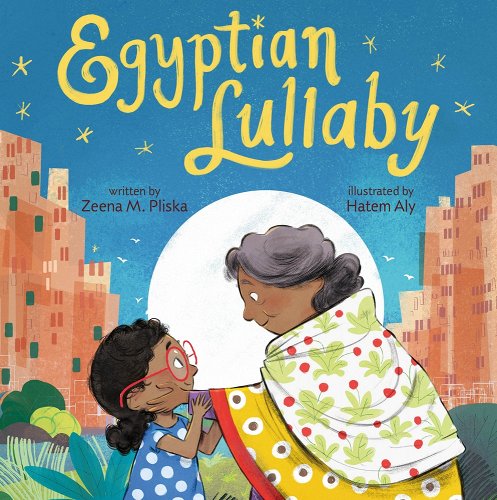
 Egyptian Lullaby Illustrated by Hatem Aly  (Roaring Brook Press)


Hello, Little One:  A Monarch Butterfly Story Illustrated by Fiona Halliday  (Page Street Kids)


As an artist and writer, I tend to be somewhat metacognitive. I spend a significant amount of time reflecting on my process and analyzing my intentions.  My why as an artist is the desire to provoke discourse.  I want to challenge thinking and create dialogue so that people communicate, connect, and think…even small children.  That ending echo is the most important  beat of the story.  It ensures that engagement occurs and for me, what is art without engagement?

I love the quote that April highlighted in her last post and her description of serpentine endings. 

"One way to end the poem is to turn it back on itself, like a serpent with its tail in its mouth." ~ Maxine Kumin

Her post helped give me context to what I do.  She helped me name and identify my approach to endings.  I hope that our two posts back-to-back bring to you some thoughts and reflections on your own writing process as you explore… HOW DO YOU APPROACH ENDINGS?

For me…whether it’s a picture book, a graphic novel, a YA novel, or the eulogy at the end of one’s life, the ending is the final echo of the story.


Thursday, July 20, 2023

HOW TO END A...

Howdy, Campers and Happy Poetry Friday! (The link to PF is below)

Our topic this round is HOW DO YOU APPROACH ENDINGS?

How do we know the last chapter, last paragraph, last word is the right last piece of a puzzle?  

In ending my first picture book, TO RABBITTOWN, I took the advice of poet Maxine Kumin without realizing it.
Image of a large red speech bubble with the following quote in white lettering: "One way to end the poem is to turn it back on itself, like a serpent with its tail in its mouth." ~ Maxine Kumin

Here are the first two pages of TO RABBITTOWN by me, with beautiful watercolor illustrations by Robin Spowart (Scholastic):
 

I opened her rabbit-y cage
and while she nibbled celery
I asked her:
Where do the rolling hills go?
She said:
Beyond the wheat
to a pine forest
to the edge of it all
to Rabbittown

I snuggled her close
She told me:
Hop there
Ride the green waves
Find the cliffs
past the smell of the sea
There you’ll find
those brown rabbit eyes
And so I went

The child leaves home and joins a world of rabbits, slowly turning into one.  The last three pages read:

I said:
I miss them
I want to run back through the hills
to the tops of the cliffs
toward the smell of mown lawns
where I’ll find
those curious human eyes

And off I hopped
through the pine forest
over the rolling wheat hills
past the smell of the sea
back to mown lawns
and my family

To grow legs again
to grow arms again
to hold my pet bunny again
who holds memories
of Rabbittown.

That book was published in 1989. At the time, I knew nothing about serpentine endings or writing. Nothing. I just liked tinkering with words. And that's how I still feel. Every. Single. Day. (Except some days...keep reading.)

How DOES one write (and end) a poem about endings?  I began by brainstorming:

ENDINGS

the last cookie
the last episode
the last stop for four hours so you’d better pee now
the last words before the lights go down and the curtain comes up

the end of summer
the end of the year
the end of the meeting

the end of wearing diapers
the end of wearing braces

the end of the song
the end of Uncle Rob

the end of...
the end

============
A week or so after writing that, I threw everything into the pot (including the fact that my son's an ER doc) and messed around with end rhymes, without any organization or story:

HOW TO END...


A fire, a falsehood, a romance? (Swipe right.)

A concert, a friendship, a novel, a flight?

A sentence (that’s spoken), a sentence (for life)?


A shell game, a head trip, a story, a hike?

A hoax at a rally, a ruling, a right?

A swing shift, a bleeding, a day and a night?


A habit, an anthem, a bias, a fight?

A birthday, a luncheon, an obit, a rite?

A card: “may this new year be filled with bright lights”?


Wild rhyme, unhinged rhyme in this labyrinth?

Good night!
========

Clearly it needed some kind of organizing principle. Maybe the words in each line could be related? Or the lines could all march to a satisfying ending? I sent it to my best friend Bruce Balan, asking:

Dear Poem Repair Person, Please take my out-of-tune poem and make it sing in four-part harmony. 
===================== 
The suggestions he sent were supposed to go here: _________________________________. But I'm not going to tell you his suggestions because he's right and I'm tired and it'll take too much work and I don't wanna.

Well, okay, I will share one question he sent:  "My real question is, what are you trying to say?" I had no idea.  

Sometimes internal logic, metaphors and a perfect visual shape will emerge from the muck of the marsh. And since none of that happened, I was hoping he would just tell me what I was trying to say. Or just rewrite the whole thing for me. Isn't that what friends are for?
Image of the last piece fitting into a completely white puzzle with these words on the puzzle: "I was hoping that as I moved the puzzle pieces around, they would come together in a satisfying, cohesive click." ~ AHW

Though the poem above didn't have heart or logic or answer the title's question, it was a SO MUCH FUN to write!  

Breaking News:
 sometimes it's not fun.

Sometimes I have to let things "cook" for awhile and the answers appear. But I didn't have time for that--this post was due! 

I decided to admit to you, dear campers, that "I'm tired of trying to figure things out" (phrase from a song by Tom Hunter). I can't seem to write a poem about endings. So, I took Dory's advice. I just kept swimming. I thought about my favorite hike and how last week it was mysteriously much harder than usual. (I didn't know I was coming down with a cold.)

JUST KEEP SWIMMING

This gentle path along the bluff

becomes a trail up a hill

and now a trek up to the ridge...

that peak is far.

That peak is steep.

This hike is hard.

I hear it growl...

and then it steepens loud

at me.

============ 
all poems--or rough drafts of future Pulitzer Prize-winning poems (c)2023 April Halprin Wayland. All rights reserved.

Thank you for sticking with me to the bloody end! I'll leave you with one last thought and, of course, the link to Poetry Friday:

“Poems are short stories
with punctuation disorders”

Tom Cassidy 

Thank you, Margaret at Reflections on the Teche
for hosting Poetry Friday this week!

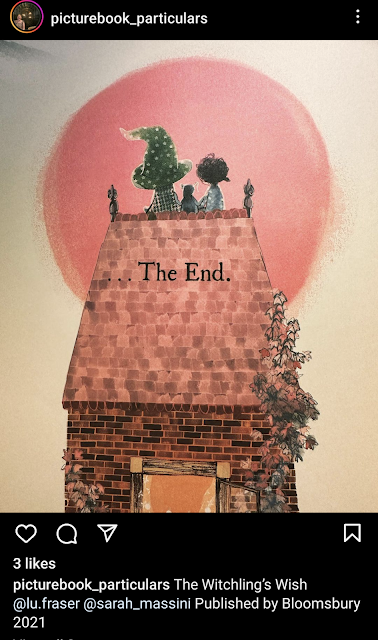
Image of the end papers from The Witchling's Wish
by Lu Fraser, illustrated by Sarah Massini
posted by Picturebook_particulars on Instagram 

posted with love by April Halprin Wayland with help from Bruce Balan and the infinite knowledge of poets everywhere.
_____________

PS from Carmela: Congratulations to the winner of our 2 for 1 Giveaway: A Set of Metaphor Dice and a copy of the Poetry by Chance Anthology 
Marcie F.

Thursday, July 6, 2023

2 for 1 Giveaway: A Set of Metaphor Dice and a copy of the Poetry by Chance Anthology

Happy Poetry Friday! (Wondering what Poetry Friday is? See this page for info.) 

Today we have a special treat for all our followers who are fans of metaphor and/or poetry, and especially for those of you who teach writing.

I mentioned in my June 16 post that we'd be hosting a giveaway of Poetry by Chance: An Anthology of Poems Powered by Metaphor Dice edited by Taylor Mali (Button Poetry). Well, Taylor surprised me by sending not only a copy of the book autographed to "a fan of TeachingAuthors" but by also including a set of Metaphor Dice for the giveaway.

I include instructions on how to enter the giveaway for this fun prize duo at the end of this post. But first, I want to share a bit about the anthology and give you a sneak preview of my poem that appears in it.

As it says in the book's description: "Poetry By Chance is the first collection of poems that were all prompted by different rolls of Metaphor Dice, featuring submitters from the inaugural Golden Die Contest." But that description fails to note that the anthology includes poems from young people, ages 10 and up, as well as adults. The book also contains a section devoted to Lesson Plans using Metaphor Dice to inspire writers of all ages. 

Poetry by Chance will be released Tuesday, July 11, 2023. Taylor Mali will be celebrating with a free book launch the following Friday, July 14, at Brooklyn Poets, 144 Montague St, Brooklyn, NY. If you're in Brooklyn, I hope you'll attend in person. If not, you can participate virtually instead. But either way, you must register in advance to attend, which you can do so here

Even though the book isn't officially out till next week, I have received permission to share my poem with you today. As I mentioned last time, the poem was inspired by these dice:

 Here's the poem:

     WHAT IT MEANS TO FORGET

      For some,
      forgetting is a gentle blessing
      providing absolution
      and forgiveness of sins.

      For me,
      forgetting is a harbinger of death,
      bearing the image of my grandmother—
      her brown eyes blank, blinking—
      unable to remember my name.


© 2023 Carmela A. Martino, Published in Poetry by Chance: An Anthology of Poems Powered by Metaphor Dice edited by Taylor Mali (Button Poetry). All rights reserved.  

In my last post, I mentioned that I first learned of the anthology from a Poetry Friday post by Heidi Mordhorst, and that my poem follows one of two of Heidi's that appear in the book. I neglected to say that the Lesson Plan section in the back of Poetry by Chance includes a contribution by Margaret Simon, another Poetry Friday regular. Margaret shares a fun way she uses Metaphor Dice to teach students about figurative language. It's lovely to have my poem in such great company!

Speaking of Poetry Friday, after you enter our giveaway below, be sure to visit this week's Poetry Friday round up hosted by Marcie Flinchum Atkins


And now for our giveaway!

. . . . . .

To enter the drawing to win a copy of Poetry by Chance: An Anthology of Poems Powered by Metaphor Dice edited by Taylor Mali (Button Poetry) AND a set of Metaphor Dice, use the Rafflecopter widget below. (Note: if the widget doesn't appear, click on the link at the end of this post that says "a Rafflecopter giveaway" to enter.)

You may enter via up to 5 options. The more options you choose, the better your odds!

If you choose option 4, you MUST leave a comment on TODAY’S blog post or on our TeachingAuthors Facebook page. If you haven’t already “liked” our Facebook page, please do so today!

If you prefer, you may submit your comment via email to: teachingauthors [at] gmail [dot] com.

Note: if you submit your comments via email or Facebook, YOU MUST STILL ENTER THE DRAWING VIA RAFFLECOPTER BELOW.  The giveaway ends July 15, 2023 and is open to U.S. Residents only.

If you’ve never entered a Rafflecopter giveaway, here’s info on how to enter a Rafflecopter giveaway.  And a second article explains the difference between signing in with Facebook vs. with an email address.

Good luck!

Carmela


a Rafflecopter giveaway

Friday, June 16, 2023

3 Little Words Can Be a Powerful Prompt: Playing with Metaphor Dice

Hi, all! Today I'm wrapping up our series on the subject of Writing Prompts, which April kicked off in this post two months ago. It's been interesting to read the varied responses to the topic from the other TeachingAuthors and some of our followers. Personally, I love prompts, especially because they often take me to unexpected places. At the end of this post, I share a poem inspired by three little words, courtesy of Metaphor Dice.

First, though, I'm pleased to announce that those same three words also inspired a poem that will appear in Poetry by Chance: An Anthology of Poems Powered by Metaphor Dice edited by Taylor Mali (Button Poetry). The book will be released in less than four weeks, on July 11, 2023. And I'm thrilled to say that we'll be offering a giveaway of the book next month, so stay tuned!

I had never heard of Metaphor Dice until reading about them in a post on Heidi Mordhorst's blog. Metaphor Dice were invented by poet and teacher Taylor Mali, who edited the anthology. The official Metaphor Dice website describes them as "The writing tool that plays like a game!" The dice come in three colors and have words printed on them. The words on the red dice are concepts. The white dice contain adjectives, and the blue ones, objects. To play the game, you roll three dice--one of each color--and then use the words to form a metaphor. If you like, you can then expand the metaphor into a poem. If you're not a poet, you might try incorporating the metaphor into an essay or story.

Heidi's post included a link to the Golden Dice contest for Metaphor Dice-inspired poems. (The contest ended April 30, 2022.). Winning poems would then be published in Poetry by Chance.

I couldn't resist trying my hand at using the dice. But crafting a satisfactory poem from the metaphors I came up with proved more challenging than I expected. Here are the three words that finally gave me the inspiration I needed:


And here's a draft of one of the poems these words inspired:

            Forget and Forgive

    In the past, I fought against the notion
    that forgetting might be a gentle blessing
    by memorizing my mistakes for quicker recall.

    Now, I’ve come to see that forgetfulness
    can be a way to wipe the slate clean,
    and finally forgive myself. 

 © Draft 2022 Carmela A. Martino. All rights reserved. 

I can't share the poem that made it into Poetry by Chance just yet, but I can tell you that I'm honored to have my work included in the anthology. As it turns out, my poem follows one of two by Heidi Mordhorst! 

Poetry Friday logo by Linda Mitchell
I look forward to saying more about the anthology in next month's giveaway post. Meanwhile, be sure to check out this week's Poetry Friday roundup hosted by Michelle Kogan.  

Carmela


Friday, June 2, 2023

Not Prompts—Sensory Cues! by Mary Ann Rodman

 The term “prompt” is not a favorite of writers. I know it’s not a favorite of students. I don’t know if “journal writing” is still used by teachers to keep students quiet while taking attendance. However, I’ve taught a whole generation of kids who wince at the words “prompt” and “journal” after years of having to expound on “my favorite fruit” and “what is a good friend” in a notebook that the teacher checked but never read. 

To me, “prompt” means you’ve lost your way and your memory needs nudging—like being prompted on stage. I prefer the term “cues”, but not just any cues, but sensory cues. 

Sensory cues are those aromas or textures that evoke particular emotions and memories. I keep a list of these cues. Here are a few of mine: Smells—honeysuckle, lime scented aftershave, mildew, baking bread or cookies. Textures—velvet, sand, grass, peanut butter, porcelain.

Let’s take peanut butter—which is on both of my lists. I imagine the mouthfeel of soft bread mixed with crunchy peanut butter (my favorite).  The smell of peanut butter recalls a twin aroma—that of the slightly soured milk smell of my vinyl Barbie lunchbox in second grade. Even though my thermos was washed every day, the scent of milk and peanut butter had absorbed into the soft sided vinyl. Oh, and that’s another cue —the sharp chemical smell of a new vinyl lunchbox or three-ring notebook. Suddenly, I’m back in my second grade classroom, with a cascade of cues: pencil shavings, chalk dust, hot asphalt (it was a new school and the parking lot was still being paved). This is followed by specific images, like Margaret who sat across the aisle. She wore her hair in long ringlets, wore periwinkle suede Hush Puppies and read nothing but Winnie-the-Pooh books the whole year. 

Whew! That was unexpected! See how that works? Sensory details are what makes writing come alive for me. So much of what we write in a first draft is what we see or hear. As a result my first draft often feels like a string of events—a lot of “and he went there and she said this.” It’s when I use my cues (NOT prompts), that my story picks up momentum. 

Suddenly, I want to write a second grade story. Hmmm—I wonder what happened to Margaret?

Posted by Mary Ann Rodman. 

Friday, May 19, 2023

Prompting Possible Imaginations


I happen to agree with Esther when it comes to writing prompts. I’m not a great devotee of prompts.  

We’ve all heard those success stories of debut authors. (I hesitate to use the qualifier “overnight’, as it tends to negate the work that went into the writing.) J.K. Rowling. Veronica Roth. S.E. Hinton. Christopher Paolini self-published his first book, Eragon. He sold thousands of copies, when Random House took notice and bought the rights, and the rest is dragon history.  Emma Cline, who wrote The Girls, was offered a three-book contract with a reported $2 million deal.  

The real success stories – and the real champions -- are not the lucky debuts but we the sloggers, the majority of us who get up every morning and do what we do. We don’t define ourselves by rejections, nor by successes. We write. And if we’re lucky, we have a friend or two who send reminders, wrapped in chocolate, with a note: Yes, rejection sucks. Eat chocolate. Now get back to work.

But getting back to work is not always as easy as it sounds. I’ve written about my own trials in finding an agent many times, including here.  This week, news broke out about events surrounding New Leaf Agency (See Publisher’s Weekly article here), bringing into stark relief how excruciating the business of writing can be. Despite having seven books, a few award-winners and several short stories published in major venues, I've faced my own challenges to find an agent. And this in stressor certainly impacted my writing process. I mean, what’s the point?

After parting ways with my third agent, I stopped submitting to focus more on the story engineering process, taking classes from some of the best people in the business. (I highly recommend classes from the indomitable Emma D. Dryden, from the master editors of Eileen Robinson and Harold Underdown at Kid's Book Revisions, from Lorin Oberweger's Free Expressions.) Taking classes from such great teachers kept me in the flow.

 In 2023, one editor finally made an offer (shhhh, it’s not official yet. But watch this space! Unless, of course, change happens.).  Another editor invited me to create a proposal for a multi-book project. Who-op! The proposal was accepted and made its way up the chain. With these several manuscripts in hand, I was able to connect with my current agent.  

Still, we remember that things can change on a dime. That’s what it means to have a career in writing: the business of publishing is always in a state of flux. And so it happened again, the proposed series was rejected. Historical fiction is a hard sell.  What's next? Well, my agent and I are working on it.

If there’s a prompt to be had, perhaps the only one that matters is: 

Write what you love. Write your passion. 

 I write historical fiction. As Liz Trenow states (Writer’s Digest, April 2023): “When I discovered historical fiction, I loved the way it opened up worlds I knew little about, led me into researching eras of history, even took me traveling to find out more.” 

For me, history is my inspiration.  I grew up reading historical adventures and watching Doctor Who (a show that bent history into a wibbly wobbly adventure, to be sure!) Of course, it was the boys who were having all the fun. I wanted to know about those other stories, plain and ordinary girls like me. 

I also love to research. I enjoy reading diaries of those who experienced the events. When writing Girls of Gettysburg (2014), I walked the battlefield four times, watching re-enactors create this moment in history taht took place one hundred fifty-one years ago. I stood in the very place where twelve thousand Confederate forces gathered along Seminary Ridge. Almost a mile away, at the end of an open field, a copse of trees marked the Union line standing firm on Cemetery Ridge. When the signal was given, the men marched across the field. The line had advanced less than two hundred yards when the federals sent shell after shell howling into their midst. Boom! Men fell legless, headless, armless, black with burns and red with blood. Still they marched on across that field. And in the middle of this gruesome battle, the bloodiest of the Civil War, were my girls of Gettysburg

My characters also broke the rules and norms of their period as they struggled to take control of their destiny, although I was careful to provide context.  This focus reaffirmed the theme that underscores all my writing: Doing right wasn’t always easy, and sometimes it could be dangerous, but it could also change the world. And, in reading my stories, young readers are empowered (hopefully) to do the same.

For me, historical fiction tells the story of a living past, illustrating the continuity of life. Humans by their very nature are difficult, complicated, short-sighted, and at times, tragic. And yet, there is hope, grounded in human experience and perspective, all of which has been the driving force of my storytelling.

As my protagonist in Big River’s Daughter (2013) said, “This here story is all true, as near as I can recollect. It ain’t a prettified story. Life as a river rat is stomping hard, and don’t I know it. It’s life wild and woolly, a real rough and tumble. But like Da said, life on the river is full of possible imaginations. And we river rats, we aim to see it through in our own way. That’s the honest truth of it.”  And therein is the hope of River’s journey: if one perseveres,  life can be full of possible imaginations.
So, the question -- or the prompt -- becomes: Why do you like to write, and what do you love about your writing? 

-- Bobbi Miller


Friday, May 5, 2023

PROMPT: The Verb!

I sadly confess: concerning the featured theme of our current blogs, 

I am not, nor have I ever been, a Devotee of Writing Prompts.

Should a writer or student relish such an exercise, I consult my 

“Writing Prompts” file and gladly comply.

Should a teacher or presenter put forth such an exercise in a class 

or workshop I’m attending, I seldom respond.

I happily confess, however: I am hopelessly devoted to prompting 

writers and students - urging, assisting, encouraging, coaching 

them - to keep keepin’ on, no matter the project, whether stalled, 

stopped or even stuck.

When it comes to prompt, the verb, my FOR HESITANT WRITERS 

file runneth over.

It holds strategies, techniques, tricks of the trade, tips, exercises 

and recommended books, including the oh, so understanding and 

oh, so instructive book Unstuck (St. Martins Press, 2003).

Most Readers have already met Unstuck’s author - writer, poet and 

Writing Coach Jane Anne Staw, my longtime friend I still fondly 

call Janie.

In July of 2020 I shared in a Wednesday Writing Workout one of 

her illuminating blog posts based on her book Small: The Little 

We Need for Happiness (Shanti Arts, 2017).

Lucky us, because once again, my dear friend graciously granted 

me permission to reprint her published words. This time I’m 

sharing a helpful Try This exercise from Unstuck to prompt any of 

our stuck readers to return to the work at hand.


The book’s subtitle says it all: A Supportive and Practical Guide to 

Working Through Writer’s Block.

In fourteen chapters that help the writer learn his or her own story, 

from “The Right to Write” to “What’s at Stake,” Unstuck lives up to 

its subtitle. Chapters 3 (“Flushing Out Our Enemies”) and Chapter 

6  (“Showing Up for Yourself”) especially spoke to me.

I’m hoping the essence of Chapter Five, “Thinking Small,” speaks 

to you.


Jane Anne-dash-Janie begins the chapter by sharing her two-word 

mantra.

     “If I were to choose a mantra for my writing, it would be 

     Think small.  Each time I sit down to write, I begin by recalling 

     these two words. And whenever I feel myself slowing down too 

     much or veering off-track, I bring myself back by repeating 

     them. Think small, Jane Anne. Think small. Thinking small 

     actually helps us write big.  Instead of limiting you, thinking 

     small will set you free.”

She ends the chapter with this Try This:

     “Instead of thinking about all the writing you must do – or have 

     not gotten done – think about just one small part.  If you are 

     working on a book, focus on the first chapter only.  If it’s a legal 

     brief, concentrate on the first point you want to make.  If this 

     amount of writing feels overwhelming, narrow your sights even 

     more.  Think only about the first page or the first paragraph.  

     Then, when you have accomplished your goal, congratulate 

     yourself and negotiate the next small step.”


May the above exercise prompt you to think small and - continue

to write… BIG!

Thanks to Linda B at TeacherDance for hosting today’s Poetry 

Friday.

And thank you, Janie, for once again sharing your smarts, 

expertise and guidance with our TeachingAuthors readers.


Happy Keepin’ On!

Esther Hershenhorn


P.S. from Carmela: Time is running out if you haven't yet entered our giveaway of Zeena Pliska's brand new picture book, Egyptian Lullaby (Roaring Brook Press)! Read this post for details.


Friday, April 21, 2023

Book Giveaway...It's here! Egyptian Lullaby

I drove to work on Tuesday and found myself sobbing…deep sobs…coming from a wave of sorrow unexpectantly bubbling up from somewhere hidden. Finally, the day had come, pub day for my picture book, Egyptian Lullaby.  It has been a long time coming…five  years…I had anticipated intense joy  but not sadness. And then I remembered that my father had died a little over a year ago.  There would be no phone call today to share the anticipated book birthday. 


 In fact, I was in Cairo exactly a year ago because he passed away on March 19th.

Click here to view post about my trip to Egypt

Even more heart breaking was the memory of my Aunt Zina who had been the inspiration for the book. She too died before the book came out.  Again, there would be no phone call. 


I thought about legacy and memories and what we leave behind as I drove to work to be with with my 19, 5-year-olds. I thought about the lifetimes they have ahead of them. I thought about the audience I wrote for when I wrote this book over 5 years ago.  I thought about the irony that the students who would share this book birthday with me were either yet to be born or were just born.  I thought about how their parents were incubating them at the same time I was incubating this book.  I felt how it all swirled around me... Life and death, beginnings and endings, celebrations and being alone…and I marveled at it all through my sobs.


Click here if the video above won't play

Click here if the video above won't play

As an artist, I am always seeking to speak my truth and tell stories through different mediums.  My current way is to write children's picture books.  When I became a parent, I found it difficult to continue to develop as a photographer and visual artist.  My days as a parent were too delicious to divide between being present with my child and creating new works. I chose parenthood and paused my artistic endeavors.  Now that she is transitioning into young adulthood, I am finding the time and energy to return to my former life.  

Picture books seem to come out on Tuesdays.  An odd day of the week to ask children to come to an author event.  This book held so much emotion. It is my love letter to Cairo and all that it means to me. It is also my way to counter the negative media depictions of Arabs that demonize the culture. 

I wanted to acknowledge the day, so I created a photography exhibit with photos of Cairo titled, Dear Cairo...my dear Cairo. The artist reception served as my artist/author event designed to complement the book and carry the same intention and message, to normalize Arab culture for those who are unfamiliar and to celebrate for those who are familiar with it. The Los Angeles photo exhibit is happening simultaneously at two different venues, the Venice Abbot Kinney Branch of the Los Angeles Public Library and Village Well Books and Coffee in Culver City.  Different photos will be on display at each venue as part of the exhibit. There will also be a second artist reception on April 22 4:00pm - 6:00pm.


To celebrate the release of Egyptian Lullaby by Zeena M. Pliska, illustrated by Hatem Aly and the 14th Blogiversity of Teaching Authors, we are giving away a copy of the book! See below for instructions on how to enter.

By Zeena
 
________
 

We are giving away ONE copy of the latest TeachingAuthor picture book, Egyptian Lullaby (Roaring Brook Press) written by Zeena M. Pliska and illustrated by Hatem Aly! 

To enter the giveaway drawing, use the Rafflecopter widget below. (Note: if the widget doesn't appear, click on the link at the end of this post that says "a Rafflecopter giveaway" to enter.)

You may enter via up to 4 options. The more options you choose, the better your odds!

If you choose option 3, you MUST leave a comment on TODAY’S blog post or on our TeachingAuthors Facebook page. If you haven’t already “liked” our Facebook page, please do so today!

If you prefer, you may submit your comment via email to: teachingauthors [at] gmail [dot] com.

Note: if you submit your comments via email or Facebook, YOU MUST STILL ENTER THE DRAWING VIA RAFFLECOPTER BELOW.  The giveaway ends May 8, 2023 and is open to US. Residents only.

If you’ve never entered a Rafflecopter giveaway, here’s info on how to enter a Rafflecopter giveaway. And a second article explains the difference between signing in with Facebook vs. with an email address.

Good luck!
 

a Rafflecopter giveaway

Friday, April 7, 2023

What's a Serial Deconstruction Poem?

Howdy, Campers and Happy Poetry Friday! 

I am feeling particularly happy today. I've been dealing with a stupid health issue and have been in pain for quite a while. But guess what? 

NO PAIN last night! No pain today! 

And: it's SUNNY again in So Cal! Not rainy, not wildly windy. 

So: No pain, a sun-shiny day, two poems in a new anthology, and Poetry Friday...what more could a girl ask for?

At the end of this post is the Poetry Friday link, info about my summer class, and my poems from Pomelo Books' newest anthology, What is a Family?

Our topic this round is "Offer our readers a writing exercise or prompt." 

Like many friends in the Poetry Friday family, I write a poem a day. Surely I'm not alone when I say that sometimes my brain stands up, puts on its coat says, "Nope. No ideas. I'm outta here."

So the other day when my brain walked out of the room, I took these two phrases from a friend’s email:

·        1) delicate balance

·         2) I wanted to stab my hand with a fork

an   ...and began playing with them. I sliced the second sentence into pieces with which to start new lines:

======================== 

DELICATE BALANCE

I wanted to slice watermelon but you wanted

to stab a steak or maybe spear a pimento olive.

My hand hesitated. I offered you a fig, which you ate

with a fork.


DELICATE BALANCE

I wanted it to stop. I wanted

to stab the newspaper, rip it to shreds, or swipe right with

my hand. After, I went to the ocean and made circles in the sand

with a fork.


DELICATE BALANCE

I wanted to find the pulse of a poem. I wanted

to stab this page with surprise.

My hand wants that, too. But it’s distracted by that guy

with a fork.


DELICATE BALANCE

I wanted stars, stars, and stars

to stab this night. I wanted to lift

my hand to them, conducting their murmurs

with a fork.


DELICATE BALANCE

I wanted you to speak,

to stab that diaphanous curtain.

My hand goes to my lips. You are, you are! I listen

with a fork halfway to my mouth.


DELICATE BALANCE

I wanted to call this exercise How

to Stab a Sentence to Death. But

My hand disagreed. Hands are very opinionated, especially hands

with a fork.

poems © 2022 April Halprin Wayland

===============

It was a so much fun! I asked my husband what I should call this form. He was eating at the time. He said, "Serial Deconstruction. Or," he said, looking down at his granola, "you could call it Cereal Deconstruction."

Ha!

I like presenting these poems in groups. Try it. Let me know how it goes!

=============
Many of you know Pomelo Books ~ I call them the publisher with the 💗big heart💗. At its helm are Sylvia Vardell and Janet S. Wong, the proud parents of their newest book, WHAT IS A FAMILY? born on March 31st. 

The 40 ekphrastic poems in this book—inspired by a wide variety of diverse and inclusive black-and-white photos—explore extended families, blended families, classmates and sports teams as families, animal families, and family occasions such as birthdays, holidays, weddings, funerals, and much more.

As with the companion book WHAT IS A FRIEND? and also their books in the "THINGS WE" series (THINGS WE DO; THINGS WE EAT; THINGS WE FEEL; THINGS WE WEAR), 100% of the profits will be donated by this truly big-hearted publisher to the IBBY Children in Crisis Fund (IBBY.org). (Worth joining; I'm a member.)

Here are my ekphrastic poems from WHAT IS A FAMILY?:

CLASSROOM


PUPPIES!

And once again I'll be teaching a one day, three-hour class called ​​Intro to Writing Children's Poetry for the Big-Hearted, Brave,and Curious​! (my title, not necessarily UCLA's). It's on Wednesday, July 12th from noon-3pm PST. The course won't be visible until April 10th; Summer enrollment opens April 24th. 

Tah-dum! I started writing this happy, and I'm ending it happy that 

Margaret is hosting Poetry Friday!

Poetry Friday logo by Linda Mitchell

Reminder: I'd love to hear about your own Serial Deconstruction poems! 

I keep bubbling, I know, but one more thing to leave you with. I've been listening to Leonard Bernstein conduct his playful Overture to Candide. It lifts me. Maybe it will lift you, too.

Posted with love by April Halprin Wayland 
with help from Kitty, seen here on my desk, helping me work 
(she's another thing that makes me happy):