Friday, October 20, 2023

Meet Ethan Long, A Children's Book Creative Virtuoso! + Book Giveaway


Once again I shout, “Lucky me!”

I meet The Best People doing what I love and loving what I do, 

here in our singular Children’s Book World.

But now you can, too.

Meet Ethan Long, a veritable Children’s Book Creative Virtuoso 

whose debut middle grade novel The Death and Life of Benny 

Brooks (Christy Ottaviano Books/Little Brown, October, 2023) 

might luckily be yours simply by entering our Book Giveaway.

(See details at the end of this post.)

Fate first connected me to Ethan oh, so long ago, in 2001, 

when Holiday House editor Mary Cash chose him to illustrate my 

debut middle grade novel, The Confe$$ion$ and $ecret$ of 

Howard J. Fingerhut.  Ethan and I met in person at that year’s NY 

SCBWI Conference, his smile every bit as impish as the one he’s 

sprouting in the above photo. His Professionalism, Commitment, 

Passion, Smarts and Joy bowled me over. He was all in when it 

came to creating children’s books, grateful to be illustrating, but 

eager and determined to someday figure out a way to tell his 

story, his “crazy family’s story,” in words.  He’s done just that, 

adding illustrations, of course, in The Death and Life of Benny 

Brooks (Sort of a memoir). I knew he someday would, which is 

just what I’d told him.


Ethan has added all sorts of descriptive nouns in the intervening 

years - author/illustrator, author, graphic novelist, cover artist, 

game designer, animator, just to name a few, creating baby board 

books, picture books, novelty books, chapter books, murals, 

baseball cards, poetry books, joke books, book trailers, 

digital book series, animated shorts, indeed his very own NFT 

collection. His awards include the 2013 Theodor Seuss Geisel 

Award for Up! Tall! And High! and a 2022 Kidscreen Award for 

Scribbles and Ink, an Emmy Award Nominee. His latest noun in 

apposition should be no surprise: AGENT!  He and his wife 

Heather recently joined the Tugeau 2 Art and Literary Agency to 

represent fellow creatives. You can learn more about his artists 

and the story-tellers he seeks here.


Imagine my surprise when Good Ol’ Serendipity arranged a long-

awaited meet-up at ALA this June in Chicago! Ethan’s puckish 

smile was the same, his eyes twinkling behind round horn-rimmed 

glasses just like mine. He was as grateful a human being as ever.  

When he shared his Good News - how he’d finally figured out a way

to tell his “crazy family story,” as an illustrated middle grade novel, 

how The Death and Life of Benny Brooks would release this 

October, I could only thank him for affirming my “I told you so!”


The book’s front flap copy captures Benny perfectly.  “Benny's life 

is slowly unraveling. His parents are newly divorced, his mom 

chooses to move away, and Benny and his brother and sister are 

left with their chain-smoking dad, who has just been diagnosed 

with lung cancer. Benny is lonely, anxious, and very angry. He 

can't sleep at night and spends his days trying to survive fifth 

grade.”


Numerous starred reviews praised Ethan’s illustrations – 

“dynamic youthful-feeling pencil drawings by the protagonist” - 

but as important, the “bighearted story brimming with hope.”

Janet Tashjian’s testimonial lauded Ethan’s novel as “the perfect

 book for readers trying their best to come to terms with the 

many curve balls life hurls.  It also has the most important 

quality a story can have – honesty.  There’s not a false note in 

it.”

I agree, 100%. Benny’s heart reaches out to the Reader and

never lets go from the very first image on page one: Benny 

lying beneath the clouds, wondering what it would be 

like to be dead. “The part of me that used to be happy and 

funny and smiley is gone,” he shares.


After a tortuous school year in which his teacher Mr. Rogers guides 

him to focus, not fight, “YOU,” Mr. Rogers tells Benny, “are going 

places, Sir! Once you realize how much you have to give, which is a 

lot, you’re going to soar.”


Read my interview with Ethan that follows. Click on the links to 

read about his books.  

I know you’ll agree: Ethan Long continues to soar!


Thank you, Ethan, for being who you are and doing what you do - 

for Young Readers, for our Children’s Book World and for gifting 

one lucky TeachingAuthor reader of this post with an autographed 

copy of The Death and Life of Benny Brooks.


Long live Creatives!


Esther Hershenhorn

p.s.

Thanks to Bridget at WeeWords for hosting today’s Poetry Friday.

…

 You’ve had quite the Children’s Book Creator’s Journey, from illustrating my first middle grade novel in 2001 to writing yours, with a bounty of written and illustrated picture and early chapter books in between. You shared on your website you’ve experienced in the publishing industry both “struggles as well as successes.”  What wisdom did you glean from both that kept you keepin’ on?

Thank you, Esther! Great question. And I love that we have 

known each other for over 20 years! The struggles: They 

teach you about yourself and your limits — what you will 

put up with and what you won’t put up with. When I am 

struggling or have struggled, sometimes it is so hard that I 

want to give up, and sometimes do (temporarily), then 

realize I HAVE to keep going because of the commitment 

I made to myself as a creator and also the commitments I 

have to my family. It is not fun, but knowing my family, 

friends, and other artists have seen me struggle and succeed 

lets them know they can do it, too. At least, that is my hope.


·       Channeling Richard Peck’s Dear Reader letter for The Best Man (Dial, 2016), what does Benny’s story mean to you and what do you hope it means to your Readers?

Benny’s story is about struggle and hope. The goal was just 

to get the book out of my head and down on paper, but now 

that it’s out, it makes sense to me that people are thanking 

me for writing it and how it has inspired them to reach out 

to estranged family members or deal with a lingering issue. 

The book has inspired them to ACT. It has also inspired

 other writers to go emotionally deeper into their stories. 

That is satisfying.


·       Congratulations on your newest endeavor, partnering with your wife, Heather – Heather and Ethan Long Art & Literary Agents with the Tugeau Art & Literary Agency! You’ve already signed 13 creators you’ve deemed “amazing.” How would you describe the creatives you seek? How can interested writers and illustrators contact you?

Oh my gosh, our time with Nicole Tugeau and Lillian 

Mazeika at Tugeau 2 has been an amazing experience. Both 

struggle and success have been intertwined since we started 

in November of 2022. The creatives we seek have to be 

technically skilled in what they do, have the content and 

expression to make us go WHOA, but also have the 

inclination to write stories. They need to be prepared for 

that kind of hard work. We will have 17 artists by the end 

of 2023 and although not everyone has gotten work yet or 

sold a story to a publisher, everyone is working and 

growing. It’s amazing to watch and be a part of.


·       I once heard an editor share that as writers and illustrators, each of us has a story to tell, a Truth, of sorts, we wish to leave behind. We tell that story again and again, in various formats and genres, for a variety of Readers. What might be your story?

You are a pro at asking great questions, Esther! Hmmm. My story 

is multi-faceted in that I came to this earth with a lot of gifts, but

 also a lot of baggage that I had to sift through over the years to 

let my gifts shine through. It has taught me to continually clean 

myself out by talking through things and letting them go. That 

process keeps me as in-the-moment as possible and allows my 

creativity to flow effortlessly and without boundaries to others.

It gives me the mindset to work on many projects at a time and

not feel weighed down. Is it a perfect process? No. But I work 

at it every day of my life.

·       

Y   You write on your website you “can’t wait to see what comes next.” Either can I and now, I’m sure, the Readers of this interview. Can you give us a clue or a hint? Might something new be in the works (I hope)?

You know me by now…there is ALWAYS something in the 

works. :) Two middle grade novels, some easy readers, two 

“non-fictiony” picture books with a writing partner and friend, 

some animation development, and of course, the artists at the 

agency, which are always a work in progress, like the rest of us.


. . .  . . . . . .

OUR BOOK GIVEAWAY!

To enter the giveaway drawing for The Death and Life of Benny 

Brooks, use the Rafflecopter widget below. (Note: if the widget 

doesn’t appear, click on the link at the end of this post that says 

“a Rafflecopter giveaway” to enter.)


You may enter via up to 4 options.  The more options you 

choose, the better your odds! If you choose option 3, you 

MUST leave a comment on TODAY’S blog post or on our 

TeachingAuthors Facebook page.  If you haven’t already 

“liked” our Facebook page, please do so today!

If you prefer, you may submit your comment via email to: 

teachingauthors @gmail.com

Note: if you submit your comments via email or Facebook, 

YOU MUST STILL ENTER THE DRAWING VIA 

RAFFLECOPTER BELOW.  The giveaway ends 

November 1, 2023 and is open to U.S. Residents only.


If you’ve never entered a Rafflecopter giveaways, here’s info 

on how to enter a Rafflecopter giveaway.  And a second article 

explains thedifference between signing in with Facebook vs. 

with an email address.


Good luck!


a Rafflecopter giveaway

Friday, October 6, 2023

The End ... of This Series

Happy Poetry Friday! I share a draft of an original poem at the end of this post, along with the link to this week's Poetry Friday roundup. But first, I'm going to wrap up our series on the topic of Endings.

I originally suggested this topic to the TeachingAuthors team for three main reasons:

  1. I was inspired to think about Endings after reading the book The End written by John Bray and illustrated by Josh Cleland (Starry Forest Books, 2022).
  2. In the past, the TeachingAuthors have discussed Beginnings and Middles, but we'd never done a series on Endings before.
  3. I was hoping that reading my fellow TeachingAuthors' posts would help me find a satisfying ending for a humorous picture book I've been struggling to finish for years.

The last reason may seem a bit selfish, but from the comments this series has received, I can see I'm not the only one who struggles with endings. In fact, in the first post in this series, April discussed her problem finding an ending for her poem "How to End ..." . When she turned to her friend, Bruce Balan, for help, he sent her some suggestions, but said, also: "My real question is, what are you trying to say?"

Rereading that post today, I realized this is THE question I have to answer for my humorous work-in-progress. I've gone through several variations of the story, each with a different theme or throughline. Yet I still don't know what I'm trying to say. Until I can answer that question, I won't be able to discover the satisfying ending I yearn for. Finding the answer to this one question has given me a new sense of direction in how to tackle revising my WIP. Many thanks to April, and the other TeachingAuthors, for all your terrific insights on endings!

This week, I've been tinkering with a poem related to the recent end of summer and the disappearance of the hummingbirds I already miss. It's been only in the last few years that we've found ways to attract hummers to our backyard. I never saw one as a child growing up in Chicago, but they have become frequent summer visitors to our suburban home. The key has been growing hummingbird mint plants, which they seem to love. 

I haven't been able to capture a decent photo of a hummingbird in our yard. But I do have a very brief video below that I took in late August. I hope you can make out the ruby-throated hummer drinking from our hummingbird mint blossoms. The video sets the scene for the poem that follows. (If you're an email subscriber and the video isn't available in the email, you can watch it online here.)    

 
Video of ruby-throated hummingbird flitting among hummingbird mint blossoms in our backyard.


            The Last Hummingbird

    flits from blossom to blossom to blossom,
    from salvia to petunia to its namesake mint,
    fueling up for its migratory flight.

    I can hardly believe this hummer is still here.
    We hadn’t seen one for days.
    Many more days will have to pass

    before I can say this was truly the last.


       ©2023 draft Carmela A. Martino. All rights reserved.


I'd love to know what you think of this poem. And don't forget to check out this week's Poetry Friday roundup hosted by Matt Forrest Esenwine at Radio, Rhythm & Rhyme.  

THE END!
Carmela
 

Friday, September 15, 2023

Glimmers and Starbursts and Hopeful Endings


You may remember my big summer news:  After a particularly nasty fall, I underwent surgery to replace a very sad hip.  I couldn’t take my walks. I couldn’t go into the woods or see my favorite trees or feed my favorite turtles.  The news was overwhelmingly depressing. I’ve watched every season of Doc Martin and The Witcher. And you know Whoooo!

And just about that time, a meme made its way to my page, defining the nature of glimmers. A glimmer is that micro-moment of happiness; a sign of hope.

So, I decided enough is enough. I pulled out an old story and made it new again.  Working at the desk, while doing my leg exercises, o! the possibilities!

A month later, I could bike ½ mile (albeit, it’s a PT bike. But a bike is a bike!)

I walked 45 minutes (albeit, I stopped to practice my balance, with my trusty cane – Miss Purple Bess – by my side.)

O, big glimmer. My eighth book, this one from Charlesbridge, is scheduled for Spring 2026! 

So how does this relate to our topic on endings? Ending is such a particularly good concept for me these days. I went to my Doc appt recently. I'm at the halfway mark. Only 6 more weeks of PT.  Endings. And new beginnings!

In other words, hope is the core ingredient for a satisfying ending to a story. There are many ways to end a story. There’s the happily ever after, common in romance stories and other fairy tales. There’s the “the restoration of honor through sacrifice; the bolstering of friendship and altruism through earned humility.” As Vaughn Roycroft noted in his article, Good Story Endings: Happy or Sad, or Something Else?” 

There’s the tragic ending, epitomized by Jack’s death in Titanic. And the open ending, when nothing is really resolved, and the murderer seems to have escaped. Then there's the redemption at the end of the story. In each scenario,  hope allows the character to move forward, and the possibilities are endless. After Jack died, Rose’s ‘heart lived on' to love again and have a family. Darth Vader found redemption and the rebellion found new hope.  

Hope means the story didn’t end with the tragedy, or even with the ecstasy. It is, in essence, the beginning to the next chapter – the sequel, if you will.

David Means, author of Two Nurses, Smoking, said, “A good ending doesn’t answer a question. It opens up the deeper mystery of the story itself.”

In other words, through dark moments and tragic scenes, and happy reunions, the most memorable ending invites readers to glean meaning from the story and, in so doing, becomes inspired, as noted by Hannah Gullickson in her article, “Imagination and Writing: The “Hopeful Ending” vs. the“Happy Ending”.  

And to end this reflection with a starburst: this morning I submitted the revision to my agent. 


“Life is amazing. And then it's awful. And then it's amazing again. And in between the amazing and awful it's ordinary and mundane and routine. Breathe in the amazing, hold on through the awful, and relax and exhale during the ordinary. That's just living heartbreaking, soul-healing, amazing, awful, ordinary life. And it's breathtakingly beautiful.” -- L.R. Knost

-- Bobbi Miller

Thursday, August 31, 2023

And They All Live Happily Ever After ...Not! Posted by Mary Ann Rodman


 Has this ever happened to you? You've invested hours, days, weeks of your precious reading time in the Novel of the Season. The writing is wonderful, the plot a page turner. The characters have become like members of your family. The  book resides in your brain when you've not reading. This is the best book ever until...

Wham, bam, thank you, ma'am... it's over. It's over and you feel cheated. What a terrible ending! Maybe it was ludicrous, given the 400 previous pages. Maybe you didn't see it coming...and not in a good way. Maybe the writer got tired and looked for the nearest exit ramp.

Endings are your final impression of a book. A sucky ending is not likely encourage you to read another book by that author. And we authors do like return readers. (So do publishers.)

One of the reasons I became a writer was the awful endings of books as I read as a kid. The books available to me in the 60's were primarily written in the 50's and 40's, the Era of Perpetually Happy Endings. No names mentioned, but there were a couple of "teen romance" writers whose plain but brilliant female main character always landed her dream boat by the last page. If Dreamboat had discovered the inner beauty of Plain Jane, I would've been happy, but that's not what happened. In every single book, Jane suddenly became a curvaceous beauty, with a perfect complexion and shimmering hair. I can't tell you the number of times 10-year-old me threw a book across the room, yelling, "Real life isn't like that!" I vowed to myself I'd become a writer of books with Real Life endings.

The first Real Life ending I encountered (although I didn't realize it) was Charlotte's Web when I was 8. I cried for days (one of the few books that have made me cry.) I didn't really think very much about why E.B White chose to end his book that way, until I was in the Vermont College MFA program. Someone on the faculty--if only I could remember who--said, "Endings should be inevitable." Light bulbs! Fireworks! Lightening! Yes! But the lecturer was still talking, "Inevitable doesn't need to be predictable. The ending should be organic to what has come before." Ding ding ding! In two minutes, I learned the secret of a good ending.

Now all I had to do was write one.  

There are people who don't write without an outline, complete with ending. I'm not one of those people. I know the beginning, I know some of what happens in the middle...but the end? The end is always as much of a surprise to me as I hope it is to the reader. If I have to think hard, then the end is neither inevitable or organic. It's just an ending.

In writing both of my middle grade novels, Yankee Girl and Jimmy's Stars, I thought I had the end firmly in mind and then... In Yankee Girl, several new characters came out of nowhere, jumped in the scene and took it to another place all together, with me, racing behind, trying to keep up. Jimmy's Stars had my main character remember something from chapter one--something I had forgotten--that ended the story for me. Organically. Inevitably.

Picture books are a little easier to end, because the story isn't as complicated. However, I had no idea how to end First Grade Stinks. I didn't so much write that one, as take dictation. My daughter came home from school every day with a new complaint about first grade. Why wasn't it cool, like kindergarten? I couldn't use reality here, because my daughter and her first grade teacher never came to terms. I had to let that one "germinate" in the computer files for a year as I contemplated what my character... wanted from first grade...and what she really needed. What she needed was a new attitude. Once she found that...the ending came all in a rush. Happily-ever-after-but with a twist of reality.

Not all my readers appreciate my endings. I've lost count of the kids who've asked  "Why did such and such have to happen?  That was so sad!"   I ask them, "So what would the story be if that thing didn't happen?" The answer is usually, "Well then Ellie/Alice Ann/Lily would be happy." 

"OK, now tell me your version of the story," I say. The young reader starts to retell the story until the troubling plot point. They fumble around for a minute, before saying "And they all lived happily ever after." Pause. "That's not a very good story, my way, is it?" Nope. (No conflict, no story...but that's a different post.) How the character (and author) handle and resolve conflict realistically makes a satisfying ending.

 I'm sure there are kids all over the world, throwing my books across the room, yelling, "What a dumb ending!" But I'll bet they don't say "Real life isn't like that."

And they always ask about a sequel.


P.S. Indulge me a minute. This is my daughter, on the first day of kindergarten, and the same daughter, heading off to her first week of teaching her own Pre-K class. I could not be prouder of her. She also uses "extra story time" as a class reward. If you're a picture book writer and you're my friend, your books are in her classroom library.

Posted by Mary Ann Rodman

Friday, August 18, 2023

Once upon a time...


Once upon a time, I had the good fortune to learn from the late 

and oh, so wise award-winning author and teacher Richard Peck.

When it comes to crafting story, he taught me, 

“In the beginning is the end, in the end is the beginning.”

It matters little what my character seeks –

a problem’s solution,

a need’s fulfillment,

the realization of a dream,

the granting of a wish.

Somewhere within the story’s requisite inevitable yet surprising 

satisfactory resolution lies its start.


Mr. Peck’s sage advice has become a mantra of sorts, one I gladly 

repeat to myself as well as my writers and students when we find 

ourselves facing unreachable endings to our stories.

His words provide the perfect Rx.

Revisiting a story’s beginning allows us to reconnect with our 

characters to finally see their narrative arcs, to remind ourselves 

what our story is about, to remember our story’s promise to the 

Reader.

The beginning and end need to be of a piece so the story works as 

an harmonious whole.


Even better, though, especially for picture book writers, revisiting

 a story’s beginning words – those we chose when we launched our 

story, often reveals hidden nuggets that await discovery and 

repurposing.

A word ripe for word play or repetition.

A phrase worthy of a refrain.

A reader-grabbing sentiment, revealing the story’s heart.

For example, in my There Goes Lowell’s Party! (Holiday House), 

with his faith in his family’s love and resourcefulness to over-

come all obstacles confirmed, Lowell confidently casts all doubt 

aside and declares: “Here comes my party!

In my Fancy That (Holiday House), Pippin Biddle honors his 

“Though far, I am near, cheering you on!” promise to his sisters to 

save them from the Poor House, prompting the sisters to in time

exclaim, “Though far, you were near, cheering us on!”


My chosen story structure in Chicken Soup By Heart (Simon & 

Schuster) – a story within a story – begins and ends with, “Here it 

is, from start to finish, how such a nice boychik saved the Chicken 

Soup Queen.”


Of course, and fortunately, Richard Peck taught me far more than 

the craft of writing. He modeled for writers, published or not, 

dedication to craft and dogged pursuit of one’s dreams.

Yes, our stories’ ends must hold their original beginnings and vice-

versa.

But his multitude of singular characters showed me what all of our 

story characters come to learn if they are different for the Journey:  

like all ends, THE END inevitably births new and surprising

 satisfactory Once upon a times!


Thanks to Molly at Nix the Comfort Zone for hosting today’s Poetry 

Friday.


Here’s to Happy-Ever-After endings – my favorite kind!


Esther Hershenhorn

Friday, August 4, 2023

Last Echoes

HOW DO YOU APPROACH ENDINGS?

I once walked a family member through the process of writing a eulogy. They were grief stricken by the loss but also about to step into battle with the surviving family members over the inheritance.  Before the death, the family found themselves in a tangled web of nastiness.  

When I arrived in town to help the family member tasked with delivering the eulogy, I found that he had written very little for the service the next day and what he had written was a mess of ego-based, one upmanship of the family members he was outraged over. A self rightous attempt to gain control, He was ready to air the dirty laundry of the family to the captive audience attending the funeral. My writing skills kicked in and I began the very painful rewriting process, moving him away from using the pulpit to shame the relatives and toward telling his father’s life story.  My message was strong, clear, and unwavering. 

“ You are retelling the highlights of this man’s lifetime.  Your are telling this man's final story. It is the one and only time it will get told succinctly to those who have gathered to say goodbye. This is the last echo of his life.”

I surprised myself that I was able to tease a decent eulogy out in the wee hours of the morning before the funeral.  But then again, I shouldn’t have been surprised.  It’s how I approach the ending of most of my stories.  The ending is the echo of the heartbeat of the story, whether it’s a picture book, a graphic novel, or a YA novel that I’m writing.  My two published picture books and my other stories that are out on submission end with that echo…the bookend of a circular story if you will.


 Egyptian Lullaby Illustrated by Hatem Aly  (Roaring Brook Press)


Hello, Little One:  A Monarch Butterfly Story Illustrated by Fiona Halliday  (Page Street Kids)


As an artist and writer, I tend to be somewhat metacognitive. I spend a significant amount of time reflecting on my process and analyzing my intentions.  My why as an artist is the desire to provoke discourse.  I want to challenge thinking and create dialogue so that people communicate, connect, and think…even small children.  That ending echo is the most important  beat of the story.  It ensures that engagement occurs and for me, what is art without engagement?

I love the quote that April highlighted in her last post and her description of serpentine endings. 

"One way to end the poem is to turn it back on itself, like a serpent with its tail in its mouth." ~ Maxine Kumin

Her post helped give me context to what I do.  She helped me name and identify my approach to endings.  I hope that our two posts back-to-back bring to you some thoughts and reflections on your own writing process as you explore… HOW DO YOU APPROACH ENDINGS?

For me…whether it’s a picture book, a graphic novel, a YA novel, or the eulogy at the end of one’s life, the ending is the final echo of the story.


Thursday, July 20, 2023

HOW TO END A...

Howdy, Campers and Happy Poetry Friday! (The link to PF is below)

Our topic this round is HOW DO YOU APPROACH ENDINGS?

How do we know the last chapter, last paragraph, last word is the right last piece of a puzzle?  

In ending my first picture book, TO RABBITTOWN, I took the advice of poet Maxine Kumin without realizing it.
Image of a large red speech bubble with the following quote in white lettering: "One way to end the poem is to turn it back on itself, like a serpent with its tail in its mouth." ~ Maxine Kumin

Here are the first two pages of TO RABBITTOWN by me, with beautiful watercolor illustrations by Robin Spowart (Scholastic):
 

I opened her rabbit-y cage
and while she nibbled celery
I asked her:
Where do the rolling hills go?
She said:
Beyond the wheat
to a pine forest
to the edge of it all
to Rabbittown

I snuggled her close
She told me:
Hop there
Ride the green waves
Find the cliffs
past the smell of the sea
There you’ll find
those brown rabbit eyes
And so I went

The child leaves home and joins a world of rabbits, slowly turning into one.  The last three pages read:

I said:
I miss them
I want to run back through the hills
to the tops of the cliffs
toward the smell of mown lawns
where I’ll find
those curious human eyes

And off I hopped
through the pine forest
over the rolling wheat hills
past the smell of the sea
back to mown lawns
and my family

To grow legs again
to grow arms again
to hold my pet bunny again
who holds memories
of Rabbittown.

That book was published in 1989. At the time, I knew nothing about serpentine endings or writing. Nothing. I just liked tinkering with words. And that's how I still feel. Every. Single. Day. (Except some days...keep reading.)

How DOES one write (and end) a poem about endings?  I began by brainstorming:

ENDINGS

the last cookie
the last episode
the last stop for four hours so you’d better pee now
the last words before the lights go down and the curtain comes up

the end of summer
the end of the year
the end of the meeting

the end of wearing diapers
the end of wearing braces

the end of the song
the end of Uncle Rob

the end of...
the end

============
A week or so after writing that, I threw everything into the pot (including the fact that my son's an ER doc) and messed around with end rhymes, without any organization or story:

HOW TO END...


A fire, a falsehood, a romance? (Swipe right.)

A concert, a friendship, a novel, a flight?

A sentence (that’s spoken), a sentence (for life)?


A shell game, a head trip, a story, a hike?

A hoax at a rally, a ruling, a right?

A swing shift, a bleeding, a day and a night?


A habit, an anthem, a bias, a fight?

A birthday, a luncheon, an obit, a rite?

A card: “may this new year be filled with bright lights”?


Wild rhyme, unhinged rhyme in this labyrinth?

Good night!
========

Clearly it needed some kind of organizing principle. Maybe the words in each line could be related? Or the lines could all march to a satisfying ending? I sent it to my best friend Bruce Balan, asking:

Dear Poem Repair Person, Please take my out-of-tune poem and make it sing in four-part harmony. 
===================== 
The suggestions he sent were supposed to go here: _________________________________. But I'm not going to tell you his suggestions because he's right and I'm tired and it'll take too much work and I don't wanna.

Well, okay, I will share one question he sent:  "My real question is, what are you trying to say?" I had no idea.  

Sometimes internal logic, metaphors and a perfect visual shape will emerge from the muck of the marsh. And since none of that happened, I was hoping he would just tell me what I was trying to say. Or just rewrite the whole thing for me. Isn't that what friends are for?
Image of the last piece fitting into a completely white puzzle with these words on the puzzle: "I was hoping that as I moved the puzzle pieces around, they would come together in a satisfying, cohesive click." ~ AHW

Though the poem above didn't have heart or logic or answer the title's question, it was a SO MUCH FUN to write!  

Breaking News:
 sometimes it's not fun.

Sometimes I have to let things "cook" for awhile and the answers appear. But I didn't have time for that--this post was due! 

I decided to admit to you, dear campers, that "I'm tired of trying to figure things out" (phrase from a song by Tom Hunter). I can't seem to write a poem about endings. So, I took Dory's advice. I just kept swimming. I thought about my favorite hike and how last week it was mysteriously much harder than usual. (I didn't know I was coming down with a cold.)

JUST KEEP SWIMMING

This gentle path along the bluff

becomes a trail up a hill

and now a trek up to the ridge...

that peak is far.

That peak is steep.

This hike is hard.

I hear it growl...

and then it steepens loud

at me.

============ 
all poems--or rough drafts of future Pulitzer Prize-winning poems (c)2023 April Halprin Wayland. All rights reserved.

Thank you for sticking with me to the bloody end! I'll leave you with one last thought and, of course, the link to Poetry Friday:

“Poems are short stories
with punctuation disorders”

~ Tom Cassidy 

Thank you, Margaret at Reflections on the Teche
for hosting Poetry Friday this week!

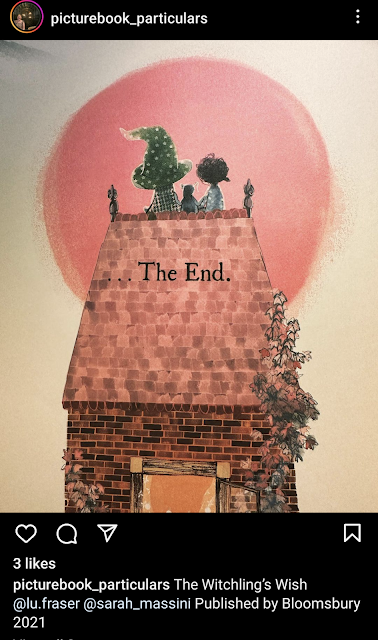
Image of the end papers from The Witchling's Wish
by Lu Fraser, illustrated by Sarah Massini
posted by Picturebook_particulars on Instagram 

posted with love by April Halprin Wayland with help from Bruce Balan and the infinite knowledge of poets everywhere.
_____________

PS from Carmela: Congratulations to the winner of our 2 for 1 Giveaway: A Set of Metaphor Dice and a copy of the Poetry by Chance Anthology:   
Marcie F.

Thursday, July 6, 2023

2 for 1 Giveaway: A Set of Metaphor Dice and a copy of the Poetry by Chance Anthology

Happy Poetry Friday! (Wondering what Poetry Friday is? See this page for info.) 

Today we have a special treat for all our followers who are fans of metaphor and/or poetry, and especially for those of you who teach writing.

I mentioned in my June 16 post that we'd be hosting a giveaway of Poetry by Chance: An Anthology of Poems Powered by Metaphor Dice edited by Taylor Mali (Button Poetry). Well, Taylor surprised me by sending not only a copy of the book autographed to "a fan of TeachingAuthors" but by also including a set of Metaphor Dice for the giveaway.

I include instructions on how to enter the giveaway for this fun prize duo at the end of this post. But first, I want to share a bit about the anthology and give you a sneak preview of my poem that appears in it.

As it says in the book's description: "Poetry By Chance is the first collection of poems that were all prompted by different rolls of Metaphor Dice, featuring submitters from the inaugural Golden Die Contest." But that description fails to note that the anthology includes poems from young people, ages 10 and up, as well as adults. The book also contains a section devoted to Lesson Plans using Metaphor Dice to inspire writers of all ages. 

Poetry by Chance will be released Tuesday, July 11, 2023. Taylor Mali will be celebrating with a free book launch the following Friday, July 14, at Brooklyn Poets, 144 Montague St, Brooklyn, NY. If you're in Brooklyn, I hope you'll attend in person. If not, you can participate virtually instead. But either way, you must register in advance to attend, which you can do so here. 

Even though the book isn't officially out till next week, I have received permission to share my poem with you today. As I mentioned last time, the poem was inspired by these dice:

 Here's the poem:

     WHAT IT MEANS TO FORGET

      For some,
      forgetting is a gentle blessing
      providing absolution
      and forgiveness of sins.

      For me,
      forgetting is a harbinger of death,
      bearing the image of my grandmother—
      her brown eyes blank, blinking—
      unable to remember my name.


© 2023 Carmela A. Martino, Published in Poetry by Chance: An Anthology of Poems Powered by Metaphor Dice edited by Taylor Mali (Button Poetry). All rights reserved.  

In my last post, I mentioned that I first learned of the anthology from a Poetry Friday post by Heidi Mordhorst, and that my poem follows one of two of Heidi's that appear in the book. I neglected to say that the Lesson Plan section in the back of Poetry by Chance includes a contribution by Margaret Simon, another Poetry Friday regular. Margaret shares a fun way she uses Metaphor Dice to teach students about figurative language. It's lovely to have my poem in such great company!

Speaking of Poetry Friday, after you enter our giveaway below, be sure to visit this week's Poetry Friday round up hosted by Marcie Flinchum Atkins. 


And now for our giveaway!

. . . . . .

To enter the drawing to win a copy of Poetry by Chance: An Anthology of Poems Powered by Metaphor Dice edited by Taylor Mali (Button Poetry) AND a set of Metaphor Dice, use the Rafflecopter widget below. (Note: if the widget doesn't appear, click on the link at the end of this post that says "a Rafflecopter giveaway" to enter.)

You may enter via up to 5 options. The more options you choose, the better your odds!

If you choose option 4, you MUST leave a comment on TODAY’S blog post or on our TeachingAuthors Facebook page. If you haven’t already “liked” our Facebook page, please do so today!

If you prefer, you may submit your comment via email to: teachingauthors [at] gmail [dot] com.

Note: if you submit your comments via email or Facebook, YOU MUST STILL ENTER THE DRAWING VIA RAFFLECOPTER BELOW.  The giveaway ends July 15, 2023 and is open to U.S. Residents only.

If you’ve never entered a Rafflecopter giveaway, here’s info on how to enter a Rafflecopter giveaway.  And a second article explains the difference between signing in with Facebook vs. with an email address.

Good luck!

Carmela


a Rafflecopter giveaway